The Secret to Blending Different Carpet Dye Lots in Large Rooms
The reality of a flooring professional often smells like WD-40 and oak dust, even when the project involves soft surfaces. I have spent twenty-five years on my knees with a moisture meter, and if there is one thing I have learned, it is that a floor is a performance surface, not a decoration. Most installers treat carpet like a blanket they can just throw over a subfloor. They are wrong. When you are dealing with a massive room where the square footage exceeds the capacity of a single carpet roll, you are entering a world governed by chemistry and light physics. I spent three days grinding concrete on a job last month just so the floor would not click like a castanet, and that same level of obsession is required to blend dye lots. Most guys skip the leveling compound and think the underlayment will hide the dip. It won’t. Every imperfection in the subfloor changes the angle at which light hits the carpet fiber, making even the best dye lot match look like a disaster.
The hidden reality of the dye lot mismatch
To blend different carpet dye lots in large rooms you must sequence rolls numerically, use seam sealers to prevent fraying, ensure pile direction consistency, and manage lighting angles to mask color shifts. Physical blending involves the gradual transition of fibers at natural architectural breaks or using specific seam placement to minimize the optical impact of varying dye concentrations. Dye lots exist because the chemistry of the manufacturing process is never perfectly static. When a carpet mill runs a batch of nylon 6,6, the immersion time in the heated aqueous solution determines the molecular saturation of the polymer chains. A variance of even one degree in the dye bath or a slight shift in the atmospheric humidity of the factory can result in a Delta E color variance that the human eye will perceive as a different shade once the rolls are laid side by side in a 5,000 square foot ballroom.
“A floor is only as good as the subfloor beneath it; deflection is the enemy of every joint.” – Master Flooring Axiom
The molecular zooming of this problem begins at the extrusion of the fiber. Synthetic fibers like nylon and polyester are created by forcing molten polymer through spinnerets. In a large scale installation, you might have one roll from the beginning of the production run and another from the end. The sulfur-based compounds used in acid dyes interact with the amine end groups in the polymer at varying rates. If you do not understand the strike rate of these dyes, you cannot hope to blend them. You must treat the installation as a structural engineering challenge. This means examining the specific gravity of your floor leveling compounds to ensure a perfectly flat plane. A subfloor that deviates by more than 1/8 inch over 10 feet will create shadows that accentuate dye lot differences. I have seen guys lose $20,000 in material because they ignored the subfloor prep and blamed the mill for the color shift.
[image_placeholder]
The physics of light and fiber refraction
Light refraction on carpet fibers is determined by the cross-sectional shape of the nylon filament and the angle of the pile. When different dye lots are used, the refractive index of the surface can vary slightly, which is why lighting orientation is fundamental. The way a trilobal fiber reflects light is vastly different from how a round fiber does. If you are working in a room with massive south-facing windows, the ultraviolet load will expose every mismatch. The secret is not just in the color, but in the way the pile is oriented. You must ensure that the pile direction is identical across all rolls. If one roll is flipped 180 degrees, the light will hit the side of the fiber rather than the tips, creating a permanent visual stripe that no amount of cleaning or vacuuming will ever fix. This is basic physics, yet I see it ignored on half the jobs I inspect.
| Fiber Type | Dye Method | Absorption Rate | Color Fastness |
|---|---|---|---|
| Nylon 6,6 | Acid Dye | High | Moderate |
| Solution Dyed Nylon | Pigment Extrusion | Low | Superior |
| Polyester | Disperse Dye | Medium | High |
| Polypropylene | Solution Dyed | Low | Excellent |
Why floor leveling matters for carpet appearance
Floor leveling is the most overlooked aspect of carpet installation and serves as the foundation for successful dye lot blending. A flat subfloor eliminates low spots that create artificial shadows, which are often mistaken for color variations between rolls. When you are prepping a slab, you need a high-flow, calcium aluminate based self-leveling underlayment. This stuff is not cheap, but it is essential. I always tell my clients that the carpet is just the skin; the subfloor is the skeleton. If the skeleton is deformed, the skin will look terrible. Using a 10-foot straight edge to identify peaks and valleys is the only way to ensure that the carpet lies in a perfectly flat plane. This is especially true in large rooms where the eye can see for fifty feet across the floor surface. Any dip in the concrete will cause the carpet to compress differently underfoot, leading to localized wear and color distortion over time.
- Verify roll numbers and manufacture dates on all carpet tags.
- Check for sequence labels to ensure rolls are installed in order.
- Perform a dry lay test in the actual room lighting.
- Inspect the subfloor for moisture vapor transmission rates.
- Seal all seams with a thermo-plastic or solvent-based sealer.
- Maintain consistent tension during the power stretching process.
The 1/8 inch that ruins everything
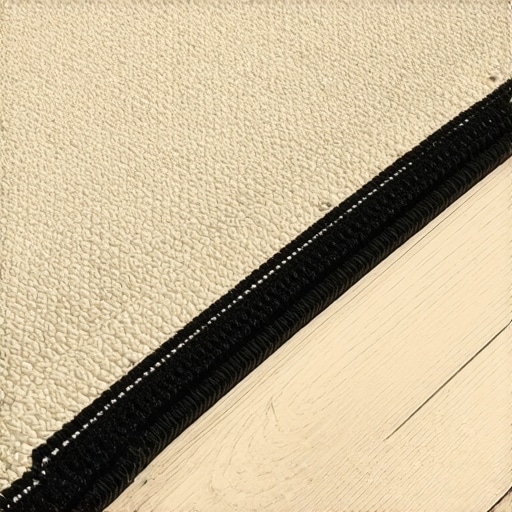
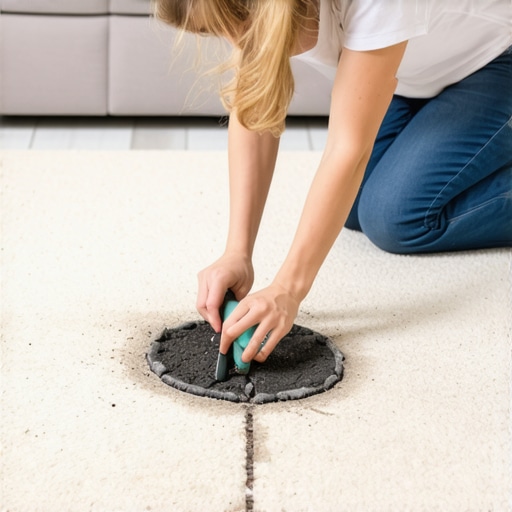
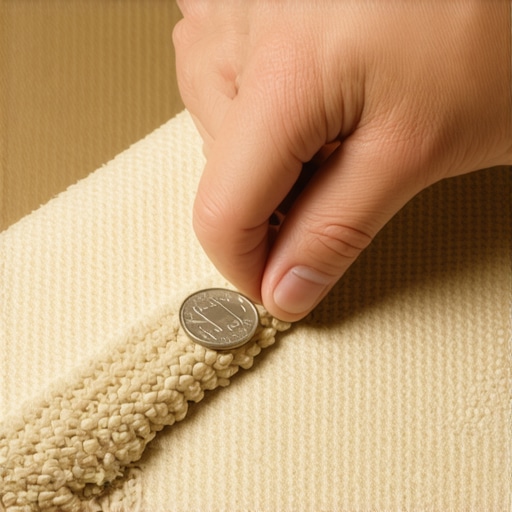
The precision of the seam cut is the difference between a professional blend and a failed inspection. A gap of just 1/8 inch at the seam can create a dark line due to the shadow of the fibers or a white line if the backing is exposed. I use a row cutter to follow the natural grain of the carpet, ensuring that I am not cutting through the loops or the pile. If you are blending two different dye lots, the seam is your transition point. You want to place these seams in areas of low foot traffic or under furniture if possible, but in a large open space, that is a luxury you rarely have. This is where the chemistry of the adhesive comes in. A high-quality seam sealer must be applied to both edges to prevent fraying and to lock the fibers in place. If the fibers at the seam begin to bloom or unravel, the dye lot difference will be magnified tenfold.
“Carpet shall be installed in accordance with the manufacturer’s instructions and the CRI 104 standard for commercial installations.” – Carpet and Rug Institute
Navigating the metamerism trap
Metamerism is the optical phenomenon where two colors appear to match under one light source but look different under another. This is the primary cause of dye lot complaints in large rooms with mixed lighting sources such as LED and natural sunlight. You might look at your rolls in the warehouse under fluorescent tubes and think they are a perfect match. Then you get them into a high-end residential living room with 2700K warm LEDs and suddenly one roll looks pink and the other looks grey. This happens because the spectral power distribution of the light interacts with the chemical pigments in the dye. To avoid this, you should always check the carpet samples and the actual rolls under the lighting that will be used in the finished space. It is a fundamental step that separates the masters from the amateurs.
Professional techniques for roll sequencing
Roll sequencing involves installing carpet rolls in the exact order they were manufactured to ensure the most gradual transition between dye batches. Manufacturers label their rolls with consecutive numbers for this exact reason, as the color drift is usually linear throughout a production run. If you have rolls 101, 102, and 105, you do not put 105 between 101 and 102. You follow the sequence. In very large rooms, you can even stagger the seams so that they do not create a single long line across the floor. This breaks up the visual path and makes it harder for the brain to identify where one roll ends and another begins. It is an old school trick I learned from a guy who had been laying broadloom since the fifties. It works every time because it exploits how the human eye processes patterns and colors.
The structural role of underlayment
The choice of underlayment directly impacts how much the carpet pile will deflect and how light will reflect off the surface. A high-density rubber or frothed foam underlayment provides a firm foundation that prevents the carpet from “bottoming out” and changing its visual texture. While most people want the thickest underlayment, too much cushion actually causes the locking mechanisms on modern hybrid floors to snap and causes carpet to stretch excessively. For carpet, a pad that is too soft will allow the seam to flex every time someone walks over it. That flexing breaks down the latex backing and the seam sealer, leading to a visible gap. I prefer a high-density 8-pound pad for residential and even denser for commercial. It keeps the surface stable and ensures that the light hits the dye consistently across the entire expanse of the room.