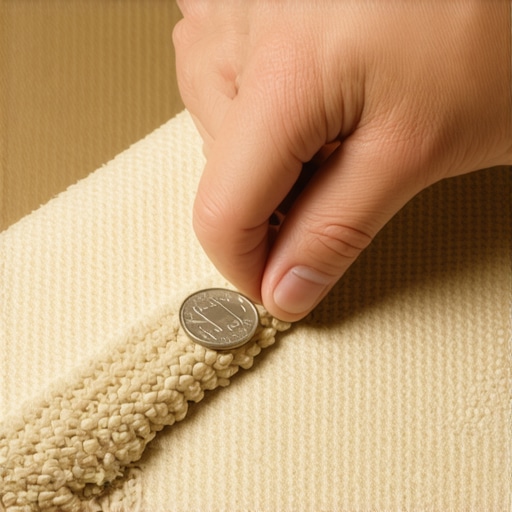
The ‘Dime Test’ for Checking Carpet Stair Treads for Proper Tension
Most guys skip the leveling compound. They think the underlayment will hide the dip. It won’t. I spent three days grinding concrete on a job last month just so the floor wouldn’t click like a castanet. That job taught me that shortcuts in the subfloor phase are just invitations for a lawsuit later. When it comes to a carpet install on stairs, the stakes are even higher. You are not just dealing with aesthetics. You are dealing with gravity and human safety. A loose carpet on a tread is a slip hazard waiting to happen. Most homeowners see a carpet install as a soft finish, but a professional sees it as a tensioned architectural system. If that tension fails, the system fails. This is why the dime test is the gold standard for every master installer who cares about his reputation.
The subfloor secret that ruins every carpet job
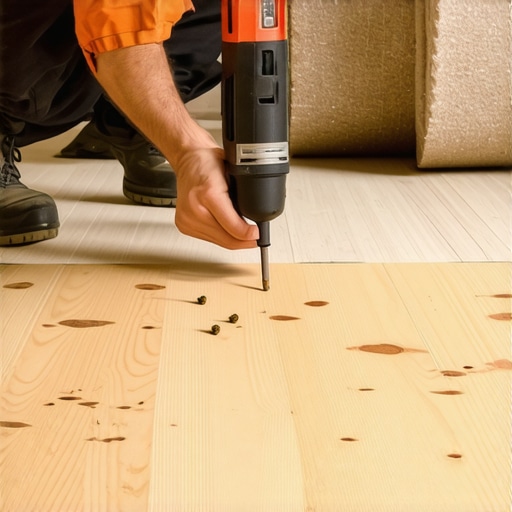
Floor leveling and structural integrity are the foundations of any high quality carpet install on staircases. If the subfloor is uneven or the treads are not perfectly level, the carpet will never achieve the proper tension required for safety. Professionals use floor leveling compounds to ensure that every stair tread provides a flat, stable surface for the padding and carpet to rest upon. This prevents the carpet from shifting or bunching over time. I have seen countless jobs where the installer ignored a 1/8 inch dip in the plywood. Within six months, the carpet had stretched into that void. It created a pocket of loose fabric that eventually caused a trip. You have to treat the stairs like a machine. Every part must be calibrated. This includes checking the moisture content of the wood stringers. If the wood is too wet, it will shrink as it dries. This pulls the tack strips away from their original position and kills your tension. I always carry a moisture meter. I do not care if the builder says the house is ready. I check it myself because it is my name on the warranty.
The physics of carpet tension on vertical rises
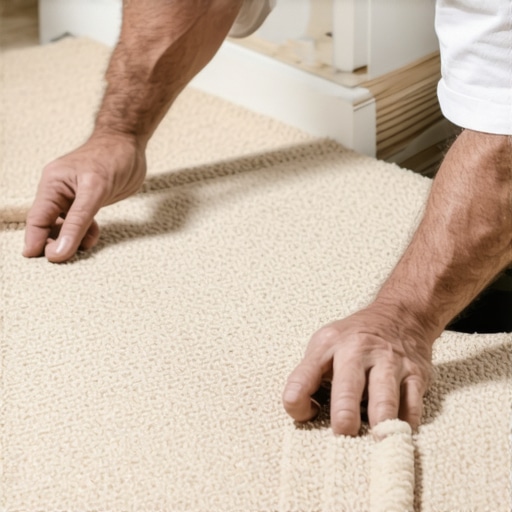
Carpet tension on stairs is a matter of calculating lateral force and shear resistance against the stair nosing and the tack strips. When a person walks down a flight of stairs, their weight pushes the carpet forward and down simultaneously. If the carpet is not tight, the fabric moves under the foot. This movement causes friction which wears out the carpet fibers and the padding prematurely. A properly tensioned stair tread should feel as solid as a hardwood floor. It should not have any give. We achieve this by using a power stretcher on the treads whenever possible, though most guys just use a knee kicker. The knee kicker is okay for small areas, but on a staircase, you need to drive that carpet into the pins of the tack strip until the backing is screaming. You are looking for a specific amount of stretch. Most synthetic backings require a one to two percent stretch in both directions to remain stable. If you under stretch, the carpet will bag. If you over stretch, you risk snapping the primary backing or pulling the tack strip right out of the riser. It is a delicate balance of force and finesse.
“A floor is only as good as the subfloor beneath it; deflection is the enemy of every joint.” – Master Flooring Axiom
How the dime test saves your ankles
The dime test is a simple but effective method to verify that carpet tension is sufficient to prevent tripping hazards on stair treads. To perform the test, you attempt to slide a dime between the carpet and the stair nosing at the point where the horizontal tread meets the vertical riser. If the dime slides in easily, the carpet is too loose and needs to be re-stretched or re-tucked. A successful test means the dime cannot penetrate the gap because the carpet is pulled so tight against the wood that there is no air space. This tightness ensures that when a foot lands on the edge of the step, the carpet does not roll or shift. This is especially vital on the nosing. The nosing is the most dangerous part of the stair. It is where most slips occur. If the carpet is loose here, it acts like a banana peel. I have seen people try to fix this by just putting more staples in. That is a hack move. Staples are not a substitute for tension. If you rely on staples, you are just masking a structural failure in your installation technique.
The chemistry of tack strip anchoring
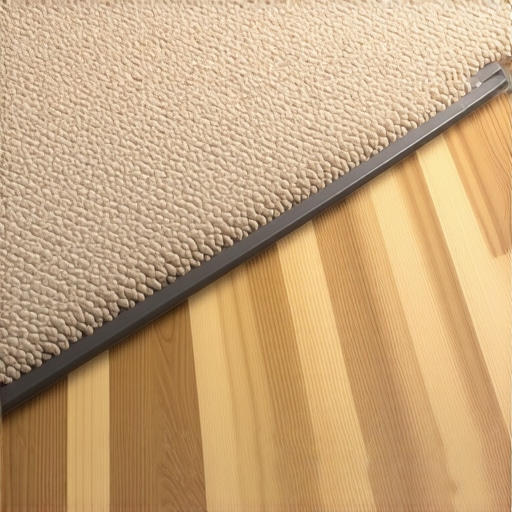
Tack strips for stairs are not the same as the ones you use in a bedroom. For a carpet install on stairs, you need commercial grade strips with more pins per linear foot. The adhesive bond of the nails holding the strip to the tread is the only thing keeping the carpet from flying off. On concrete stairs, we use a high strength epoxy or a construction adhesive in addition to masonry nails. The chemistry of the glue matters. You need an adhesive that stays slightly flexible so it does not crack under the vibration of foot traffic. If the glue is too brittle, the strip will eventually pop loose. When you are working on wood treads, you have to make sure you are hitting the structural meat of the wood. If you nail into a soft spot or a knot, the strip will pull. I always double up the strips on the back of the tread. One strip is never enough to hold the tension of a high quality plush or a heavy berber. You need that extra row of pins to bite into the backing and hold it fast while you are kicking the front edge over the nosing.
The 1/8 inch that ruins everything
Precision measurements are the difference between a master installer and a carpet layer who just wants to get paid and go home. If your padding is cut even 1/8 inch too long, it will overlap the tack strip. This prevents the carpet pins from fully engaging with the carpet backing. You will think the carpet is tight, but it is actually just floating on the pad. Eventually, the pad compresses, the carpet slips off the pins, and you have a loose tread. You have to be surgical. I use a fresh blade for every three steps. If the blade is dull, it tears the pad instead of cutting it. This creates lumps. Those lumps are felt through the carpet. On a laminate floor or a tile job in showers, you can see your mistakes immediately. With carpet, the mistakes are hidden for the first month. Then the customer calls you because the stairs look like a wrinkled mess. It is all about the prep. I spend more time with my utility knife and my straight edge than I do with the carpet itself. That is the secret to a job that lasts twenty years instead of twenty months.
| Feature | Standard Requirement | Master Class Spec |
|---|---|---|
| Tension Gap | Less than 1/4 inch | Zero (Dime Test Pass) |
| Pad Density | 6 lbs per cubic foot | 8 lbs to 10 lbs |
| Tack Strip Type | Standard C-Strip | Tri-tack or Architectural |
| Acclimation Time | 24 Hours | 48 to 72 Hours |
| Staple Frequency | Every 4 inches | Every 2 inches (hidden) |
Technical specifications for high traffic treads
High traffic staircases require carpet fibers with a high denier count and a twist level that can withstand compression without matting down. When we talk about molecular zooming in flooring, we are looking at the polymer chains in the nylon or polyester. Nylon 6,6 is my preferred choice for stairs. It has a tighter molecular structure that resists crushing. If you put a cheap polyester on stairs, the fibers will flatten within a year. No amount of tension will save a bad fiber choice. You also have to consider the wear layer of the backing. If the secondary backing is made of cheap jute or thin polypropylene, it will stretch out and lose its memory. You need a high density backing that wants to return to its original shape. This is why acclimation is so important. If the carpet is cold when you install it, it is stiff. Once the house warms up, the fibers relax and the tension drops. I never install carpet that has been sitting in a cold truck. It has to be at room temperature for at least two days before it touches the stairs.
- Verify subfloor moisture is below 12 percent before starting.
- Use floor leveling compound on any tread with more than 1/16 inch deflection.
- Install tack strips 1/2 inch away from the riser to allow for a deep tuck.
- Check the pad thickness to ensure it does not exceed the height of the tack strip pins.
- Perform the dime test on every single step before leaving the job site.
- Vacuum the stairs to remove any loose fibers and inspect for staple pops.
Moisture migration in stairwell framing
Moisture migration is a silent killer of carpet tension on stairs, especially in humid climates or near showers and bathrooms. When moisture enters the wood framing, the wood expands. In a stairwell, this expansion happens at different rates for the stringers, treads, and risers. This differential movement puts immense stress on the carpet installation. If you are installing carpet in a basement or a coastal home, you must use a vapor barrier or a moisture resistant pad. Without it, the pad acts like a sponge. It sucks up the humidity and transfers it to the carpet backing. This causes the backing to swell and lose its dimensional stability. I have seen beautiful wool carpets ruined because the installer did not account for the humidity coming off a nearby bathroom. You have to think about the environment. A floor is a living thing in a sense. It reacts to the air around it. If you do not give it the right environment, it will fail you every time.
“Consistency in tension is the only path to longevity in soft surface mechanics.” – Master Flooring Axiom
The role of the power stretcher on vertical surfaces
Power stretching on stairs is a difficult task that most installers avoid because it requires specialized stair tools and more time. However, it is the only way to ensure proper tension that meets NWFA and CRI standards. A knee kicker can only provide so much force. It is limited by the strength of the installer’s leg. A power stretcher uses mechanical advantage to pull the carpet to its absolute limit. When I work on a high end custom home, I use a mini stretcher for every tread. I lock the head on the nosing and pull the carpet toward the riser. This ensures that the fabric is tight across the entire surface of the step. It eliminates the micro-bubbles that eventually turn into large wrinkles. If an installer shows up with only a knee kicker, he is not doing a professional job. He is doing a fast job. There is a huge difference. The dime test will catch a guy who only uses a kicker. The carpet might look okay, but the dime will slide right in because the mechanical tension is not deep enough into the backing.
The future of stair installation technology
Innovative adhesives and synthetic backings are changing how we approach the carpet install process. We are now seeing backings that are virtually non-stretch, meaning they require zero acclimation and stay perfectly flat. However, these still require proper tension at the perimeter to stay in place. Even with new tech, the old school rules apply. You still need a flat subfloor. You still need floor leveling. You still need to understand the physics of the nosing. I tell the young guys that the tools might change, but gravity does not. A person’s foot is always going to hit that stair with a certain amount of force. If your carpet installation cannot handle that force, you have failed. The dime test is a bridge between the old school craftsmanship and new school materials. It is a universal constant that proves the job was done right. No matter if it is laminate in the hallway or carpet on the stairs, the quality is in the details you cannot see. It is in the tension. It is in the prep. It is in the refusal to accept anything less than perfection.