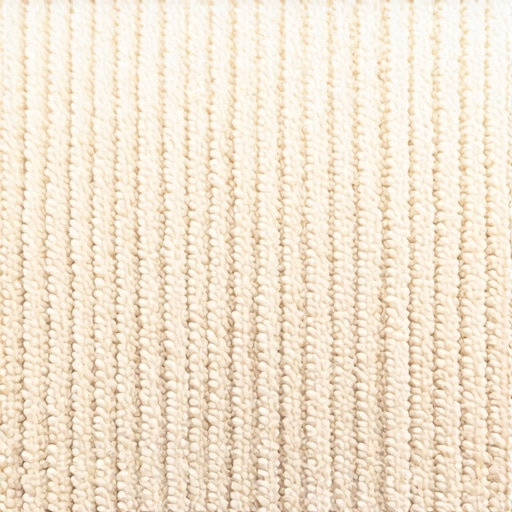
Why Your New Carpet Has Visible Rows of Tiny Holes
Why Your New Carpet Has Visible Rows of Tiny Holes
I have spent twenty five years with my knees on the ground and sawdust under my fingernails. I have seen the way light hits a floor at four in the afternoon and reveals every single sin of a lazy installer. Most guys skip the leveling compound. They think the underlayment will hide the dip. It won’t. I spent three days grinding concrete on a job last month just so the floor wouldn’t click like a castanet. When you lay carpet over a bad slab, every ridge pushes up and stretches those fibers apart until you see the backing. You see those tiny holes in neat rows? That is not just a cosmetic fluke. That is the physical reality of a structural system under stress. Flooring is not a decoration, it is an engineering challenge that starts three inches below the surface you walk on. If you see holes, someone ignored the physics of the textile or the geometry of the subfloor.
The manufacturing needle lines in your new carpet
Visible rows of tiny holes in new carpet often originate from the tufting process where hundreds of needles punch yarn into a primary backing. If the machine tension is calibrated incorrectly or if the yarn denier is too low, these needle punch points remain open and visible to the naked eye after the secondary backing is applied. This is the ghost of the factory. Inside a carpet mill, a tufting machine looks like a giant sewing machine with over a thousand needles working in synchronization. These needles penetrate a woven polypropylene primary backing at speeds that would make your head spin. When the needle pulls back, it leaves a hole. Normally, the SBR latex coating and the secondary action-back material seal these voids. However, if the latex is too thin or the temperature in the curing oven was off by five degrees, those holes do not close. They become permanent architectural features of your floor. I have seen rolls of carpet come off the truck where the needle lines were so pronounced you could use them as a ruler. This is why checking the mil-thickness of the backing is just as important as checking the pile height.
Why stretching physics create visible gaps
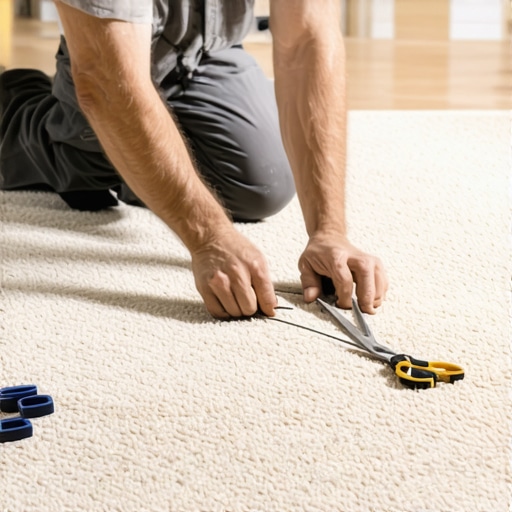
Mechanical stretching tools like the power stretcher use metal teeth to grip the carpet backing and pull it toward the walls. If these teeth are set too deep or if the carpet is overstretched, the primary backing fibers separate and create small visible holes or elongated gaps between the tufted rows of yarn. A power stretcher is a massive piece of equipment, not the little knee kicker you see the DIY guys using at the big box stores. It uses a lever action to apply hundreds of pounds of tension across the room. If an installer does not adjust the pin depth on the stretcher head, those steel pins bite right through the face fibers and into the structural backing. When they pull, they aren’t just moving the carpet, they are stretching the molecular bonds of the polypropylene. This creates a zipper effect. You will see a row of tiny holes right where the stretcher head was placed. It is a sign of an installer who was in a hurry and did not respect the tensile strength of the material. I tell my apprentices that the carpet should be tight enough to bounce a quarter, but not so tight that you are tearing the fabric apart at the molecular level.
“A floor is only as good as the subfloor beneath it; deflection is the enemy of every joint.” – Master Flooring Axiom
The subfloor secret that reveals every flaw
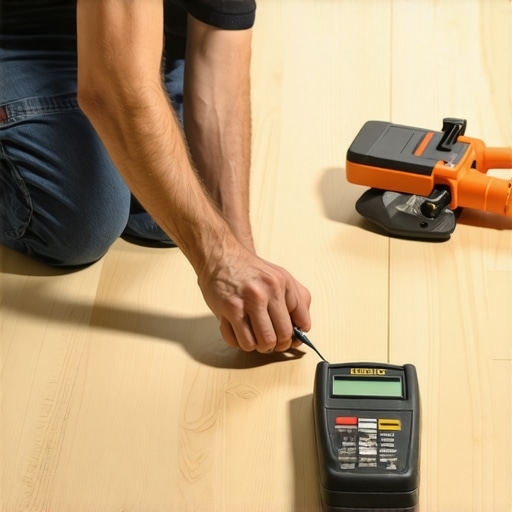
Subfloor leveling is the most overlooked aspect of carpet installation because people assume the padding will mask imperfections. In reality, a high spot in a concrete slab or a plywood joint causes the carpet backing to peak, which opens the yarn rows and makes manufacturing needle holes or stretching marks significantly more apparent. Think about the physics of a curve. When you take a piece of carpet and bend it over a hump in the floor, the top surface has to travel a longer distance than the bottom surface. This is basic geometry. That stretching force pulls the tufts of yarn away from each other. If there was a tiny needle hole from the factory, that hump just turned it into a crater. This is why floor leveling is not optional. I carry a ten foot straight edge on every job. If I see a gap larger than an eighth of an inch, the bags of self-leveling compound come out. I have seen laminate jobs fail and carpet jobs look like a topographical map because the guy before me was too lazy to mix a bucket of leveler. You cannot hide a bad subfloor with a thick pad. In fact, a pad that is too soft will actually make the holes more visible because it allows the carpet to deflect even more under foot traffic.
The chemistry of backing and why it fails
The chemical bond between the primary and secondary backing of a carpet relies on a specific weight of SBR latex adhesive. If this adhesive is brittle or applied too sparingly, the backing will delaminate when stretched, causing the structural holes in the weave to expand and become visible through the face fibers. Styrene-Butadiene Rubber, or SBR, is the glue that holds the carpet world together. It is a synthetic rubber that provides the stiffness and memory to the floor. If a manufacturer tries to save a few cents by loading the latex with calcium carbonate filler, the glue becomes brittle. When I hook that carpet onto a tack strip and start my stretch, I can hear the glue cracking. That sound is the death of the floor. Once that bond breaks, the holes where the needles went through the primary backing are no longer supported. They stretch out into ovals. You will see these rows of holes most often in hallways where the carpet is stretched long ways. It is a chemistry failure that looks like an installation error, but a real pro knows the difference by the way the backing feels in his hands.
| Carpet Component | Technical Function | Impact on Hole Visibility |
|---|---|---|
| Primary Backing | Structural weave for yarn | Determines initial needle hole size |
| SBR Latex | Chemical adhesive layer | Prevents holes from widening under tension |
| Secondary Backing | Dimensional stability | Masks manufacturing voids from the underside |
| Yarn Denier | Fiber thickness and weight | High denier masks holes through density |
The myth of the waterproof pad
While many homeowners insist on waterproof padding to protect against spills, these non-porous surfaces can actually highlight carpet flaws by reflecting light differently and preventing the carpet from seating properly against the subfloor. Everyone wants the fancy pad with the blue plastic film on top. They think it will save them from a pet accident. What they don’t realize is that the plastic film creates a friction barrier. The carpet backing slides across it instead of gripping it. This allows the carpet to shift and bunch, which puts uneven pressure on the seams and the stretching points. When the carpet shifts, those needle holes we talked about start to show up in areas of high traffic. I have seen carpet in showers in the seventies, and it was a disaster then, and trying to turn your whole house into a waterproof zone with plastic pads is a recipe for visible rows of holes. The carpet needs to breathe and it needs to grip. If you want a waterproof floor, go buy some luxury vinyl plank and let me level your subfloor properly first. Carpet is a textile, and you have to treat it with the same care you would a fine suit.
The eighth inch rule for tack strips
Proper tack strip placement requires a gap of exactly one eighth of an inch from the baseboard to allow the carpet to be tucked and locked. If the strip is placed too far away, the carpet is not held under uniform tension, causing the weave to open and reveal the backing structure. The tack strip is a simple tool, a piece of plywood with sharp zinc pins poking up. But if you put it a half inch from the wall, you are asking for trouble. The tension of the stretch is not distributed evenly. This causes the carpet to pull harder on some pins than others. You will see a row of tiny holes following the line of the wall. That is the carpet literally tearing itself apart because it was not tucked and locked correctly. I see this all the time in new construction. The installers are paid by the yard and they move like lightning, throwing the strips down without a spacer. They miss the mark, and six months later the homeowner is wondering why their carpet looks like it is falling apart at the edges.
“Deflection in a subfloor is the silent killer of warranties and the primary cause of aesthetic fiber separation.” – Master Flooring Axiom
Checklist for a Hole Free Carpet Installation
- Verify the subfloor is level within 1/8 inch over a 10 foot span.
- Check the moisture emission rate of the concrete slab using a calcium chloride test.
- Ensure the power stretcher pin depth is adjusted to the specific thickness of the carpet pile.
- Inspect the carpet roll for manufacturing needle lines before the first cut is made.
- Confirm the use of a high density pad that does not exceed 7/16 inch thickness for residential installs.
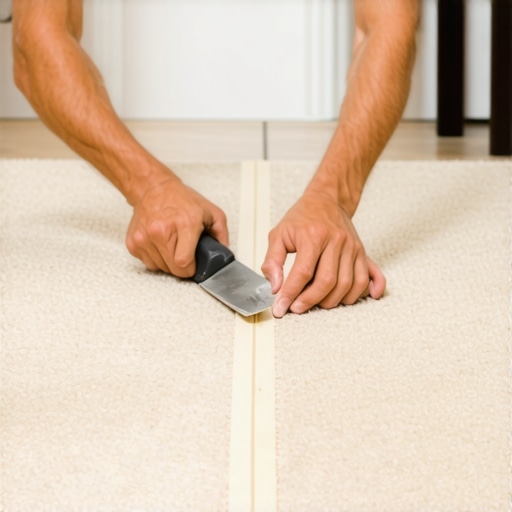
- Use a seam sealer on all cut edges to prevent the backing from unraveling and showing holes.
The ghost in the expansion gap
Expansion gaps at the perimeter of a room are vital for hard surfaces like laminate, but in carpet installations, improper tensioning near these gaps can cause the backing to distort and reveal the tufting rows. When I am installing laminate or hardwood, I am obsessed with the expansion gap. I leave a quarter inch or more so the floor can breathe. With carpet, the tension is the opposite. We are pulling toward the wall. If the subfloor has a massive gap at the drywall line, the tack strip has nothing to bite into. The wood splits, the pins lean, and the carpet backing stretches unevenly. This is where those rows of tiny holes come from. It is about the structural integrity of the perimeter. If you don’t have a solid base, you don’t have a floor. I have seen guys try to nail tack strips into the air because the subfloor was cut too short. They wonder why the carpet looks like a mess. It is because they didn’t take the time to fix the subfloor before they started the pretty work. You have to be a carpenter before you can be a floor layer.
Why your carpet clicks like a castanet
A clicking sound in a new carpet installation usually indicates that the subfloor is uneven and the carpet backing is slapping against a void in the slab or plywood. This movement repeatedly stresses the carpet fibers, eventually opening up visible holes in the backing. This is the ultimate sign of a failed job. You walk across the room and you hear a rhythmic clicking or popping. That is the sound of a hollow spot. Usually, it happens with laminate, but with a thin carpet and a cheap pad, you can hear the backing hitting the concrete. Every time you step on that spot, the carpet stretches and compresses. It is like bending a paperclip back and forth. Eventually, it breaks. Those tiny rows of holes you see are the first sign of that fatigue. The fibers are being pulled away from the latex bond. I tell homeowners that if the floor makes noise, it is moving, and if it is moving, it is dying. A good floor should be silent. It should be an extension of the house’s foundation, not a drum skin stretched over a hole. This is why I spend more time on my floor grinder than I do with a carpet knife. The prep is the job. The carpet is just the victory lap.