Why Your Carpet Seams Are Turning Black Along the Edges
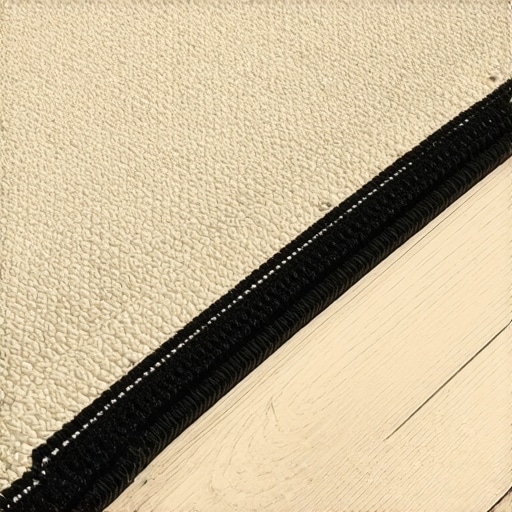
Most guys skip the leveling compound. They think the underlayment will hide the dip. It won’t. I spent three days grinding concrete on a job last month just so the floor wouldn’t click like a castanet. That job taught me that what happens beneath the surface determines everything that happens on top. When you see those ugly black lines appearing along the edges of your carpet or across specific seams, you are not looking at a cleaning problem. You are looking at a structural failure of the air seal within your home envelope. I have spent 25 years with a moisture meter and a power stretcher, and I can tell you that those black marks, often called filtration soiling, are the footprint of a house that cannot breathe correctly. You can scrub until your knuckles bleed, but unless you understand the physics of airflow and subfloor gaps, that soot will come back every single time.
The physics of filtration soiling in residential flooring
Filtration soiling occurs when air is forced through carpet fibers at the perimeter of a room or along seams, acting as a microscopic filter that traps carbon, soot, and dust. This phenomenon is driven by pressure differentials between rooms or between the subfloor and the living space. When your HVAC system kicks on, it creates a vacuum effect. If there are gaps in your subfloor or between the baseboard and the floor, the air will seek the path of least resistance. It rushes through those gaps, and your carpet acts as a high-efficiency particulate air filter. Because the carpet fibers are often synthetic, such as nylon or polyester, they carry a slight electrostatic charge that literally pulls the dark pollutants out of the air and bonds them to the fiber.
The airflow vacuum under your baseboards
The primary cause of black edges on carpet is the lack of a proper seal between the drywall and the subfloor. In most standard construction, there is a gap of about half an inch where the drywall stops before it hits the floor. If the installer did not use a high-quality sealant or if the carpet tack strip was placed too far from the wall, air will whistle through that gap. I have seen this in high-end builds and low-end apartments alike. The air carries microscopic particles of candle soot, cooking oils, and outdoor pollutants. As the air passes through the carpet to reach the wall cavity, the fibers catch the dirt. This is why the lines are always darkest right at the edge of the baseboard. It is a sign that your home is pulling air from the crawlspace or the wall voids instead of circulating it through the return vents.
“A floor is only as good as the subfloor beneath it; deflection is the enemy of every joint.” – Master Flooring Axiom
Why your subfloor is lying to you
Subfloor irregularities and unlevel slabs create air pockets that facilitate the movement of dust-laden air toward the carpet seams. If a concrete slab has a dip or if plywood sheets are not properly butted and glued, you create a subterranean highway for air. I always tell my apprentices that if you do not level the floor, you are building a bellows. Every time someone walks across the room, they are pumping air out of those gaps and through the carpet. This is especially true with floor leveling projects where the installer got lazy. If the leveling compound does not reach the very edge of the room or if it cracks due to improper mixing, you have created a new path for filtration soiling. The carbon particles in our air are so fine that they can pass through a crack the width of a human hair, but the carpet pile is dense enough to stop them right at the surface.
The 1/8 inch that ruins everything
Precision in carpet install and tack strip placement is the only way to prevent the air bypass that leads to edge darkening. Most installers want to slam the tack strip down an inch away from the wall to make it easier to tuck the carpet. That is a rookie mistake. The tack strip should be exactly one quarter of an inch from the baseboard, and the gully should be tight. If that gully is too wide, it creates a massive chimney for air to escape. When I am on a job, I make sure the subfloor is sealed with a bead of silicone or specialized acoustic sealant before the pad even touches the ground. If you skip that five-minute step, you are guaranteeing that the homeowner will have black rings around their room in two years. It is about the chemistry of the bond and the physics of the seal.
| Factor | Impact Level | Primary Cause | Prevention Method |
|---|---|---|---|
| Air Pressure | Critical | HVAC Imbalance | Seal subfloor gaps |
| Fiber Type | Moderate | Electrostatic Charge | Anti-static treatments |
| Subfloor Level | High | Structural Voids | Self-leveling compound |
| Humidity | High | Particle Bonding | Dehumidification |
The chemistry of carpet adhesives and carbon
The chemical composition of modern carpet fibers and the adhesives used in the backing can actually attract oily soot particles through a process called van der Waals forces. This is not just dirt sitting on a surface. At a molecular level, the pollutants are being pulled into the microscopic pits in the plastic of the fiber. Nylon is especially prone to this because of its hydrogen-bonded structure. When soot particles, which are often oily from kitchen grease or car exhaust, come into contact with these fibers, they create a permanent bond. This is why standard steam cleaning often fails to remove the black lines. You are not just dealing with loose dust. You are dealing with a chemical attraction that has been baked in by years of airflow. If you do not stop the air, you cannot stop the stain.
When showers and humidity attack
High humidity levels in areas near showers or bathrooms accelerate the darkening of carpet seams by making the fibers more receptive to airborne pollutants. Moisture in the air acts as a carrier. When you take a hot shower and the steam travels into the hallway, it increases the tackiness of the carpet fibers. The wet air also weighs down the soot particles, making them more likely to settle in the seams. I have seen hallways outside of master bathrooms where the carpet looks like it was marked with a charcoal stick. The humidity causes the wood subfloor to expand and contract, which often breaks the seal of any cheap caulk or tape used during the initial carpet install. It is a vicious cycle of expansion, moisture, and filtration.
Laminate transitions and the perimeter gap
While laminate flooring does not suffer from filtration soiling, the same air gaps that turn carpet black will cause laminate to fail through moisture intrusion or peaking. If you have a transition between laminate and carpet, that seam is a prime candidate for darkening. The laminate is a floating floor, meaning it needs an expansion gap. If that gap is not covered by a proper T-molding or if the underlayment is not taped correctly, the carpet side of that transition will turn black within months. The air is forced under the laminate and then escapes through the first soft surface it finds, which is the carpet. Most people think they can just throw a transition strip down and call it a day. They are wrong. You need to ensure the air cannot move under the planking.
“Thermal bridges and air bypasses are the hidden killers of interior finishes.” – Building Science Institute
The checklist for air seal perfection
- Seal the gap between the bottom of the drywall and the subfloor with silicone.
- Ensure the carpet pad is glued or stapled securely with no gaps at the seams.
- Use a high-quality, dense pad that restricts airflow better than cheap froth foam.
- Balance the HVAC system to ensure the house is not under a constant negative pressure.
- Install baseboards with a tight fit and caulk the top edge to prevent air bypass.
- Verify that all subfloor penetrations for plumbing or electrical are foamed shut.
The ghost in the expansion gap
The expansion gap required for hard surfaces is often the source of the air that ruins adjacent carpeted areas. Every time I see a flooring failure, it usually comes back to someone not respecting the gap. In the world of flooring, we talk about the gap as a necessary evil for expansion and contraction. But if that gap is open to the wall cavity, it becomes a straw. The house sucks air through that straw. If your carpet seams are turning black, go to a corner of the room, lift the edge of the carpet, and look at the subfloor. I bet you will find a gap where you can feel a draft. That draft is the ghost that is painting your carpet black. You have to kill the draft to save the floor.