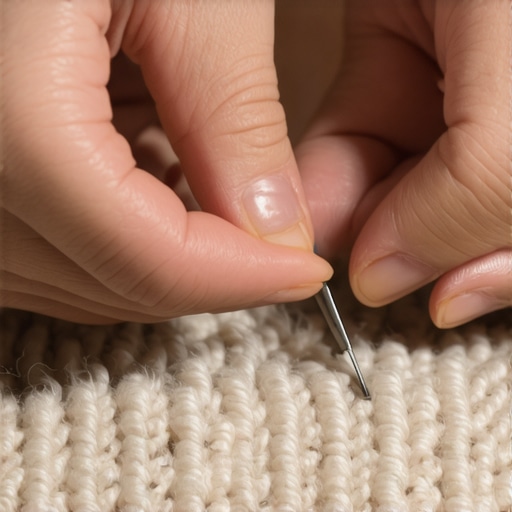
How to Repair a Snag in Loop Carpet Without a Specialist Kit
A snag in a loop carpet is not a cosmetic flaw. It is a structural failure of the textile architecture. I have spent twenty five years on my knees with a moisture meter and a level. I have seen thousand dollar rooms destroyed because someone treated a loose thread like a stray hair and pulled it. In the trade, we call that the zipper effect. You pull one loop and you unspool the mechanical integrity of the entire row. I once walked into a house where a homeowner tried to fix a snag in their Berber by pulling. They ended up with a six foot run of exposed backing that looked like a scar across their living room. Most guys skip the prep. They think they can just hide the mess. They are wrong. A floor is only as good as the subfloor beneath it. If you want to fix a loop carpet without a kit, you need to think like a surgeon and a chemist simultaneously.
Why your Berber carpet is unraveling like a cheap sweater
Loop carpet or Berber consists of continuous yarn strands looped through a primary backing and locked in place with a latex adhesive layer that bonds to a secondary backing. When a snag occurs, the mechanical tension of the weave is compromised. If you do not anchor that loop back into the adhesive layer, the surrounding loops will eventually lose their friction-fit. This is physics. Every time you walk across the carpet, your foot applies a shear force. That force travels along the yarn. Without a proper anchor, that force pulls the next loop through the backing. It is a slow motion collapse of the floor structure. You need to understand the molecular bond of the latex. Over time, heat and humidity degrade these adhesives. If your house has high moisture, the bond is already weak. This is why I always check the slab with a calcium chloride test before I even think about laying a pad. A damp subfloor is a carpet killer.
“A floor is only as good as the subfloor beneath it; deflection is the enemy of every joint.” – Master Flooring Axiom
The surgical tools for a permanent carpet fix
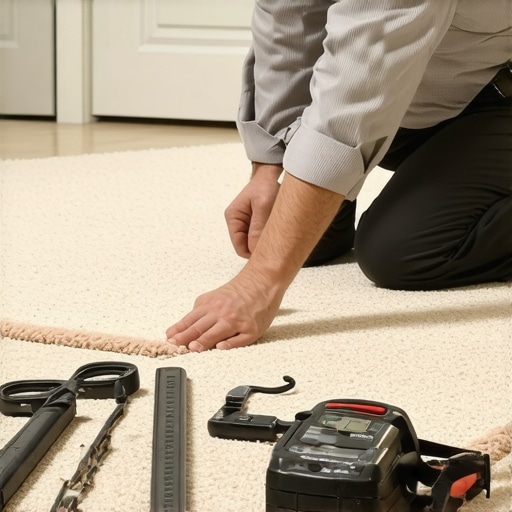
Common household items like sharp scissors, clear craft glue, and a knitting needle can replace a professional carpet repair kit if used with precision. Most people reach for the wrong tools. Do not use dull kitchen scissors. They crush the synthetic fibers instead of cutting them. You need a micro-point blade. You also need a structural adhesive. I prefer a clear drying contact cement or a high solids craft glue. Avoid wood glue or anything that dries brittle. Carpet is a dynamic surface. It moves. It breathes. A brittle glue will snap the first time someone steps on the repair. You are looking for a polymer that remains flexible after the solvent evaporates. You also need a tool to manipulate the fibers. A toothpick works, but a metal upholstery pin is better. You are acting as the loom. You are reinserting the yarn into the matrix. This is about restoring the tension that was lost when the snag was created.
The hidden danger of the unlevel subfloor
Floor leveling is often ignored when discussing carpet install projects, but it remains the most common reason for premature snags. If your subfloor has a dip of more than 1/8 inch over a ten foot span, the carpet is not sitting flat. It creates a pocket of air. When you walk over that pocket, the carpet flexes more than it was designed to. This stretching pulls at the loops. Eventually, one catches on a vacuum or a pet nail and pops. I spent three days grinding concrete on a job last month just so the floor would not click like a castanet and the carpet would not stretch into a series of ripples. People want to skip the floor leveling compound because it is messy. But if the subfloor is not flat, the carpet is basically a trampoline. You are just waiting for a mechanical failure. Whether it is laminate or loop carpet, the prep is eighty percent of the success. The rest is just finish work.
| Carpet Type | Janka Equivalent Stress | Snag Risk Factor | Repair Complexity |
|---|---|---|---|
| Berber Loop | High Tension | Critical | High |
| Cut Pile | Low Tension | Low | Minimal |
| Level Loop | Moderate | Medium | Moderate |
| Multi-Level Loop | Variable | High | High |
A step by step guide to the surgical reinsertion method
Carpet repair requires a steady hand and high quality adhesive to ensure the synthetic fibers bond correctly to the latex backing. Follow these steps carefully. Do not rush the curing process. If you walk on the repair too soon, the bond will fail and you will be back to square one.
- Identify the snag and resist the urge to pull. Even a small tug can start a run.
- Use your sharp scissors to trim the excess yarn. You want a clean edge, not a frayed one.
- Clear the area of dust and loose fibers using a vacuum with the beater bar turned off.
- Apply a tiny drop of flexible adhesive into the hole in the backing where the loop originated.
- Using your needle or toothpick, gently tuck the trimmed end of the yarn back into the adhesive.
- Hold the fiber in place for sixty seconds to allow the initial tack to take hold.
- Place a heavy object, like a piece of 1/4 inch steel or a heavy book, over the spot for twenty four hours.
The chemistry of the adhesive bond
The latex adhesive used in carpet manufacturing is a complex polymer emulsion designed to withstand thousands of pounds of pressure. When you introduce a repair glue, you are attempting a chemical weld. The glue must penetrate the primary backing and grab the secondary backing. This is why you cannot just smear glue on top. You have to get it into the guts of the floor. In a professional carpet install, we use hot melt tape for seams because it creates a thermal bond. For a snag, we are relying on solvent evaporation. The solvent in the glue slightly softens the existing latex, allowing the new material to fuse with the old. It is a molecular handshake. If the glue is too thick, it won’t penetrate. If it is too thin, it won’t have the solids content to hold the yarn. You need a medium viscosity. This is the difference between a repair that lasts a week and one that lasts the life of the floor. Most homeowners fail because they don’t understand the chemistry of the bond.
Why showers and moisture affect your carpet integrity
Showers and high moisture areas like bathrooms generate ambient humidity that can travel through the walls and settle into the carpet subfloor. I have seen more carpet failures in bedrooms adjacent to master suites because of steam than because of foot traffic. Moisture is the universal solvent. It slowly eats away at the latex bond that holds your loops in place. If your subfloor is concrete, it acts like a sponge. It pulls moisture from the ground and releases it into the carpet pad. This is why I always recommend a vapor barrier even for carpet. If the backing gets soft, the loops just pop out. You could be the most careful person in the world, but if your subfloor is wet, your carpet is going to snag. It is a systemic failure of the flooring assembly. When you fix a snag, you are treating the symptom. Always check your humidity levels. If they are over fifty percent, your adhesives are at risk. This is the structural reality that