Why Your Shower Bench Feels Unstable When You Sit on It
The smell of wet concrete and the fine grit of mortar on my hands define my workdays. I have spent thirty years fixing things that other people broke by taking shortcuts. When a homeowner calls me because their shower bench feels like it is about to tip over, I already know what I will find. Most guys skip the leveling compound. They think the underlayment will hide the dip. It won’t. I spent three days grinding concrete on a job last month just so the floor wouldn’t click like a castanet. That same logic applies to your shower. If the foundation is soft, the tile is just a pretty mask on a crumbling face. Structural engineering is not a suggestion. It is the law of the job site. Most shower benches fail because the installer treated them like furniture rather than a load-bearing part of the wall. A shower bench must support the weight of a person while resisting the constant expansion and contraction caused by steam and heat. When that seat shifts even a fraction of a millimeter, the grout cracks. Once the grout cracks, water finds the wood. Once water finds the wood, the game is over.
The physics of the wobble
A shower bench feels unstable because of structural deflection or inadequate fastener integration into the wall studs. Most residential framing relies on 2×4 Douglas Fir studs spaced 16 inches on center. If an installer simply nails a box to the wall without blocking, the weight of the user creates a lever effect. This physics problem puts immense pressure on the vertical tile joints. I once walked into a house where a custom bench was literally peeling away from the wall. The installer had used drywall screws. Those screws have zero shear strength. They snapped like dry twigs under the weight of a grown man. You need structural lag bolts or heavy-duty timber screws that penetrate at least two inches into the heart of the stud. Without this mechanical connection, you are just leaning a heavy rock against a piece of paper. The movement is microscopic at first. You might not see it, but you will feel it. That slight vibration when you sit down is the sound of thinset mortar crystals snapping. Once those bonds break, they never grow back. You are left with a floating slab that is held in place by nothing but hope and a bit of silicone. It is a disaster waiting to happen.
“A floor is only as good as the subfloor beneath it; deflection is the enemy of every joint.” – Master Flooring Axiom
Why your subfloor is lying to you
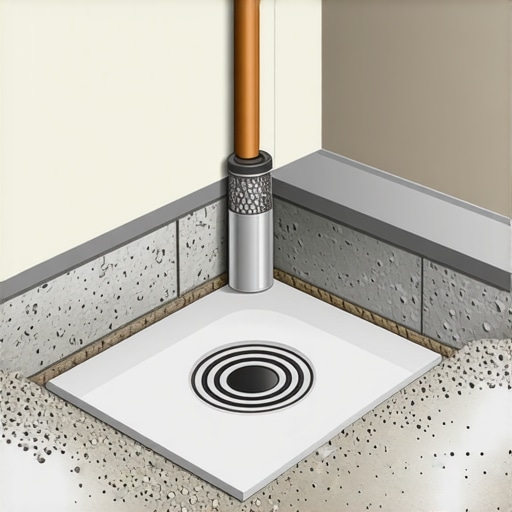
Subfloor instability beneath the shower pan often translates directly to the bench because the entire assembly moves as a single unit. If your house has a plywood subfloor, the moisture in the bathroom fluctuates constantly. This causes the wood fibers to swell and shrink. If the installer did not use a proper uncoupling membrane or a thick enough bed of mortar, the bench will move at a different rate than the wall. This is what we call differential movement. I have seen laminate floors buckle in the hallway for the same reason. People think floor leveling is just for aesthetics. It is not. It is about creating a monolithic slab that can handle the weight of the world. In a shower, the bench is an extension of that floor. If the floor is dipping 1/8 of an inch over four feet, that bench is starting on a tilt. Over time, gravity wins. The wood framing inside the bench begins to compress. If it is built from standard 2x4s without kiln-dried precision, the wood will lose moisture and shrink in the first year. That 1.5 inch wide stud becomes 1.4 inches. That tiny gap is enough to make the seat feel like a trampoline. You need to use materials that do not care about water. Foam-core benches from reputable manufacturers are popular now, but they still require a rock-solid backing. If you glue foam to a wobbly wall, you get a wobbly seat. There is no magic glue that fixes bad carpentry.
The chemical bond of modified thinset
Thin-set mortar is a complex chemical mixture designed to create a mechanical and chemical lock between the tile and the substrate. When we talk about polymer-modified thinset, we are talking about long-chain molecules that wrap around the microscopic pores of the tile. This creates a flexible bond. However, this bond has a limit. If the bench framing moves more than L/360, which is the industry standard for deflection, the thinset will fail. Think about the chemistry. Portland cement grows crystals as it cures. These crystals lock into the cement board. If you sit on a bench and it moves, you are shearing those crystals. It is like breaking a thousand tiny glass needles. Once they are broken, the tile is loose. No amount of regrouting will fix it. You have to pull the tile, address the framing, and start over. I see this often in quick carpet install jobs where the contractor tries to do a shower on the side. They use the wrong adhesive. They use mastic. Mastic is basically organic glue. In a wet environment, it turns back into mush. It smells like rotting food and has the structural integrity of peanut butter. You must use a high-quality ANSI 118.11 or 118.15 mortar. This is the only way to ensure the bench stays where you put it.
Comparison of shower bench support methods
| Support Method | Weight Capacity | Moisture Resistance | Complexity |
|---|---|---|---|
| Solid Masonry Block | High | Excellent | High |
| Wood Frame with Blocking | Medium | Moderate | Medium |
| High-Density Foam Core | Low to Medium | Excellent | Low |
| Suspended Steel Brackets | High | High | High |
The 1/8 inch that ruins everything
Precision is the difference between a bench that lasts fifty years and one that fails in five months. When I check a bench, I am looking for a slope of exactly 1/4 inch per foot toward the drain. If the bench is level, water pools. If the bench is sloped too far, you feel like you are sliding off. This affects your perception of stability. If your brain thinks you are falling, the bench feels unstable even if it is bolted to the earth. Most installers eyeball the slope. That is a mistake. I use digital levels. I want to see 2.1 degrees of pitch. Furthermore, the expansion gap at the perimeter is essential. You cannot jam tile tight against the wall. You need a 1/8 inch gap filled with 100 percent silicone sealant. Grout is rigid. Silicone is flexible. If the bench expands and the joint is grout, the grout will explode. This creates a path for water to enter the framing. In a place like Houston or Florida, the humidity stays high. The wood inside your walls is constantly sucking in that moisture. It expands. If you did not leave that 1/8 inch gap, the bench will literally push itself away from the wall. I have seen tiles pop off the face of a bench like toasted bread because there was no room for movement. It is a mechanical failure caused by a lack of understanding of thermal expansion.
“Deflection at the substrate must not exceed L/360 under all live and dead loads.” – TCNA Handbook Standards
Checklist for a rock-solid shower seat
- Install horizontal 2×6 blocking between studs at the bench height.
- Use stainless steel fasteners to prevent rust jacking over time.
- Apply a liquid-applied waterproofing membrane in at least two coats.
- Verify that the subfloor under the shower pan is reinforced to handle the extra dead load.
- Check the pitch with a level to ensure exactly 1/4 inch slope per foot.
- Ensure 95 percent thinset coverage on the underside of the seat tile.
Regional climate impacts on structural integrity
The climate where you live dictates how you build. If you are in the desert of Phoenix, the wood framing is bone dry when you build. The moment you start taking hot showers, that wood is going to react violently to the sudden moisture. In the Pacific Northwest, the wood is often damp before it even gets into the house. As the house dries out, the framing shrinks. This is why you see gaps in baseboards and laminate floors. For a shower bench, this means you must use engineered materials or metal studs if you want absolute stability. Metal does not shrink. It does not rot. It does not care if the humidity is ten percent or ninety percent. If I am building a high-end shower in a climate with extreme seasonal swings, I am using a suspended stainless steel frame. It is more expensive. It is harder to install. But it will never wobble. It will never crack. It will be there long after the rest of the house has settled into the dirt. A floor is a performance surface. A bench is a performance surface. Treat them with the respect they deserve or prepare to pay me to fix them later.