Why Your Shower Seat Is Collecting Water and How to Fix the Pitch
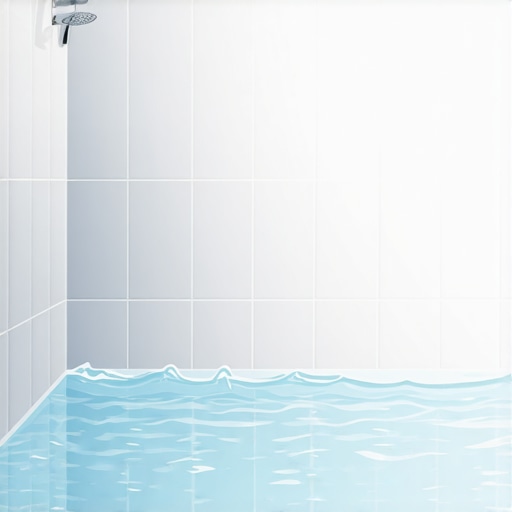
I spent three days grinding concrete on a job last month just so the floor wouldn’t click like a castanet. Most guys skip the leveling compound. They think the underlayment will hide the dip. It won’t. I have seen the same corner-cutting in showers for twenty-five years. I once walked into a master suite where the homeowner spent ten thousand dollars on Carrera marble only to have the shower seat become a stagnant pond. The installer built the bench perfectly level. In the world of finish carpentry, level is a virtue. In the world of wet-area engineering, level is a failure. If that seat does not have a positive pitch toward the drain, you are not building a shower, you are building a petri dish. Surface tension is a physical reality that tile cannot overcome on its own. Water needs an invitation to leave, and that invitation is gravity.
The physics of a failing slope
A shower seat collects water because the gravitational potential energy is neutralized by a zero-degree horizontal plane. To fix the pitch, the surface must be reconstructed with a minimum slope of one quarter inch per foot toward the drain assembly. This ensures that capillary action and surface tension cannot keep water trapped on the tile or within the grout joints.
When water hits a flat surface, it stays there because of a phenomenon called hydrogen bonding. The molecules cling to each other and to the surface of your tile. In a shower, this standing water is a magnet for soap scum and skin cells. If your seat is perfectly level, the water has no reason to move. It will sit until it evaporates, leaving behind mineral deposits that eat away at your sealer. If the seat is pitched backward toward the wall, you have a structural disaster. Water will migrate into the wall transition, find a pinhole in the silicone, and begin rotting the 2×4 framing. I have seen benches where the plywood underneath looked like wet cardboard because the installer didn’t understand the 1/8 inch rule. You need that slight angle. It is not optional.
“A floor is only as good as the subfloor beneath it; deflection is the enemy of every joint.” – Master Flooring Axiom
Why your subfloor is lying to you
Subfloor integrity is the foundation of any wet-area installation because any deflection in the wood or concrete will translate directly to the finished tile surface. If the subfloor is not rigid to an L over 360 standard, the pitch on your shower seat will eventually shift or the grout will crack.
I see it in every laminate or carpet install where the guy thinks he can just throw down some padding and call it a day. It does not work that way. In a shower, your subfloor is the boss. If you are building a bench out of wood, you are already starting from a point of weakness. Wood moves. It breathes. It expands when the humidity hits ninety percent. If you didn’t use a high-density foam core or a properly reinforced mortar bed, that seat is going to move. Even a move of a few millimeters can ruin the pitch. I always tell homeowners that floor leveling is not just for the main floor. It starts in the shower pan. If the foundation is out of whack, the water will find the low spot. Water is the most honest inspector in the world. It will find your mistake every single time.
| Material Type | Moisture Resistance | Expansion Coefficient | Typical Pitch Reliability |
|---|---|---|---|
| Plywood Frame | Low | High | Poor |
| High-Density EPS Foam | High | Zero | Excellent |
| Solid Concrete Block | Medium | Low | Good |
| Cement Backer Board | Medium | Moderate | Fair |
The bond of modified thin-set
Modified thin-set adhesives use polymer additives to create a chemical bridge between the substrate and the tile which is vital for maintaining a pitched surface. These polymers allow the mortar to retain its shape and bond strength even when applied in the slightly wedge-shaped layer required to create a slope on a flat bench.
You cannot just use cheap mud. If you are trying to fix a pitch by