Why Your Shower Grout Is Falling Out in Chunks
Why Your Shower Grout Is Falling Out in Chunks
I spent three days grinding concrete on a job last month just so the floor wouldn’t click like a castanet. Most guys skip the leveling compound because it is messy and expensive. They think the underlayment or the grout will hide the dip. It won’t. I walked into a master bath last Tuesday where the homeowner was literally vacuuming up his shower floor. The grout was coming out in gray chunks the size of gravel. He thought he bought a bad batch of material. He didn’t. He bought a bad subfloor preparation. Most people treat tile like a sticker you just slap on a wall. It is actually a rigid crystalline structure bonded to a moving wooden or concrete substrate. When those two things fight, the grout always loses. I smell like thin-set and damp oak dust most days. I have seen every shortcut in the book. If your grout is failing, it is not a cosmetic glitch. It is a structural SOS signal. You are witnessing the mechanical failure of a system that was never stabilized from the bottom up.
The hidden movement of the shower floor
Subfloor deflection and structural movement represent the primary reasons for grout failure in modern showers. When the joists under your bathroom floor flex beyond the L/360 standard, the tile assembly undergoes mechanical stress that fractures the cementitious bond of the grout joints. This movement creates micro-cracks that eventually lead to chunking. You can’t fix a moving floor with a topical sealer. I see guys try to caulk over it. That is a joke. If the plywood under your feet is bouncing like a trampoline, that rigid grout has nowhere to go but out. You need to understand the physics of deflection. The TCNA is very clear about this. If your subfloor is 5/8 inch OSB, you are asking for a disaster. You need a minimum of 1 and 1/4 inches of total subfloor thickness for a stable tile installation. I have spent years explaining to architects that 16-inch on-center joists are often not enough for heavy natural stone. The weight alone causes a sag that the grout cannot accommodate. When you step on a tile that is sitting over a void or a flexible spot, you are applying hundreds of pounds of pressure to a tiny edge. The grout is the weakest link. It snaps. It turns to dust. It falls out. It is physics, not bad luck.
“A floor is only as good as the subfloor beneath it; deflection is the enemy of every joint.” – Master Flooring Axiom
The chemistry of a botched mix ratio
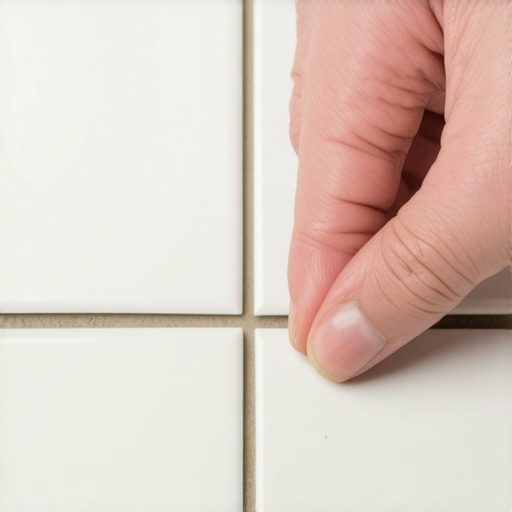
Improper water ratios during the mixing process create a weak crystalline matrix in cement-based grout. If an installer adds too much water to make the grout easier to spread, they are essentially diluting the polymers and causing evaporative voids. These microscopic holes leave the grout brittle and prone to crumbling under pressure. I see this on every budget job. The guy wants to move fast. He splashes water in a bucket without measuring. He whips it up with a high-speed drill, which introduces air bubbles. Air is the enemy of density. When that grout dries, it is basically a sponge. You can crush it with a fingernail. You need a peanut butter consistency. If it is runny like a milkshake, it is garbage. I use a margin trowel to check the slump. If it slides off the trowel too fast, I dump the bucket. I don’t care if it costs me twenty bucks. It saves me a five-thousand-dollar callback. This chemical failure is often called “soft grout.” It looks fine for a month. Then the first time you scrub it, the top layer peels off. Then the chunks start to move. You cannot save soft grout. You have to scrape it out and start over. It is a nightmare for your knees and your wallet.
| Grout Type | Flexibility Rating | Moisture Resistance | Best Use Case |
|---|---|---|---|
| Sanded Grout | Low | Moderate | Large joints over 1/8 inch |
| Unsanded Grout | Very Low | Moderate | Wall tiles and tight joints |
| Epoxy Grout | High | High | Steam showers and high traffic |
| High-Performance Cement | Moderate | High | General residential showers |
The ghost in the expansion gap
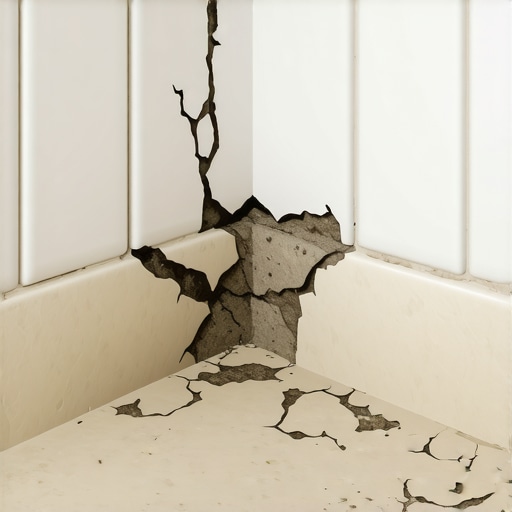
Perimeter expansion gaps are often ignored by inexperienced installers who fill change-of-plane joints with hard grout instead of flexible sealant. When walls and floors meet, they expand at different rates due to thermal changes and structural settling. Without a silicone-based buffer, the rigid grout will crack and fall out. I see this in every corner of every shower. People think grout is a glue. It isn’t. It is a filler. You need a 100 percent silicone caulk in those corners. If the guy used grout where the wall hits the floor, he failed his apprenticeship. It is a basic rule. Changes in plane require movement joints. If you don’t have them, the house will move a millimeter and your grout will shatter like glass. I have walked onto jobs where the installer grouted right up against the tub. Within six months, the vibration of a person stepping into the tub pops that grout right out. It is predictable. It is avoidable. You need to leave a 1/8 inch gap at every corner and fill it with color-matched sealant. Hard grout in a corner is a death sentence for the aesthetics of your shower.
Waterproofing membranes and the false sense of security
Inadequate waterproofing systems allow moisture to saturate the substrate, causing swelling in plywood or cement board that ejects the grout from the joints. When the backing material behind the tile gets wet, it expands and pushes the tile assembly outward. This hydrostatic pressure is the silent killer of shower floors. I have pulled up tiles that looked fine on the surface only to find moldy, swollen mush underneath. You need a topical membrane like Schluter-Kerdi or a liquid-applied guard like RedGard. If you are relying on just the grout to keep the water out, you have already lost the war. Grout is porous. Water goes through it. That is why we have a pre-slope and a liner. If that liner is flat, the water sits there. It creates a swamp under your feet. That swamp rots the thin-set. Then the tiles start to tent. That is when the grout starts to chunk. It is a chain reaction of failure. Information gain is key here. Most people think grout is waterproof. It is actually a filter. It slows water down, but it does not stop it. Your waterproofing is what happens behind the tile, not in between it.
The 1/8 inch that ruins everything
Incorrect joint sizing relative to the tile type and grout variety leads to premature erosion and loss of adhesion. If you try to shove sanded grout into a 1/16 inch joint, the sand grains will bridge the gap and prevent the cement paste from reaching the bottom of the tile edge. This creates a hollow joint that collapses. I see homeowners wanting those tiny, invisible grout lines. That is fine if you use the right product. But if you use the wrong sand-to-cement ratio, you have no structural integrity. You need to back-butter your tiles. You need to ensure 95 percent coverage in wet areas. Most guys just spot bond with five dabs of mortar. That leaves huge air pockets behind the tile. When you step on that tile, it flexes into the air pocket. The grout can’t handle that flex. It snaps. It is simple engineering. You can’t support a bridge with toothpicks. You can’t support a tile with air. Every time you hear a hollow thud when you drop a shampoo bottle, you are looking at a future grout failure. It is only a matter of time before that tile moves enough to kick the grout out.
- Check subfloor deflection for L/360 compliance before laying a single tile.
- Verify 95 percent mortar coverage on all shower floor tiles to eliminate voids.
- Ensure a minimum of 24 hours of drying time for thin-set before grouting.
- Mix grout with a low-speed paddle to prevent air entrainment and bubbles.
- Use color-matched 100 percent silicone in all change-of-plane joints and corners.
- Confirm the moisture content of the subfloor is below 12 percent using a meter.
“The presence of moisture within the substrate is the single most common cause of installation failure.” – TCNA Handbook for Ceramic, Glass, and Stone Tile Installation
The molecular reality of hydration and curing
Hydration is a chemical reaction, not just a drying process, and if the tile or substrate sucks the moisture out of the grout too fast, the chemical bond will never form. This is why porous tiles like terracotta or natural stone must be sealed or dampened before grouting. If the tile is thirsty, it steals the water the grout needs to cure. You end up with a dusty, chalky mess. I have seen guys grout a dry marble floor in a 90-degree room. The grout turned to powder in an hour. You could blow it out with a fan. You have to control the environment. You have to understand that cement needs water to grow crystals. If you stop that growth, you have no strength. I use a damp sponge to keep the joints hydrated if the room is too hot. It is about chemistry. It is about patience. People want a shower they can use in twelve hours. I tell them to wait three days. They hate it. Then they see their neighbor’s grout falling out and they thank me. Cheap, fast, or good. Pick two. I don’t do cheap and I don’t do fast. I do floors that last until the house falls down. The molecular structure of a well-cured grout joint is dense and interlocked. A rushed joint is a pile of loose dust held together by habit and hope. Hope is not a construction strategy.
Why your subfloor is lying to you
Substrate contamination from drywall dust, paint overspray, or adhesive residue prevents the mortar from creating a permanent mechanical lock with the floor. If the thin-set doesn’t stick to the subfloor, the tile will delaminate and the grout will shatter. I see this on new construction constantly. The drywall guys come in and coat the floor in white dust. The tile guy comes in and just spreads thin-set over it. That dust acts as a bond breaker. You are essentially tiling over a layer of flour. Within a year, the whole floor is clicking. The homeowner thinks the grout is the problem. No, the bond is the problem. You need to vacuum and damp-mop that substrate until it is pristine. I have spent hours with a scraper getting old carpet glue off a slab. It is the most boring work in the world. It is also the most important. If you don’t have a clean bond, you don’t have a floor. You have a puzzle that is falling apart. The grout is just the first part of the puzzle to show the damage. By the time the chunks start falling out, the tiles are already loose. You can’t just regrout it. You have to pull it up and do it right. Anything else is just a band-aid on a broken leg.