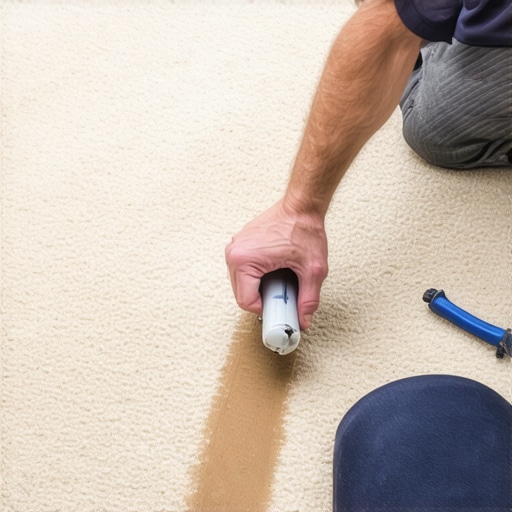
The Secret Chalk Mark That Reveals If Your Carpet Was Properly Stretched
I have spent three decades on my hands and knees with a moisture meter and a level. I have smelled enough floor wax and oak dust to fill a cathedral. Most homeowners think a carpet install is just about picking a color and watching a guy throw it down. It is not. It is a structural engineering challenge. I once walked into a house where a five thousand dollar wide-plank walnut floor was cupping so bad it looked like a potato chip because the installer did not check the crawlspace humidity. That is the kind of failure that keeps me awake. If you want a floor that lasts, you have to look at the invisible physics. You have to look for the chalk mark. Most guys skip the leveling compound. They think the underlayment will hide the dip. It won’t. I spent three days grinding concrete on a job last month just so the floor wouldn’t click like a castanet. That is the difference between a floor and a performance surface. If your installer didn’t bring a power stretcher, he isn’t an installer. He is a guy with a hobby. I have seen the way laminate fails when it meets the moisture of showers or a bad subfloor. It is a slow motion train wreck of swelling fiberboard and mold. Let us talk about the truth of tension and the chemistry of what is under your feet.
The invisible tension that keeps your carpet flat
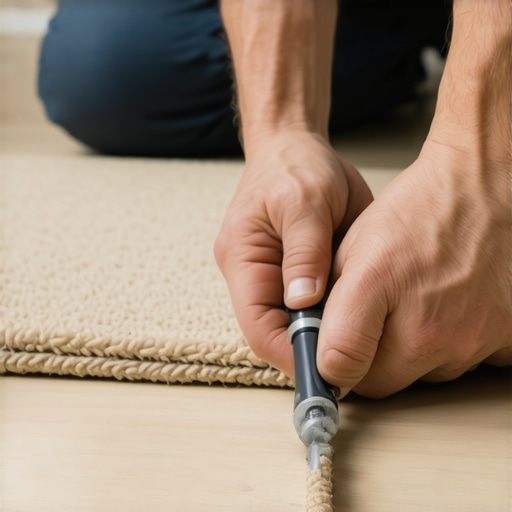
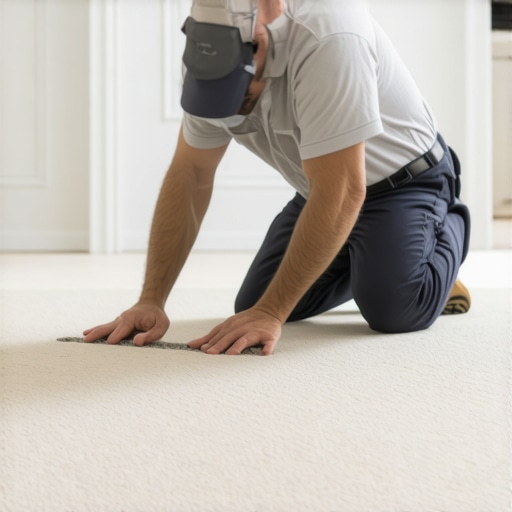
Carpet stretching requires a specific amount of mechanical force to ensure the synthetic latex and polypropylene backing remain under constant tension for the life of the product. Without this tension, the carpet will eventually relax and form ripples. These ripples are not just ugly. They cause the fibers to break down prematurely. A professional installer uses a chalk line to mark the subfloor exactly one percent of the room length away from the wall. If the carpet does not reach that mark when it is hooked to the tack strip, it is not stretched. It is just lying there. Most residential rooms need about an inch of stretch for every ten feet. If your installer is only using a knee kicker, he is only moving the surface. He is not stretching the backing. The knee kicker was designed for positioning and for tight spaces like closets or stairs. It was never intended to be the primary tool for a large room. A power stretcher uses a long pole and a geared head to push against the opposite wall. It provides thousands of pounds of pressure. This force pulls the secondary backing taut. It locks the carpet into the pins of the tack strip. If you do not see that chalk mark being used to measure the displacement, your carpet is going to fail within three years. It will buckle. It will shift. It will ruin your investment.
“A floor is only as good as the subfloor beneath it; deflection is the enemy of every joint.” – Master Flooring Axiom
The geometry of a perfect subfloor
Floor leveling is the process of removing vertical deviation from the concrete slab or plywood subfloor to ensure the final surface remains stable under load. If you have a dip that is deeper than one eighth of an inch over a ten foot span, your floor is going to move. This movement creates friction. In a carpeted room, it leads to uneven wear. In a laminate installation, it leads to broken locking mechanisms. I have seen countless homeowners buy the thickest underlayment possible thinking it will cushion the blow. It won’t. Too much cushion actually causes the locking mechanisms on laminate to snap under pressure. You need a flat surface, not a soft one. When we talk about floor leveling, we are talking about high compressive strength compounds. We use Portland cement based products that can withstand 4,000 PSI. We don’t just pour it and hope for the best. We use a primer to ensure the bond between the old slab and the new leveler is chemical, not just mechanical. If the bond fails, the leveler will crack and turn into sand under your floor. You will hear it every time you walk. It will sound like you are walking on sugar.
| Method | Tension Rating | Longevity | Subfloor Impact |
|---|---|---|---|
| Knee Kicker | Low (Manual) | 1-3 Years | Localized Stress |
| Power Stretcher | High (Mechanical) | 15+ Years | Uniform Distribution |
| Hand Tucking | Zero | 6 Months | Edge Fraying |
Why laminate and showers are a recipe for rot
Laminate flooring is essentially a high density fiberboard core with a photograph on top and a wear layer of aluminum oxide. It is incredibly durable against scratches but it is allergic to standing water. Putting laminate near showers is a gamble that you will eventually lose. Even if the manufacturer claims the product is waterproof, the core is still made of wood fibers. If water gets into the joints, the core will wick that moisture up like a sponge. This causes the edges to swell. Once the edges swell, they become proud of the rest of the floor. The wear layer then chips off because it is being hit by foot traffic at an angle it wasn’t designed for. If you must have the look of wood in a bathroom, you use Luxury Vinyl Plank or tile. You don’t use laminate. I have ripped up dozens of laminate floors in bathrooms that were only two years old. Underneath, it is always a black mess of mold and rotted subfloor. The calcium chloride test is the only way to know if your slab is dry enough for any floor. If the vapor emission rate is too high, you are essentially installing a floor over a swamp. The humidity will rise and destroy the adhesive or the core of the material.
“Proper stretching requires a power stretcher; knee kickers are for positioning only.” – CRI 104 Standard
The checklist for a floor that lasts forty years
Structural integrity begins with a comprehensive inspection of the site conditions including ambient humidity and subfloor moisture content before any material is unrolled. You cannot rush this. You cannot skip steps. If you want a floor that doesn’t creak, groan, or ripple, you follow the rules. This is not about aesthetics. It is about the chemistry of the bond and the physics of the stretch.
- Inspect tack strips for rust or looseness to ensure they can hold a mechanical stretch.
- Vacuum the subfloor until it is surgical to prevent crunching sounds under the pad.
- Measure moisture levels in the slab with a pinless meter to identify hot spots.
- Mark the one percent stretch line with chalk to verify the power stretcher’s work.
- Engage the power stretcher at 15 degree angles to ensure corner to corner tension.
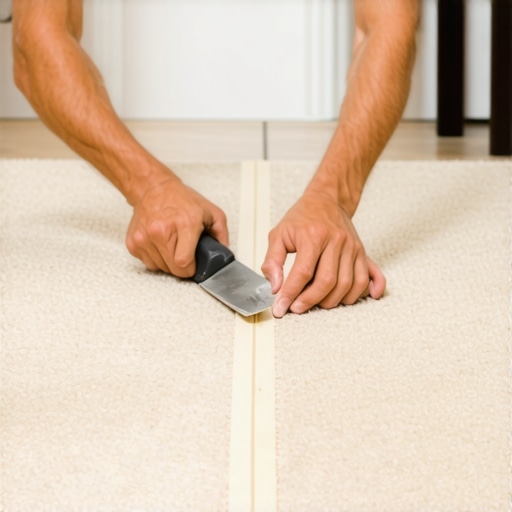
- Verify that the carpet transition bars are anchored into the subfloor, not just the carpet.
The ghost in the expansion gap
Expansion gaps are the perimeter voids left during laminate or hardwood installations to allow the material to grow and shrink with seasonal changes. Every floor is alive. It breathes. When the humidity goes up, the wood cells expand. If you butt the floor tight against the wall, it has nowhere to go but up. That is how you get a floor that bounces. You need a minimum of a quarter inch gap, though I prefer a half inch for wider rooms. Many installers get lazy. They don’t want to deal with the trim, so they push the floor tight. They think the baseboard will hide it. It might hide the gap, but it won’t stop the floor from buckling. You also have to consider the T-molding. If a room is longer than thirty feet, you need a break. You cannot have a continuous run of laminate for fifty feet. The cumulative expansion will rip the joints apart. It is simple math. It is the physics of the material. If your installer tells you that you don’t need expansion gaps, fire him on the spot. He is building a ticking time bomb in your living room.
The final word on floor performance
Professional flooring is a specialized trade that requires technical precision and a deep understanding of material science to achieve a long term result. Don’t be fooled by the big box retailers who offer free installation. They are hiring the guys who can’t get work elsewhere. They are hiring the guys who don’t own a power stretcher. They are hiring the guys who don’t know what a moisture meter is. You get what you pay for. If you want a floor that stays flat, you hire a mechanic. You hire someone who cares about the subfloor more than the color of the carpet. You hire someone who looks for the chalk mark. A good floor is silent. It is stable. It is invisible. You only notice a floor when it fails. My job is to make sure you never notice your floor again.