Why Your Shower Curb Feels Like a Wet Sponge and the Drain Flange Rule Most People Ignore
Why Your Shower Curb Feels Like a Wet Sponge and the Drain Flange Rule Most People Ignore
I spent three days grinding concrete on a job last month just so the floor wouldn’t click like a castanet. Most guys skip the leveling compound. They think the underlayment will hide the dip. It won’t. I was in a high-rise downtown where the architect specified a zero-threshold transition from the bedroom to the master bath. The slab looked like the surface of the moon. If I had laid that floor without addressing the 3/4 inch dip in the center, the locking mechanisms on the laminate would have snapped within a month. My knees hurt just thinking about that job, but the result was a surface that felt like solid stone. That is the difference between a floor that looks good in a photo and a floor that lasts through a decade of footsteps. Most people treat flooring as a cosmetic choice, but it is actually a structural engineering challenge. When you walk into a bathroom and the curb feels slightly soft, you are not just feeling a minor defect. You are feeling the slow, rot-heavy death of the subfloor. I have seen million-dollar homes where the shower was built on a prayer instead of a pre-slope. It makes my skin crawl. This is the reality of water, chemistry, and physics in your home. If you ignore the technical specifications, your floor will fail. It is not a matter of if, but when.
The phantom squish of a failing shower curb
A shower curb feels like a wet sponge when water penetrates the grout and saturates the internal wood framing or the mortar bed. This happens because the installer failed to create a waterproof barrier over the curb or, more commonly, they punctured the liner by nailing the backer board through the top of the curb. The wood inside absorbs the moisture, expands, and begins to rot. This is a catastrophic failure that usually requires a total demolition of the shower floor. I have walked into hundreds of bathrooms where the tile looks perfect, but the curb yields under the weight of a thumb. That is wood rot. That is mold. That is an installer who didn’t understand the physics of a capillary break. When you build a curb with stacked 2x4s, you are essentially putting a giant sponge at the wettest point of the room. If that wood is not completely isolated from the wet environment with a topical membrane like Kerdi or a properly folded PVC liner, it will drink. Once that wood drinks, it swells. The swelling causes the tile joints to crack. The cracks let in more water. It is a feedback loop of structural ruin. Professional installers are moving away from wood curbs entirely, opting for high-density polystyrene foam curbs that cannot rot. If your installer is still stacking 2x4s and nailing into them, you are looking at a ten-year fuse on a moisture bomb. The chemistry of the water-resistant barrier is the only thing standing between your subfloor and a massive repair bill.
“A floor is only as good as the subfloor beneath it; deflection is the enemy of every joint.” – Master Flooring Axiom
The drain flange rule most installers ignore
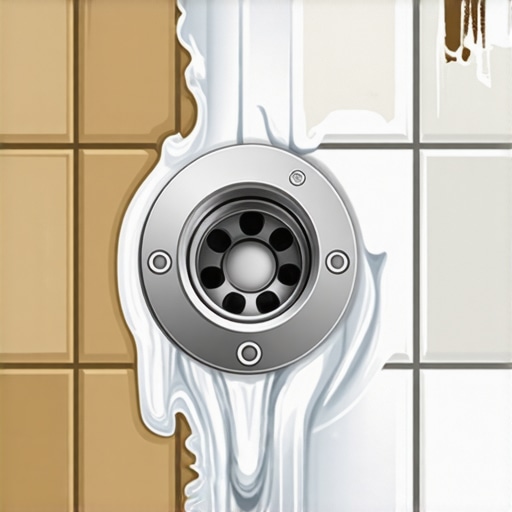
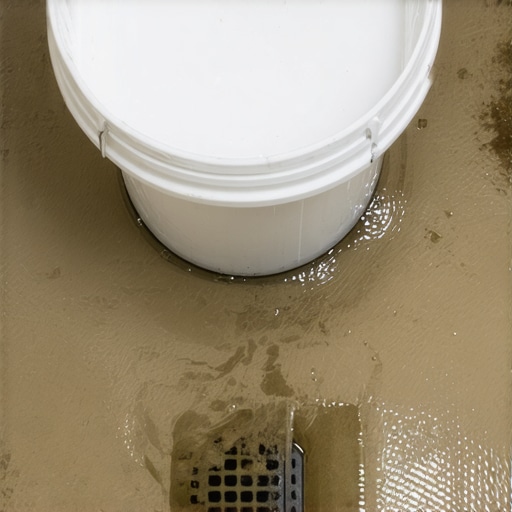
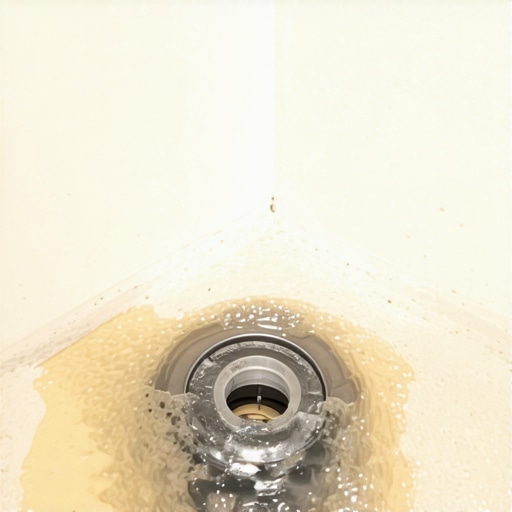
The critical drain flange rule requires that the waterproofing membrane or liner must be mechanically fastened to the flange with a clamping ring and a pre-slope must be installed underneath. Most installers skip the pre-slope, laying the liner flat on the subfloor. This causes water to pool around the drain rather than flowing into the weep holes. Water that sits there becomes stagnant, leading to a foul-smelling shower and eventually a leak. You see, the drain is not just that chrome grate you see on the surface. The real drain is the flange system hidden beneath the mortar bed. There are tiny holes called weep holes designed to let moisture that seeps through the grout find its way into the plumbing. If the installer puts mortar directly against those holes, or if they don’t slope the subfloor toward the drain before the liner goes down, that water stays there forever. It is like a swamp under your feet. The alkalinity of the standing water eventually breaks down the thin-set. Your tiles start to pop. You start to see a dark ring of moisture around the drain. That is not just dirt. That is a failed drainage system. I always use a pea gravel protector around the weep holes to ensure they stay open. It takes five extra minutes and costs about two dollars, yet most guys skip it because they want to get to the next job. That is how you end up with a shower that smells like a damp basement even when it is clean.
Why your subfloor is lying to you about level
A subfloor is rarely level enough for modern flooring and must be tested using a ten-foot straightedge to ensure a deviation of no more than 1/8 inch. Most homeowners and amateur installers rely on a short four-foot level, which fails to capture the long-wave undulations in the joists or the slab. If the floor is not flat, the locking mechanisms on laminate and LVP will experience vertical movement every time you step on them. This movement causes friction, which eventually shears the plastic tongue right off the plank. People call it a clicking floor. I call it a dead floor walking. When I walk a job site, I am looking for the dips. I use a laser level to map the topography of the room. If I see a 1/4 inch dip over six feet, I am breaking out the self-leveling underlayment. This is a high-flow, polymer-modified cement that finds its own level. It is expensive and it is messy, but it is the only way to guarantee the floor won’t bounce. People think the underlayment foam is there to level the floor. It isn’t. The foam is for sound dampening and minor cushion. If you try to use foam to fill a hole, you are creating a trampoline. The physics of load-bearing surfaces do not allow for soft spots. Every time you compress that foam in a dip, you are stressing the joints. Eventually, they will separate, and no amount of wood glue or tapping will fix it.
The chemistry of moisture in concrete slabs
Concrete is a porous material that acts like a hard sponge, constantly pulling moisture from the ground through capillary action. Before any flooring is installed over concrete, a Calcium Chloride test or an In-Situ Relative Humidity (RH) probe must be performed to ensure the moisture levels are within the manufacturer’s specifications. If the RH is above 75 percent, you are asking for a failure. I have seen expensive engineered hardwoods peel off a slab like a banana skin because the installer didn’t check the moisture. They just saw a dry-looking slab and started spreading glue. But the moisture is deep inside. When you cover that slab with a non-breathable layer like vinyl or a plastic vapor barrier, the moisture gets trapped. It builds up hydrostatic pressure. This pressure forces the alkalinity in the concrete to the surface. The high pH levels then eat the adhesive. This is a chemical war happening under your feet. The glue turns into a gooey, sticky mess that never re-sets. You start to see white powder, called efflorescence, coming up through the seams. That is the salt from the concrete. If you are installing laminate or LVP on a slab, you need a 6-mil poly film at the minimum. Don’t listen to the guy at the big-box store who says the underlayment is enough. You need a dedicated moisture barrier that is taped at the seams. It is a five-cent solution to a five-thousand-dollar problem.
| Flooring Type | Max Subfloor Deviation | Moisture Sensitivity | Acclimation Time |
|---|---|---|---|
| Solid Hardwood | 1/8 inch per 10 ft | High | 7-14 Days |
| Engineered Wood | 3/16 inch per 10 ft | Moderate | 3-5 Days |
| Laminate / LVP | 1/8 inch per 10 ft | Low | 48 Hours |
| Porcelain Tile | 1/16 inch per 3 ft | Minimal | None |
The physics of the expansion gap
Flooring materials expand and contract based on temperature and humidity, requiring a 1/4 inch to 1/2 inch gap around the entire perimeter of the room. This gap is hidden by the baseboard or shoe molding and allows the floor to move as a single unit without pushing against the walls. If you pin the floor against the drywall, it has nowhere to go when the humidity rises. The result is buckling. The floor will literally lift off the subfloor and create a hump in the middle of the room. I have seen people try to fix this by putting heavy furniture on the hump. It doesn’t work. The force of expanding wood is enough to lift a refrigerator. You also have to consider the heavy kitchen islands. You cannot install a floating floor under a kitchen island. The weight of the cabinets locks the floor in place. When the rest of the floor tries to move, it pulls against that locked section and the joints rip apart. You have to install the cabinets first, then bring the floor up to them, or vice versa if you are using a glue-down product. Most people want the clean look of cabinets sitting on top of the floor, but with a floating laminate or vinyl, that is a recipe for disaster. The floor must be able to breathe. It is a living, moving thing.
“Moisture is the single greatest cause of flooring failure in the modern construction era.” – NWFA Technical Guidelines
The checklist for a floor that outlives the mortgage
- Verify subfloor flatness using a 10-foot straightedge before buying materials.
- Perform an RH moisture test on all concrete slabs regardless of age.
- Install a pre-slope under the shower pan liner to ensure drainage.
- Keep weep holes clear of mortar using pea gravel or specialized spacers.
- Acclimate wood flooring in the room where it will be installed for at least a week.
- Leave a minimum 3/8 inch expansion gap at all vertical obstructions.
- Never install heavy permanent cabinetry over a floating floor system.
- Use a high-quality, polymer-modified thin-set for large format tiles to prevent lippage.
Carpet installation failures in the modern era
Modern carpet installation fails most frequently due to improper stretching or the use of cheap, low-density padding that collapses under high traffic. A professional installer must use a power stretcher, not just a knee kicker, to ensure the carpet is under the correct amount of tension. If the carpet is not stretched properly, it will develop ripples within two years. These ripples are more than just ugly. They are a trip hazard and they cause the carpet fibers to wear out faster because they are being hit at an angle by footsteps. The padding is the soul of the carpet. Everyone wants the thickest, softest pad, but that is a mistake for high-traffic areas. A thick, soft pad allows the carpet backing to flex too much, which eventually breaks the latex bond holding the fibers together. You want a high-density rebond pad, something in the 8-pound range. It feels firmer, but it supports the carpet. I also see guys skipping the seam sealer. Every time you cut a carpet and butt it against another piece, you have to seal those edges with a thermoplastic or a liquid sealer. If you don’t, the edges will fray and the seam will vanish, leaving you with a visible gap. It is about the details that you can’t see once the furniture is moved in.
Laminate expansion and the myth of waterproof wood
Laminate flooring is essentially high-density fiberboard topped with a photo of wood and a wear layer, meaning it is still highly susceptible to water damage from the underside. Even if the top is marketed as waterproof, the locking joints and the core are vulnerable to liquid. If water sits on the surface for more than a few hours, it will find its way into the seams. Once the HDF core gets wet, it expands and never goes back to its original shape. This is called peaking. The edges of the planks lift up and become sharp. You can’t sand it down because the surface is just a thin layer of melamine. People buy laminate for their bathrooms and kitchens thinking it is indestructible. It isn’t. If your dishwasher leaks, your laminate floor is trash. If you want true waterproof performance, you have to go with an SPC (Stone Plastic Composite) vinyl. But even then, the subfloor must be perfect. SPC is very brittle. If there is a dip in the floor, the stone-dust core will snap under pressure. Laminate is more forgiving of minor floor defects because it is slightly flexible, but it hates water. It is a trade-off. You have to decide which enemy you are more worried about: a crooked floor or a leaky sink. In 25 years, I have never seen a perfectly waterproof wood product. Physics doesn’t allow it. Wood and water are natural enemies, and a fancy click-lock system doesn’t change that reality.