How to Save a Carpet That Has Been Stretched Too Thin
The physics of the over-tensioned fiber
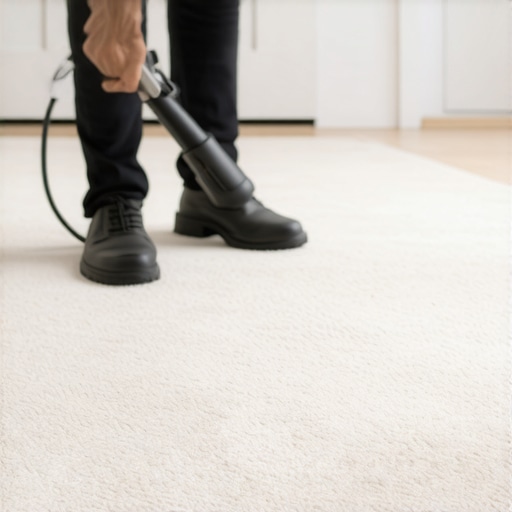
Saving a carpet stretched too thin requires immediate tension release, structural assessment of the latex backing, and precision re-trimming. When a carpet is pulled beyond its elastic limit, the bond between the primary and secondary backing often fails, leading to permanent ripples or a catastrophic tear at the tack strip pins. I spent three days grinding concrete on a job last month just so the floor wouldn’t click like a castanet, and that experience reminded me that prep is everything. If you skip the fundamentals, you end up with a textile that is under so much stress it begins to resemble a drum skin rather than a floor covering. I have spent twenty-five years with sawdust under my nails and the smell of floor wax in my lungs, and I can tell you that a carpet under too much tension is a ticking time bomb. Most guys think they can just keep cranking the power stretcher until the wrinkles disappear. They do not realize they are literally tearing the microscopic SBR latex bonds that hold the face fibers to the jute or polypropylene base. Once those bonds snap, you have delamination. You cannot fix delamination with a prayer or a knee kicker. You are looking at a structural failure that compromises the acoustic and thermal properties of the room. It is a mess that usually happens because an installer was trying to compensate for a subfloor that was not level or a room that was not square. We see this often in builder-grade installs where speed is valued over the NWFA or CRI standards. A carpet is a high-performance surface, not just a bit of fuzz to hide a bad slab.
The ghost in the expansion gap
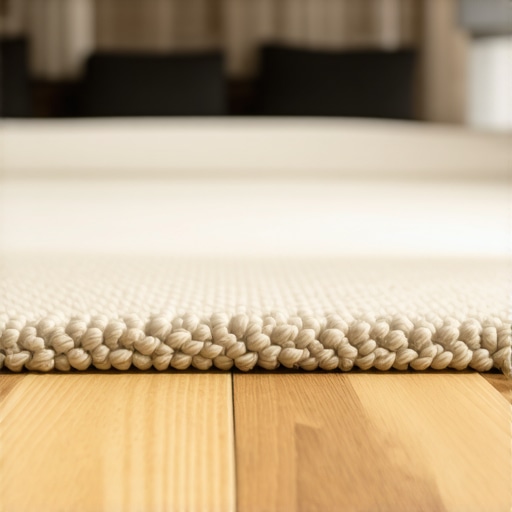
The expansion gap is the essential void between the flooring material and the wall that allows for natural movement caused by humidity and temperature changes. In a carpet installation, this space is managed by the architectural tack strip, which must be placed exactly one half the thickness of the carpet away from the baseboard. If the carpet is stretched too thin, it pulls away from these pins, leaving a visible gap that no amount of tucking will hide. [IMAGE_PLACEHOLDER] I remember a job in a high-rise where the installer used a power stretcher meant for industrial broadloom on a thin, residential polyester. He pulled it so tight the tack strips actually curled up off the plywood. It was a disaster. To save it, we had to let the carpet acclimate for forty-eight hours without any tension. We had to let the molecules of the backing relax. It is like a muscle that has been pulled. If you do not give it time to recover, it will never hold its shape again. This is particularly true in regions with high humidity fluctuations where the fibers are constantly expanding and contracting. You have to understand the chemistry of the material. A nylon fiber has a different memory than a triexta fiber. If you treat them the same, you are going to fail. We see people trying to use laminate installation logic on a carpet job, and it just does not work. You need to respect the textile physics.
“A floor is only as good as the subfloor beneath it; deflection is the enemy of every joint.” – Master Flooring Axiom
Why your subfloor is lying to you
Your subfloor might look flat to the naked eye but microscopic dips and peaks create uneven tension that forces installers to over-stretch certain sections to prevent wrinkling. This uneven pull is exactly why a carpet ends up being stretched too thin in one corner while remaining loose in another. I always tell my apprentices that if they do not start with a level slab, they are just polishing a corpse. We use a ten-foot straightedge to find the lies the subfloor is telling. If there is a dip deeper than an eighth of an inch, the carpet will eventually bridge that gap and then sink, creating a localized stretch point. This is where the floor leveling keyword comes into play. You must use a high-quality cementitious leveler to fill those voids before the pad even touches the ground. If you are working over a crawlspace, you also have to worry about the moisture coming up through the subfloor. High moisture content softens the latex backing, making it much easier to over-stretch the material without realizing it. I have seen guys pull the pins right out of the wood because the plywood was soft from rot. You cannot ignore the structural engineering of the house and expect the carpet to stay pretty. It is all connected. From the floor leveling to the way you trim the edges, every step is a brick in the wall of a successful install.
| Fiber Type | Elastic Limit (%) | Recovery Rate | Tension Tolerance |
|---|---|---|---|
| Nylon 6,6 | 1.5-2.0 | High | Excellent |
| Polyester (PET) | 1.0-1.5 | Low | Moderate |
| Triexta (PTT) | 2.0-2.5 | Medium | High |
| Olefin (PP) | 0.5-1.0 | Very Low | Poor |
The 1/8 inch that ruins everything
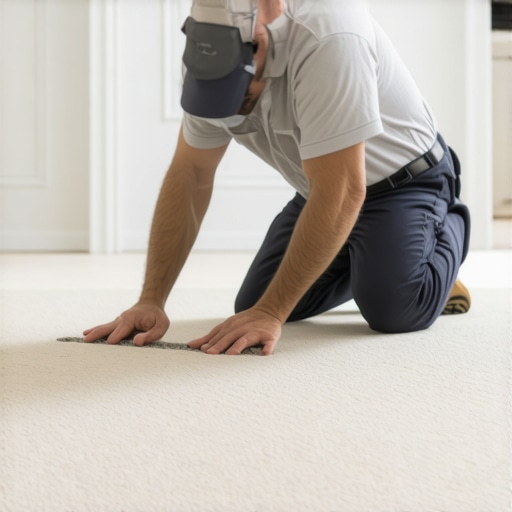
The difference between a perfect stretch and a ruined carpet is often as small as an eighth of an inch of excessive travel on the power stretcher head. If you exceed this threshold, the primary backing enters a state of plastic deformation, meaning it will never return to its original dimensions. This is the moment of no return. You can hear the backing start to pop. It sounds like tiny kernels of corn hitting a hot pan. That is the sound of your profit disappearing. To save a carpet at this stage, you must use a specialized seam sealer or a liquid latex bridge to reinforce the stressed areas, though this is a surgical procedure that most residential guys are not equipped to handle. I prefer to pull the carpet back, check the strip, and see if I can shift the entire tension map of the room. Sometimes you can steal an inch from a closet or a transition to give yourself more material to work with. But you have to be careful. If you are dealing with a shower transition or a tile edge, you have to ensure the transition strip is secure. A loose transition is a trip hazard and a point of mechanical failure. We often see carpet pulled too thin where it meets a laminate floor because the installer did not use a proper Z-bar or shim. They just tried to stretch it across the gap and hope the transition strip would hold it. It won’t. The physics of the walk-way will pull it loose in six months.
- Assess the backing for white chalky residue indicating latex failure.
- Verify tack strip integrity and pin sharpness.
- Acclimate the room to 70 degrees Fahrenheit and 50 percent humidity.
- Release all tension and let the carpet rest for 24 hours.
- Use a power stretcher with a pressure gauge to re-apply tension.
- Seal all cut edges with a thermoplastic or liquid adhesive.
The chemistry of secondary backing and latex fatigue
The bond between the primary and secondary backing is maintained by a layer of carboxylated styrene-butadiene rubber which provides the stiffness and dimensional stability required for a stretch-in install. When this carpet is stretched too thin, the polymer chains in the latex are pulled apart, leading to a loss of structural memory. This is why a carpet that was once tight suddenly develops giant waves. The backing has fatigued. It is no longer a single unit but two layers of fabric sliding against each other. In my shop, I keep samples of delaminated carpet to show homeowners what happens when you hire the cheapest bid. They see the two layers flapping like a fish and they finally understand. You cannot fix this with a knee kicker. You need to understand the molecular reality of the product. The mil-thickness of the backing matters. The density of the weave matters. If you are installing a high-end wool, the rules are even stricter. Wool has a lot of natural give, but if you over-do it, you will distort the pattern and it will look like a funhouse mirror. This is why we use a power stretcher on every job, no exceptions. A knee kicker is for positioning, not for stretching. Anyone who tells you otherwise is a hack who should be nowhere near a professional job site.
“Excessive force during power stretching can lead to structural delamination where the secondary backing separates from the primary face.” – Master Flooring Axiom
The regional climate factor and moisture control
Regional environmental conditions like the swampy humidity of Houston or the dry heat of Phoenix dictate how much tension a carpet can safely handle before it is considered over-stretched. In a humid environment, the fibers absorb moisture and become more elastic. If you stretch a damp carpet to what feels like a normal tension, it will sag the moment the air conditioner kicks in and dries the air out. Conversely, in a dry climate, the backing can become brittle. If you hit it too hard with the stretcher, it will snap. I always check the moisture content of the subfloor and the ambient humidity before I even open the roll. This is the same level of care you would give to a hardwood install. People think carpet is forgiving, but it is actually quite sensitive to its environment. If you are installing over a concrete slab in a basement, you need a moisture barrier that actually works. If you do not, that moisture will migrate into the carpet backing, weaken the latex, and cause the whole floor to fail. I have seen carpets that were stretched perfectly on day one looking like a stormy sea on day thirty because the installer ignored the humidity. It is a fundamental error that costs thousands. You have to be a scientist as much as a mechanic in this business.
The final verdict on salvageable materials
Determining if a carpet is salvageable involves a rigorous stress test of the backing and a visual inspection for permanent fiber distortion. If the secondary backing has detached over more than ten percent of the surface area, the material is scrap and must be replaced to ensure safety and performance. There is no middle ground here. You cannot glue it back together in a way that will withstand the mechanical force of foot traffic. If the damage is localized, you might be able to patch in a new section, but the dye lot will never match perfectly. It is a hard truth to tell a homeowner, but my reputation is built on honesty, not on covering up failures. We take pride in the engineering of a floor. Whether it is a perfectly leveled shower floor or a complex laminate layout, the principles are the same. You respect the material, you respect the physics, and you do not take shortcuts. If you find yourself with a carpet that has been stretched too thin, stop what you are doing. Evaluate the cause. Usually, it is a subfloor issue or an installer error. Fix the root cause before you try to fix the symptom. That is how you build a floor that lasts for thirty years instead of three.