The Magnet Trick for Finding Buried Screws in Your Subfloor
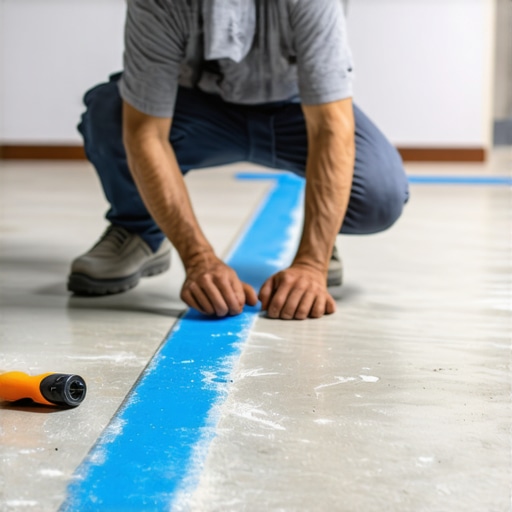
I spent three days grinding concrete on a job last month just so the floor wouldn’t click like a castanet because the previous crew thought they could bury their mistakes under a thick pad. Most guys skip the leveling compound. They think the underlayment will hide the dip. It won’t. I walked onto that site and the smell of old dust and WD-40 was thick in the air. The homeowner was panicked because their expensive wide-plank flooring felt like a trampoline. I had to rip it all up and start from the slab. That is the reality of this trade. If you do not respect the physics of the substrate, the finish floor will betray you every single time. Flooring is not a cosmetic upgrade. It is a structural engineering challenge that begins with the fasteners you cannot see.
The physics of rare earth magnets on plywood
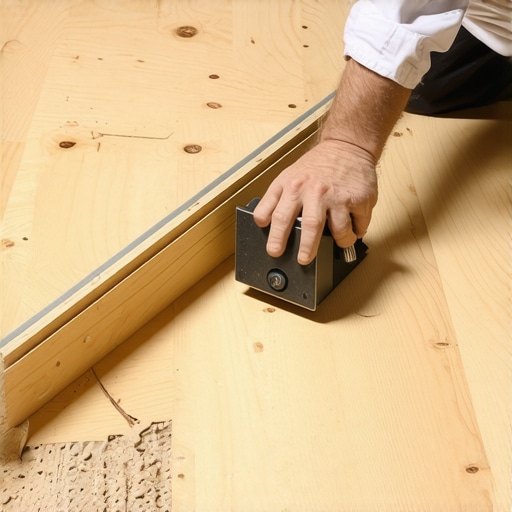
Finding a buried screw requires understanding magnetic flux and the density of subfloor materials like CDX plywood or oriented strand board. A standard refrigerator magnet will not work for this task because it lacks the pull force to penetrate three quarters of an inch of wood fiber. You need a neodymium N52 grade magnet which offers the high magnetic remanence necessary to detect the zinc-plated head of a wood screw. When you slide a powerful magnet across the surface of a subfloor, you are looking for the tactile snap that indicates metal. This is not just about finding a screw. It is about identifying the joist layout. If you find a line of screws, you have found your structural support. If you find a rogue screw in the middle of a span, you have found a potential squeak or a point of failure for your next layer of flooring.
Why floor leveling starts with a single screw
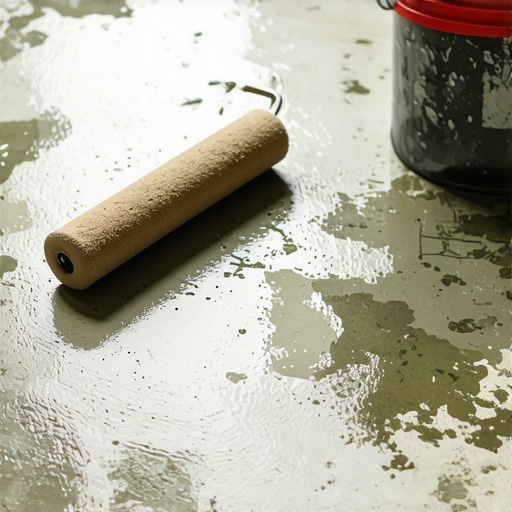
Floor leveling requires a perfectly clean and secure surface where high spots are ground down and fasteners are driven flush to prevent telegraphing through the finish material. A single screw head sticking up by even a sixteenth of an inch can ruin a self-leveling pour. The leveling compound is designed to flow into low spots, but it cannot hide a protrusion. If that screw is not found and driven home, it becomes a fulcrum point. When you walk across the finished floor, the weight of your body creates a lever action. The floor board or tile flexes over that screw head. Eventually, the locking mechanism on your laminate will snap or the grout in your tile will crack. You must use the magnet to sweep the entire room before you even think about opening a bag of patch or leveler.
“A floor is only as good as the subfloor beneath it; deflection is the enemy of every joint.” – Master Flooring Axiom
The high stakes of shower pan substrate prep
Shower installations demand a level of precision that exceeds standard dry area flooring because of the waterproofing membranes and the need for perfect drainage slopes. If you are installing a cement backer board or a high-density foam shower tray, any fastener that is not perfectly recessed will puncture your waterproofing layer. A puncture in a shower pan is a slow-motion disaster that leads to rot in the floor joists. By using the magnet trick on your shower walls and floors, you ensure that every screw is exactly where it should be. You can verify the screw pattern matches the TCNA requirements which usually specify fasteners every six to eight inches. If the magnet shows a gap in the pattern, you have a weak spot that will lead to tile failure under the weight of the user.
Carpet install nightmares and the buried fastener
Carpet install procedures often overlook the subfloor because the pad and carpet are thick enough to mask minor imperfections but they cannot hide a loose screw. A screw that has backed out of the plywood will eventually work its way through the carpet pad. It will create a sharp bump that can be felt through the carpet fibers. Over time, the friction of people walking over that bump will wear a hole in the backing of the carpet. Furthermore, if you are installing tack strips, you need to know where the buried fasteners are so you do not dull your tools or create a spark near flammable adhesives. The magnet allows you to map out the perimeter before you start hammering.
Laminate flooring and the click of death
Laminate flooring is a floating system that relies on a flat substrate to prevent the tongue and groove joints from experiencing excessive vertical movement. When an installer ignores a proud screw, the laminate plank sits at an angle. Every time someone steps on that plank, the joint is stressed. This is often called the click of death because of the audible sound the floor makes as the plastic or HDF locking mechanism fails. The magnet trick is the only way to be 100 percent sure that you have addressed every potential failure point. You cannot trust your eyes. You have to trust the pull of the magnet.
| Fastener Type | Magnetic Signature | Detection Depth | Impact on Leveling |
|---|---|---|---|
| #8 Wood Screw | Strong | 0.75 Inches | High Risk |
| 16-Gauge Nail | Weak | 0.40 Inches | Medium Risk |
| Galvanized Staple | Moderate | 0.50 Inches | Low Risk |
| Ring Shank Nail | Strong | 0.85 Inches | High Risk |
The chemistry of subfloor adhesives and metal
Adhesives interact with the subfloor and any exposed metal fasteners can cause chemical reactions or bond failures if the environment is high in moisture. In regions with high humidity, moisture migrates through the subfloor and can cause iron-based fasteners to oxidize. This rust can bleed through some types of vinyl flooring or cause the adhesive bond to weaken around the screw head. By using the magnet to find and then seal these fasteners with a rust-inhibitive primer or a high-quality floor patch, you are protecting the long-term integrity of the installation. I have seen floors where every single nail head was visible as a dark spot on the linoleum because the installer did not understand the chemistry of oxidation and moisture transport.
A checklist for a perfect subfloor preparation
- Sweep the entire floor with a neodymium magnet to identify joist locations and rogue fasteners.
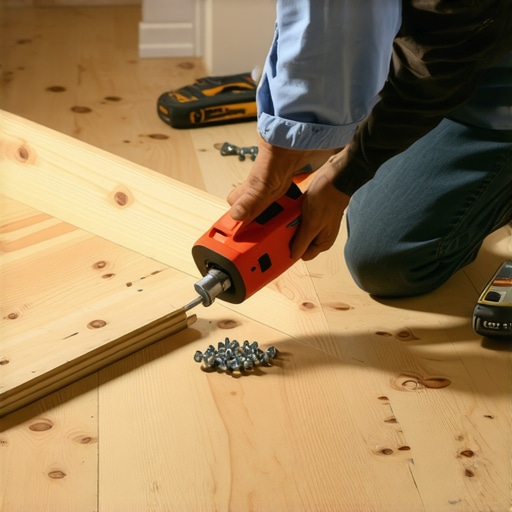
- Drive all proud screws until the head is slightly below the surface of the wood.
- Check the subfloor moisture content using a pin-type meter to ensure it is within 2 percent of the finish flooring.
- Sand down any high spots or ridges at the plywood seams using a 40-grit orbital sander.
- Vacuum all dust and debris before applying any primers or leveling compounds.
- Mark all joists on the walls so you can find them after the underlayment is installed.
“The presence of a single proud fastener can compromise the structural integrity of a floating floor system by creating a fulcrum point.” – Flooring Engineering Standard
The ghost in the expansion gap
Expansion gaps are the most misunderstood part of any floor installation. Wood and laminate are organic materials that grow and shrink based on the relative humidity of the room. If a screw is buried too close to the wall, it can catch the edge of the flooring as it tries to expand. This causes the floor to buckle in the center of the room. I have walked into jobs where the homeowner thought they had a foundation problem, but it was just a screw head catching the edge of a plank. Using a magnet to clear the expansion zone is a hallmark of a master installer. You must ensure that the entire perimeter is free of any metal obstructions that could pin the floor in place. This is why we use spacers, but spacers only work if the substrate is smooth.
Why your subfloor is lying to you
The subfloor might look flat to the naked eye, but structural deflection and lumber shrinkage create hidden valleys that only a long straightedge and a magnet can reveal. Plywood is manufactured in layers, and those layers can delaminate over time if they were exposed to rain during the construction of the house. A magnet will often feel different over a delaminated section because the screw might be pulling the top veneer down while the core remains puffed up. If you feel a screw that seems to move when you push on it, you have a structural problem that a magnet just helped you diagnose. You need to add more fasteners or replace that section of the subfloor entirely. Don’t be the guy who ignores the warning signs. Your reputation is built on what is under the floor, not just what is on top of it.