The ‘Ice Cube’ Trick for Removing Heavy Furniture Dents in Carpet
I spent three days grinding concrete on a job last month just so the floor wouldn’t click like a castanet. Most guys skip the leveling compound because they think the underlayment will hide the dip. It won’t. That experience taught me that whether you are dealing with a microscopic dip in a concrete slab or a crushed fiber in a high-pile saxony, the structural integrity of the material dictates the outcome. Carpet is more than just a soft surface. It is a complex weave of synthetic or natural polymers that possess a specific memory. When you place a heavy mahogany dresser on those fibers for five years, you aren’t just squishing them. You are fundamentally altering the orientation of the polymer chains within the yarn. Restoring that loft requires more than a quick vacuum. It requires a controlled introduction of moisture and thermal energy to reset the fiber memory without delaminating the secondary backing.
The physics of carpet fiber memory
Carpet fiber memory refers to the ability of a material to return to its original shape after deformation. High-quality nylon fibers possess superior resilience compared to polyester because of their hydrogen bonding. When heavy furniture creates a dent, the ice cube trick utilizes slow-melting moisture to penetrate the deep pile effectively.
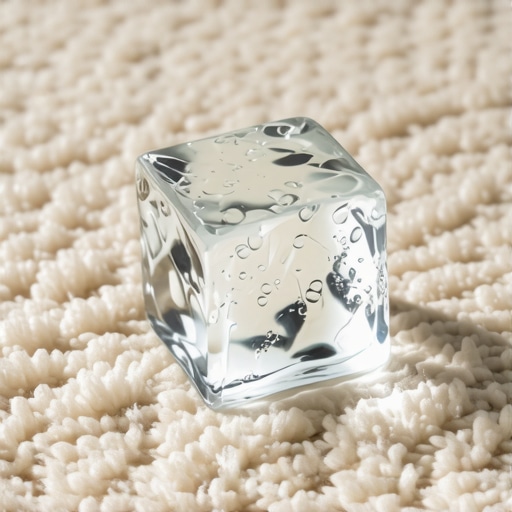
The mechanics of the ice cube trick are deceptively simple yet rooted in basic thermodynamics. A standard ice cube contains approximately 30 milliliters of water. As it melts at room temperature, it provides a slow, consistent drip-feed of moisture into the base of the crushed carpet tuft. Unlike spraying the area with a bottle, which often only wets the tips of the fibers, the melting ice ensures the water reaches the primary and secondary backings where the most significant deformation occurs. As the fibers absorb the moisture, the polymer chains begin to swell. This swelling action forces the fiber to expand and stand upright. This is particularly effective on Nylon 6,6, which is engineered for high-performance resilience. If you are dealing with a cheap polyester or a low-grade olefin, the success rate drops because those materials lack the internal structural architecture to bounce back once the cell walls have been collapsed by several hundred pounds of dead weight.
The step by step restoration process
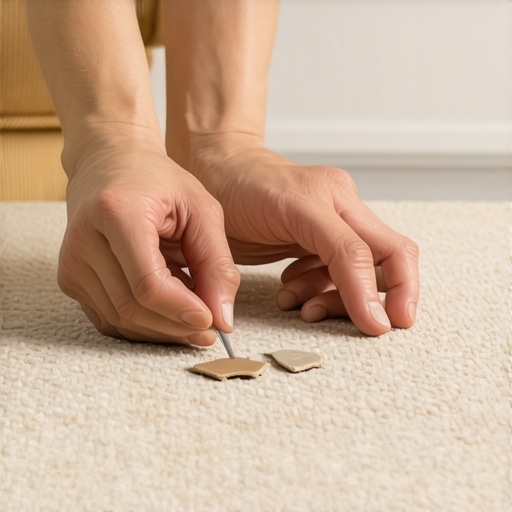
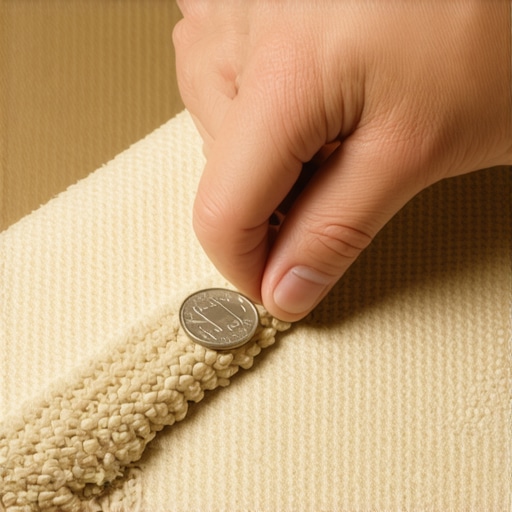
To execute the ice cube trick, place one or two ice cubes directly into the furniture indentation. Allow the ice to melt completely over several hours. Once the area is damp, use a blunt object like a spoon or a carpet groomer to gently lift the fibers upright.
- Assess the fiber type to ensure it is not a water-sensitive natural material like jute or sisal.
- Place one standard ice cube for every two square inches of the dented area.
- Wait between four to twelve hours for total saturation and melting.
- Use a clean, white microfiber cloth to blot away excess moisture once the fibers are standing.
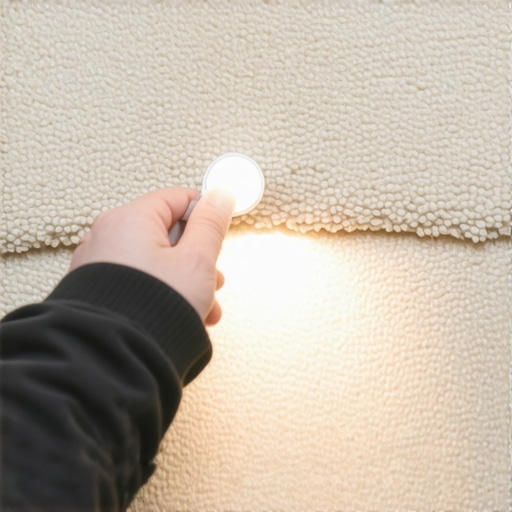
- Aggitate the tufts with a coin or a spoon to encourage the vertical orientation.
- Allow the area to air dry completely before walking on it or moving furniture back.
Precision matters here. If you use too much ice, you risk soaking the padding. A standard 7/16 inch 8-pound density rebond pad can hold a significant amount of water. If that water sits, it creates a localized humidity zone that can lead to microbial growth or the breakdown of the pad’s adhesive binders. I always tell my clients that more is not better. You want enough moisture to hydrate the fiber, not enough to drown the subfloor. If you are working over a plywood subfloor, excessive moisture can lead to localized swelling of the wood grain, which might create a permanent hump in your floor leveling profile.
“A floor is only as good as the subfloor beneath it; deflection is the enemy of every joint.” – Master Flooring Axiom
Why subfloor integrity affects carpet performance
Subfloor integrity directly impacts how carpet fibers respond to pressure and wear. A level subfloor prevents uneven weight distribution which can cause furniture to lean and create deeper, more permanent gouges in the carpet pile. Proper floor leveling is required before any professional carpet install or laminate placement.
When I talk about floor leveling, people usually think about tile or hardwood. But carpet is just as sensitive to a bad subfloor. If the floor has a 1/4 inch dip over a 10-foot span, the tack strip won’t hold the tension properly. This leads to ripples. When you place heavy furniture on a ripple, you aren’t just denting the fiber. You are stretching the backing of the carpet. No amount of ice cubes will fix a stretched backing. That is a structural failure. In high-moisture areas like basement installs, the subfloor condition is even more vital. If you have a concrete slab that is off-gassing moisture, that moisture gets trapped under the carpet and pad. This softens the fibers from the bottom up, making them even more susceptible to permanent crushing. Before you even think about the carpet, you need to check the slab with a calcium chloride test or an in-situ RH probe.
Comparing floor types and durability
Comparing different flooring materials reveals that while carpet offers comfort, it lacks the compressive strength of laminate or tile. Laminate flooring uses a high-density fiberboard core that resists denting from furniture, whereas carpet relies on the resilience of individual yarn tufts and the underlying cushion.
| Material Type | Janka Hardness / Durability | Moisture Resistance | Furniture Dent Recovery |
|---|---|---|---|
| Nylon Carpet | Low (Fiber Resilience) | Moderate | High (with Ice Cube Trick) |
| Polyester Carpet | Low (Fiber Resilience) | Moderate | Low to Moderate |
| Laminate Flooring | 1,200 – 1,900 (High) | Varies by Core | Very High (Resists Dents) |
| Solid White Oak | 1,360 (Medium) | Low | Low (Requires Steam) |
Laminate is often the choice for those who hate the maintenance of carpet. Modern laminate with a 12mm thickness and a proper AC4 or AC5 wear layer is nearly impervious to the weight of a standard sofa. However, laminate has its own set of rules. If the subfloor isn’t flat to within 3/16 of an inch over 10 feet, the click-lock joints will eventually snap. I have seen it a hundred times. The homeowner skips the leveling compound, and six months later, the floor sounds like it is cracking every time they walk. It is the same principle as the carpet dent. If the foundation is weak, the surface will fail.
The 1/8 inch that ruins everything
The 1/8 inch deviation is the threshold where most flooring warranties become void. Whether it is a gap in laminate planks or a dip under a carpet pad, this tiny measurement dictates the longevity of the installation. Ignoring small subfloor imperfections leads to localized wear and permanent material deformation.
In the world of professional flooring, we live and die by the 1/8 inch rule. When you are installing showers or bathroom tile, that 1/8 inch determines if the water drains or pools. When you are stretching carpet, it determines if the transition to the next room is flush or a trip hazard. If you are trying to remove a dent from a carpet and it just won’t budge, look at what is underneath. If the padding has completely collapsed or bottomed out, the fiber has no support. A 40-ounce face weight carpet on a cheap 4-pound pad is a recipe for disaster. The pad acts like a shock absorber. Once that shock absorber is dead, the carpet fiber takes the full brunt of the furniture’s weight. This is why I always recommend a high-density frothed foam or a heavy rebond pad. They have a higher compression set resistance, meaning they won’t stay squashed after the furniture is moved.
“Subfloor flatness is not a suggestion; it is the structural foundation of the walking surface.” – Master Flooring Axiom
The chemistry of carpet cleaning and maintenance
Carpet cleaning chemistry involves the use of surfactants and pH-balanced solutions to break the bond between soil and fiber. When restoring dents, the goal is to rehydrate the fiber without leaving behind a residue that would attract future dirt and cause the spot to darken over time.
One mistake people make after the ice cube trick is using a stiff brush. You should never scrub carpet. Scrubbing untwists the yarn. Once the yarn is untwisted, it is called blossoming. Blossoming is permanent. You have effectively destroyed the tip of the fiber. Instead, you want to use a gentle lifting motion. If the ice cube doesn’t work, you can move up to a steam iron. But you have to be careful. Most synthetic carpets are made of plastic. If you touch a hot iron to a nylon or polyester carpet, you will melt it. You must use a damp towel as a buffer. The steam penetrates the towel and reaches the fiber, providing more energy than the ice cube to reset those polymer bonds. This is effectively like a heat-set process in reverse. We use heat to set the twist in the factory, and we use heat to restore the loft in the home. But if you go too far, you reach the glass transition temperature of the plastic, and the floor is ruined.
Regional climate impacts on floor performance
Regional climate conditions such as humidity and temperature fluctuations significantly impact flooring materials. In humid coastal regions, carpet can hold moisture, making fibers softer and more prone to matting. In dry climates, static electricity and fiber brittleness become the primary concerns for homeowners.
I remember a job in a high-humidity area where the homeowner couldn’t understand why their carpet felt damp and flat even though they hadn’t spilled anything. The ambient humidity was consistently over 60 percent. At that level, the carpet fibers absorb moisture from the air, increasing their weight and decreasing their resilience. In those environments, the ice cube trick might actually be counterproductive because the carpet is already struggling to dry. You need a dehumidifier to bring the room down to 40 or 50 percent humidity before the fibers will have the structural strength to stand back up. Conversely, in a bone-dry climate, the fibers can become brittle. When you move heavy furniture, the fibers don’t just bend. They snap. This is why maintaining a consistent indoor climate is part of floor engineering. You aren’t just living in a house. You are managing a climate-controlled laboratory for your building materials.
Advanced troubleshooting for permanent crushing
Advanced troubleshooting for carpet crushing involves identifying whether the issue is a dent or actual fiber wear. If the ice cube trick and steaming fail to restore the loft, the fiber has likely reached its limit of elastic deformation and has entered plastic deformation, which is irreversible.
There is a point of no return. If you have a heavy pool table sitting on a low-grade carpet for a decade, that carpet is dead. The backing is crushed, the pad is pulverized, and the fibers are fused together by years of pressure and dust. In those cases, you are better off patching the area or replacing the room. If you are doing a carpet install, think about where the heavy items will go. Use furniture coasters with spikes that reach through the pile to the backing. This distributes the weight more evenly and prevents the deep crushing that the ice cube trick is designed to fix. It is about proactive engineering rather than reactive repairs. A floor is a system of layers. If you understand the chemistry of the fiber and the physics of the subfloor, you can keep that system running for twenty years. If you ignore those details, you will be back at the flooring store much sooner than you planned.
{“@context”:”https://schema.org”,”@type”:”HowTo”,”name”:”How to Remove Furniture Dents with the Ice Cube Trick”,”step”:[{“@type”:”HowToStep”,”text”:”Assess the carpet fiber to ensure it is synthetic and water-tolerant.”},{“@type”:”HowToStep”,”text”:”Place ice cubes directly into the furniture indentation.”},{“@type”:”HowToStep”,”text”:”Allow the ice to melt completely over a period of 4 to 12 hours.”},{“@type”:”HowToStep”,”text”:”Blot excess moisture with a clean white cloth.”},{“@type”:”HowToStep”,”text”:”Gently lift and agitate the fibers using a spoon or carpet groomer.”}]}