The Knee Kicker Mistake That Ruins New Carpet
Most guys skip the floor levelness requirement. They think the underlayment will hide the dip. It won’t. I spent three days grinding concrete on a job last month just so the floor wouldn’t click like a castanet. I smell like WD-40 and oak dust most days, and my knees have the scars to prove I have been on them for twenty five years. I have seen fifteen thousand dollar wide plank walnut floors cup like potato chips because someone didn’t check the crawlspace humidity. But the most common heartbreak is the carpet. Homeowners see a ripple in their new broadloom and think it is just the carpet settling. It isn’t. It is the result of an installer who used a knee kicker as a primary tool instead of a power stretcher. This mistake ruins the structural integrity of the textile before you even move the furniture back in.
The mechanical lie of the knee kicker
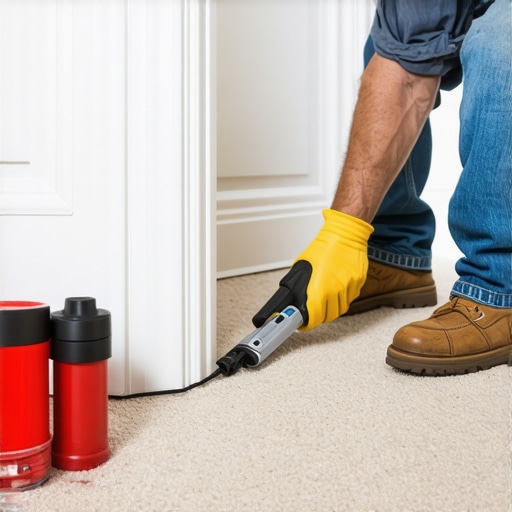
The knee kicker is a positioning tool designed for tucking carpet into gullies and navigating tight corners around door jambs. It is not an installation tool for stretching. Using it to tension a room is a mechanical failure that leads to permanent ripples, delamination of the primary backing, and accelerated wear on the carpet fibers.
A knee kicker works by localized force. You hit a padded plate with your patella to nudge the carpet forward a fraction of an inch. This works for the three inches directly in front of the tool. However, a standard room is twelve to fifteen feet wide. The force of a knee kicker cannot penetrate the molecular friction of the carpet pad and the weight of the roll itself. When you use a kicker to stretch a room, you are only tensioning the perimeter. The center of the room remains loose. Within six months, as the humidity fluctuates and the latex in the backing relaxes, that loose middle will bunch up. Once those ripples appear, the carpet backing begins to crack. Every time someone walks over a ripple, they are bending the stiff latex adhesive that holds the yarn to the backing. This is called delamination. Once the backing separates, the carpet is garbage. There is no fixing it. You cannot just stretch it out later because the structural ‘skeleton’ of the carpet is already broken.
The physics of textile tension
Carpet tension is a matter of engineering because modern synthetic carpets are composed of polypropylene primary and secondary backings held together by a layer of SBR latex adhesive. This assembly requires a specific amount of elongation to lock onto the tack strip pins and maintain a flat profile under heavy foot traffic.
When I talk about the chemistry of a floor, I am talking about how that SBR latex reacts to stress. If you don’t use a power stretcher, you aren’t actually stretching the carpet. You are just moving it. A power stretcher uses a long pole system that braces against one wall and uses a physical lever to pull the carpet from the other side. It applies thousands of pounds of pressure evenly across the entire surface. This ensures the carpet reaches its maximum elongation. In the industry, we look for a stretch of about one to one and a half percent. In a twenty foot room, that means the carpet needs to be pulled about three inches. You cannot achieve a three inch stretch with your knee. If you try, you will end up in the hospital with a blown out meniscus before you finish the first bedroom. The lack of tension means the carpet is ‘floating’ over the pad. This creates air pockets that act like bellows, sucking dust and allergens deep into the pile every time you step.
“A floor is only as good as the subfloor beneath it; deflection is the enemy of every joint.” – Master Flooring Axiom
The subfloor levelness requirement
Floor leveling is the foundation of every successful install even when you are putting down soft goods like carpet. If the subfloor has a birdbath deeper than 3/16 of an inch, the carpet will eventually bridge over the depression, leading to localized friction and premature fiber loss.
I have spent countless hours with a ten foot straightedge and a bag of calcium aluminate self-leveling compound. People ask why I care about a dip in the concrete if I am just putting carpet over it. The reason is simple. Carpet is not a liquid. It is a stiff fabric. If there is a dip, the carpet stays flat over it until a heavy couch leg or a human heel pushes it down. This constant up and down movement creates a ‘shearing’ force on the backing. It also makes the floor feel cheap. If you want your home to feel like a high-end hotel, you grind the high spots and fill the low spots. For concrete slabs, I use a diamond cup wheel on an angle grinder. It is messy, it is loud, and it is the only way to do the job right. You have to check the moisture vapor emission rate too. If the concrete is off-gassing more than three pounds of moisture per thousand square feet, that moisture gets trapped under the carpet pad and starts growing a science experiment.
The moisture barrier at the shower threshold
The transition between a wet room shower and a carpeted hallway is a critical failure point where capillary action can pull moisture into the carpet pad. This requires a silicone-sealed transition strip and a moisture-proof membrane to prevent rot in the subfloor.
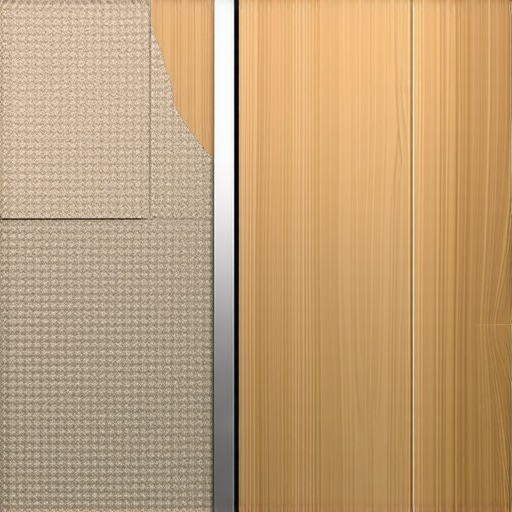
I have seen carpet tack strips in hallways that were completely rusted out because the homeowner didn’t have a proper threshold at the bathroom door. When you step out of the shower, you drop water. That water travels. If you have laminate or carpet right up against a tile edge without a moisture break, the subfloor will soak that water up like a sponge. For laminate installs, this is even worse. The HDF core of a laminate plank will swell the second it touches a drop of water. It turns into a soggy cracker. You need to use a high-quality T-molding and seal the channel with 100 percent silicone. Do not use the cheap acrylic stuff. It shrinks and cracks. You want a seal that stays flexible for twenty years. This is the difference between a floor that lasts and a floor that needs to be replaced in three seasons.
The chemistry of carpet backing and latex breakdown
The secondary backing of a carpet is held to the primary backing by styrene-butadiene rubber latex. This chemical bond is susceptible to heat and moisture, meaning that aggressive steam cleaning or lack of proper stretching will cause the adhesive to fail.
When an installer relies on a knee kicker, they often over-kick one specific spot to get the carpet to stay on the pins. This concentrated impact actually breaks the latex bond in that six inch circle. You won’t see it immediately. But after the carpet is cleaned for the first time, the water and heat will finish the job. The carpet will start to bubble. I tell my clients that a carpet is a system. It is the yarn, the primary backing, the latex, the secondary backing, the pad, and the subfloor. If any one of those layers is compromised, the system fails. Professional installers understand that the pad density is also vital. If you put a super thick, soft pad under a carpet, it makes it harder to stretch. The carpet ‘sinks’ into the pad, increasing the friction. A 7/16 inch pad with an 8 pound density is the sweet spot for most residential installs.
The 1/8 inch that ruins everything
Precision in flooring is measured in eighths of an inch because expansion gaps and subfloor tolerances dictate whether a floor buckles or stays flat. If an installer fails to leave a consistent gap at the perimeter, the entire floor system is destined for mechanical failure.
This applies to laminate, hardwood, and even carpet tack strips. If you nail your tack strip flush against the baseboard, you have no place to tuck the carpet. The carpet edge will eventually fray and pull up. You need exactly a 1/8 inch gap between the strip and the wall. For laminate, you need more, usually 1/4 to 3/8 of an inch. I’ve seen guys tight-fit laminate against a stone fireplace. The first time the humidity hit 60 percent, the floor arched up like a bridge. You could literally see light under the planks. They had to pull the whole floor up and trim it back. It is a waste of time and money that can be avoided by just following the NWFA standards. We are dealing with materials that breathe. If you don’t give them room to breathe, they will find their own room by pushing your walls out or buckling upward.
Technical metrics of floor stability
| Material | Acclimation Time | Moisture Limit | Janka Rating |
|---|---|---|---|
| Solid White Oak | 7 to 10 days | 6 to 9 percent | 1360 |
| Engineered Maple | 48 to 72 hours | 7 to 11 percent | 1450 |
| Laminate Plank | 48 hours | 12 percent | N/A |
| Nylon Carpet | 24 hours | 65 percent RH | N/A |
As shown in the table, every material has its own set of rules. You can’t treat a laminate install like a carpet install. For laminate, acclimation is the law. If you take the planks from a cold warehouse and install them immediately in a warm, humid house, they will expand. The locking joints will snap. I have seen it happen. The sound is like a small gunshot. Once those tongue-and-groove joints are broken, the floor is toast. You can’t glue them back together and expect them to hold.
The carpet installation checklist for professionals
- Verify subfloor flatness to within 3/16 inch over a 10 foot radius.
- Conduct a calcium chloride moisture test on all concrete slabs.
- Acclimate carpet and pad to the jobsite temperature for at least 24 hours.
- Install tack strips with a 1/8 inch gap from the vertical surface.
- Use a power stretcher for all areas larger than 10 by 10 feet.
- Seal all seams with a professional grade seaming iron and premium tape.
- Trim the carpet with a sharp wall trimmer to ensure a clean tuck.
If your installer walks into your house with nothing but a knee kicker and a utility knife, send them home. They are not an installer; they are a carpet layer. There is a difference. An installer understands the physics. They understand that the carpet needs to be under tension to survive. They understand that the floor leveling compound is not an option; it is a requirement. I have spent my career fixing the mistakes of guys who wanted to go fast. Going fast in this business just means you get to do the job twice for the price of one. I would rather spend three days on my knees grinding concrete and know that the floor I lay will still be flat when I am dead and gone. That is the architect’s mindset. That is how you build a floor that lasts. Don’t let a knee kicker ruin your investment.