How to Stop Your Carpet from Fraying at the Metal Thresholds
Most guys skip the leveling compound. They think the underlayment will hide the dip. It won’t. I spent three days grinding concrete on a job last month just so the floor wouldn’t click like a castanet. That same negligence applies to your carpet transitions. If that subfloor isn’t flat, your metal threshold becomes a blade that saws through your carpet fibers every time someone walks over it. My hands are stained with the residue of a thousand tack strip installs, and I can tell you that a fraying carpet edge at a metal transition is never an accident of fate. It is a failure of structural mechanics. When you see those little threads of nylon or polyester peaking out from under a silver or gold bar, you are witnessing the slow death of a textile under mechanical stress. This is not about aesthetics. This is about the physics of footfall and the chemistry of the latex that holds your floor together.
The structural failure of the transition zone
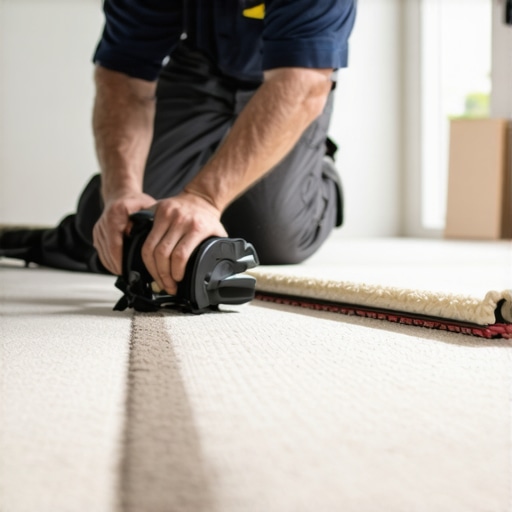
Carpet fraying at metal thresholds occurs because the carpet is not properly tensioned or the metal teeth have lost their grip on the primary backing. To stop the fraying, you must understand that the transition bar is a mechanical clamp. If the carpet has even a millimeter of play, the constant friction of foot traffic will act like sandpaper against the cut edge of the rug. I have seen million dollar homes where the carpet looks like a shaggy dog at the doorway because the installer was too lazy to use a power stretcher. You cannot just kick a carpet into a metal bar with a knee kicker and expect it to stay. You need to engage the secondary backing of the carpet into the teeth of the metal transition with enough force that the fibers are compressed. When the metal lip is hammered down, it must create a permanent seal that prevents the cut edges from being exposed to the shearing force of a shoe sole.
“A floor is only as good as the subfloor beneath it; deflection is the enemy of every joint.” – Master Flooring Axiom
The subfloor secret that ruins your carpet
Subfloor levelness is the hidden factor that determines if your metal threshold will fail or succeed over time. If there is a dip in the wood or concrete right at the doorway, the metal bar will flex every time someone steps on it. This flexing motion works the carpet fibers back and forth against the sharp underside of the metal lip. Eventually, the latex adhesive that binds the tufts to the backing will crack and fail. Once that chemical bond is broken, the fibers are free to pull out. I always check the transition area with a six foot level before I even think about rolling out the pad. If I find a hollow spot, I fill it. On concrete, I use a high strength polymer modified leveling compound. On wood, I might use a feather finish or even sand down a high spot in the plywood. You want that metal bar to sit on a surface as solid as a mountain. If the bar doesn’t move, the carpet won’t fray. It is that simple.
Physics of the metal binder bar
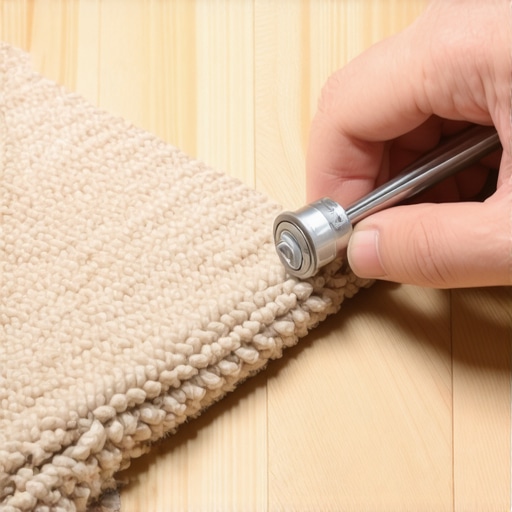
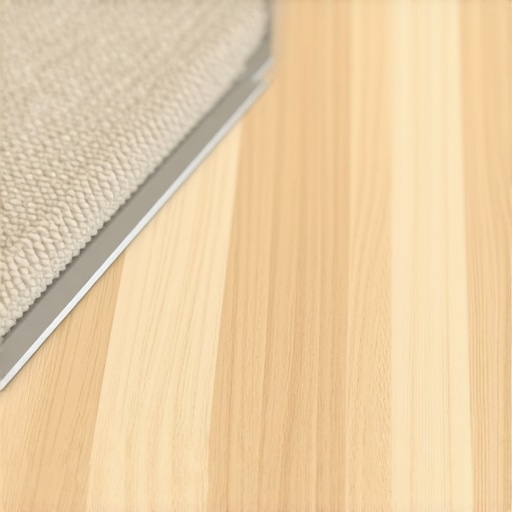
The metal binder bar functions as a cantilevered clamp that requires specific torque to hold the carpet edge. Most people call it a transition strip, but in the trade, we know it as a nap lock or a Z-bar transition. The geometry of the bar is designed to hide the raw edge of the carpet while providing a ramp to the adjacent flooring, whether that is laminate, tile, or bare concrete. When the carpet is tucked into the gullet of the metal, the teeth must bite into the backing. If you use a cheap, thin-gauge metal from a big box store, those teeth will bend or flatten under heavy use. I only use heavy duty architectural grade transitions. They have a higher aluminum content and a thicker profile. This prevents the metal from ‘relaxing’ over time. When I hammer that lip down, I use a rubber mallet and a scrap piece of 2×4 to distribute the force evenly. You want a uniform compression along the entire length of the threshold. If you have one high spot, that is where the fraying will start.
| Transition Type | Material Thickness | Recommended Traffic | Best Use Case |
|---|---|---|---|
| Standard Nap Lock | 1.2mm Aluminum | Residential Low | Bedrooms and Closets |
| Heavy Duty Z-Bar | 2.0mm Aluminum | Residential High | Main Hallways and Entryways |
| Commercial Binder | 3.0mm Brass/Steel | Commercial | Retail and Office Spaces |
| Reinforced T-Molding | Varies | High Impact | Laminate to Carpet Transitions |
The microscopic anatomy of a frayed fiber
Fraying is the result of the delamination of the primary and secondary carpet backings at the molecular level. Most modern carpets are made of tufted yarns poked through a primary backing, usually made of woven polypropylene. These yarns are then locked in place with a layer of SBR latex. A secondary backing is then glued on for stability. When you cut a carpet at a threshold, you are exposing this sandwich of materials. If the edge is not tucked deeply and tightly into the metal, the latex is exposed to air and moisture. Over time, the latex becomes brittle. As people walk over the threshold, the mechanical energy vibrates the brittle latex, causing it to crumble into a fine white powder. This is why you see those white flakes under a frayed carpet. To prevent this, I sometimes use a bead of seam sealer along the cut edge before I tuck it into the metal. This chemically welds the fibers to the backing, ensuring that even if the metal loses some tension, the fibers stay put.
Why your power stretcher is your best friend
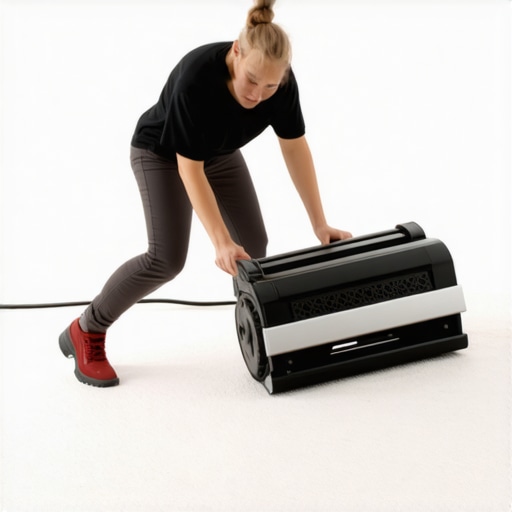
A carpet that is not under proper tension will always move at the thresholds, leading to inevitable fraying. I see guys all the time trying to do a carpet install with just a knee kicker. That is a recipe for a callback. A knee kicker is for positioning, but a power stretcher is for the actual install. You need to pull that carpet tight enough that it has zero room to shift. In a standard room, I am looking for about one to one and a half percent stretch in both directions. When the carpet is stretched properly, it exerts a constant pulling force against the tack strips and the metal thresholds. This tension keeps the carpet seated firmly against the teeth of the transition. If the carpet is loose, it will ‘wave’ or ‘ripple’ as someone walks toward the door. That ripple hits the metal bar like a wave hitting a pier, and the impact slowly pulls the fibers out of the metal’s grip. Tension is the only thing keeping your floor from falling apart.
- Check the subfloor for flatness within 1/8 inch over 6 feet.
- Use a high quality seam sealer on all cut edges at the transition.
- Ensure the metal teeth are upright and sharp before tucking.
- Use a power stretcher to achieve 1 percent tension across the room.
- Hammer the metal lip down with a protective block to ensure even pressure.
- Vacuum the area immediately to ensure no loose fibers are caught under the lip.
Concrete dampness and the chemical bond
Moisture migrating through a concrete slab can degrade the adhesives at the threshold and cause the carpet to pull away. This is a major issue in basements or on slab-on-grade construction. Even if the concrete looks dry, it is constantly breathing water vapor. If you don’t have a proper moisture barrier, that vapor collects under the metal transition. The metal is cold, so the vapor condenses into liquid water. This water sits on the edge of the carpet, softening the latex and the wood tack strips. Eventually, the wood rots and the carpet latex turns to mush. I always use a moisture meter. If the slab is over 80 percent relative humidity, I’m not laying carpet without a topical sealer. I might even swap the wood tack strips for architectural aluminum strips or use a specialized adhesive transition that doesn’t rely on wood. You have to respect the chemistry of the house. Ignoring the moisture is like building a house on a swamp. It might look good today, but in six months, you will have a moldy, frayed mess at every doorway.
The 1/8 inch that ruins everything
Precision in cutting the carpet is the difference between a professional finish and a frayed disaster. Most rookies cut the carpet too short. They think the metal will hide their mistake. It won’t. You need to leave exactly one eighth of an inch of extra carpet beyond the edge of the metal transition. This extra bit is what you ‘tuck’ into the gullet of the bar. When you tuck that extra bit, it folds over on itself, creating a finished edge that cannot fray because the raw cut is pointed downward, away from the traffic. If you cut it flush with the bar, there is nothing to tuck. The raw edge sits right at the top where shoes catch it. I use a wall trimmer or a dedicated row cutter to get that perfect line. It takes an extra five minutes, but it saves me a four hour trip back to the job site to fix a frayed doorway. People want the thickest underlayment they can find, but too much cushion actually causes the locking mechanisms on the floor to fail, and in carpet, it causes the edge to pump up and down, shearing the fibers against the metal. Keep your padding firm and your cuts precise.