Why Your New Carpet Has Permanent Fold Lines and How to Steam Them
The factory fold that haunts your living room
Permanent fold lines in new carpet are often the result of improper storage and transportation where the heavy rolls are stacked in massive piles, causing the secondary backing to undergo a structural deformation. These lines are not just aesthetic flaws but physical memories etched into the latex and polypropylene layers that require specific thermal intervention to release. If your installer tells you they will just walk out over time, they are usually lying to get to the next job. I spent three days grinding concrete on a job last month just so the floor wouldn’t click like a castanet, and I apply that same level of obsession to carpet creases. Most guys skip the leveling compound and think the underlayment will hide the dip, but it won’t. I once walked into a house where the homeowner thought their carpet was defective. In reality, the roll had sat in a cold warehouse under five other 150 pound rolls for six months. The backing had essentially been cold-molded into a V-shape. No amount of foot traffic fixes a mechanical deformation of the SBR latex adhesive. You have to understand the chemistry of the floor to fix it. Every carpet has a primary backing where the fibers are tufted and a secondary backing for stability. Between them is a layer of adhesive that becomes brittle when cold and pliable when heated. When a fold is pressed into that adhesive for months, it becomes a permanent part of the carpet architecture. This is why floor leveling is a non-negotiable step. If the subfloor is uneven, that fold will catch the light at every peak and valley, making a minor flaw look like a canyon. I have seen guys try to stretch these lines out using only a knee kicker, which is like trying to fix a dented car door with a suction cup. It doesn’t work. You need a power stretcher to put the entire room under tension, but even then, the memory of the fold often remains. This is where the physics of steam comes into play.
“A floor is only as good as the subfloor beneath it; deflection is the enemy of every joint.” – Master Flooring Axiom
The chemistry of the heat set fiber
Carpet fibers like nylon and polyester are engineered with a molecular memory through a process called heat setting, which means they want to return to their original shape unless a higher thermal energy is applied. When a carpet is folded, you are not just bending the backing, you are crushing the pile at a specific angle. To reverse this, you must reach the glass transition temperature of the polymer. For most residential carpets, this happens when the fiber is exposed to controlled, moist heat. This isn’t just about making it look pretty. It is about the structural integrity of the floor. If those fibers stay crushed, they will wear unevenly. In high-moisture areas, perhaps near bathroom showers or damp basements, the problem gets worse. The moisture in the air can actually weaken the secondary backing over time if it is already stressed by a fold line. This is why I always check the subfloor with a moisture meter before I even bring the roll inside. If the subfloor is pushing 12 percent moisture, that carpet is going to move, and those fold lines are going to turn into ripples. The interaction between the laminate in adjacent rooms and the carpet transition also matters. If your laminate is floating and your carpet is buckled, the transition strip will eventually snap. I have replaced hundreds of T-moldings because the carpet wasn’t flat. You have to treat the carpet as a performance surface. It has a specific tensile strength and a specific reaction to heat. When we talk about steaming, we are talking about re-aligning the molecular bonds of the synthetic fibers and softening the latex backing so it can lay flat against the subfloor you worked so hard to level.
How steam chemistry works on synthetic backings
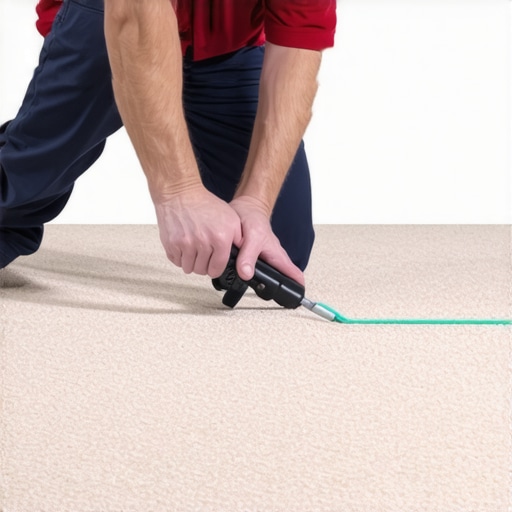
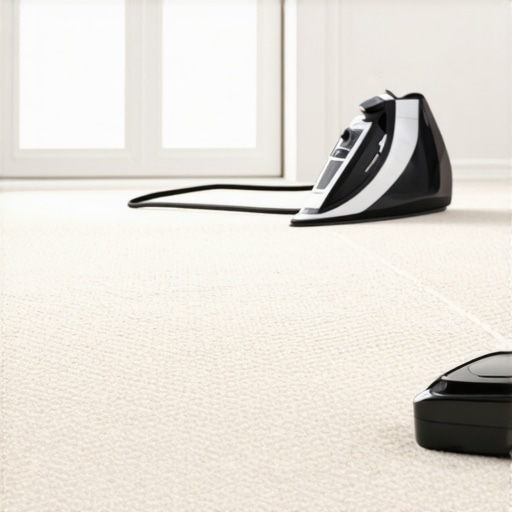
Applying steam to a carpet crease works by introducing water molecules that act as a plasticizer, temporarily softening the latex adhesive and allowing the fibers to stand upright. This process must be done with surgical precision because too much heat will delaminate the backing, effectively ruining the carpet. I use a professional grade steamer with a non-drip head. I never use a standard clothing iron because the plate temperature is too inconsistent and can melt the polypropylene. You have to hover the steamer about two inches above the surface. You are looking for that sweet spot where the steam penetrates the pile but doesn’t soak the pad. Once the area is warm and slightly damp, I use a carpet tractor or a heavy roller to massage the backing. It is a physical therapy session for your floor. If the fold is particularly stubborn, I might have to go under the carpet and steam the backing directly. This is why I tell people that the 1/8 inch that ruins everything is usually found in the subfloor prep. If there is a slight ridge in the concrete or plywood, that steam will only do so much. The carpet will always want to telegraph the shape of what is underneath it. If you have spent the money on a high-end carpet, do not let the installer skip the power stretching phase. A power stretcher uses long poles to push against the opposite wall, creating thousands of pounds of tension. This tension, combined with steam, is the only way to truly erase a warehouse fold. Without the tension, the fold will just come back as soon as the carpet cools down and the latex re-hardens.
| Fiber Type | Heat Resistance | Moisture Absorption | Elastic Recovery |
|---|---|---|---|
| Nylon 6,6 | High | 4.0% | 90% |
| Polyester (PET) | Moderate | 0.4% | 70% |
| Polypropylene | Low | 0.05% | 50% |
The 1/8 inch that ruins everything
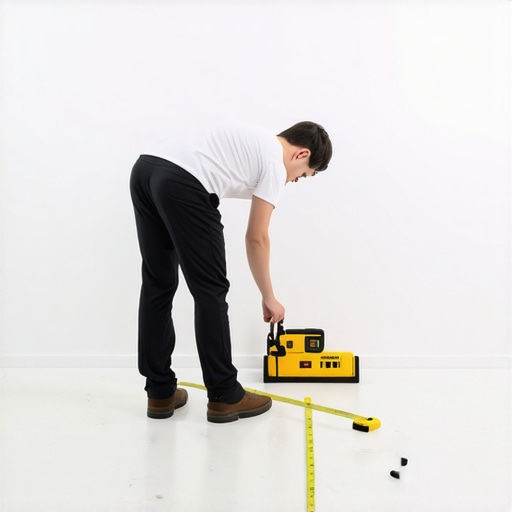
Precision in subfloor flatness is the secret to a professional carpet installation because even a tiny 1/8 inch deviation can cause shadows that highlight fold lines and shipping marks. People think carpet is forgiving. They think they can skip the floor leveling because the pad is thick. That is a rookie mistake. A thick pad actually makes a poor subfloor worse because it allows the carpet to flex more, which puts more strain on the backing. When you have a fold line and an uneven subfloor, the carpet is under constant diagonal stress. I have seen installations where the carpet actually tore at the seam because the installer didn’t account for a dip in the hallway. When you are working around showers or transitions to laminate, the subfloor must be dead flat. I use a 10 foot straight edge on every job. If I see a gap larger than 1/8 inch, the self-leveling compound comes out. It is better to spend the time on the prep than to spend the time fighting a carpet that won’t lay flat. The chemistry of the adhesives we use today is much better than it was 20 years ago, but they still require a flat plane to bond correctly. If the tack strip is sitting on a slope, the carpet will eventually pull off the pins. This is the structural reality of flooring that most people ignore. They see the color and the texture, but I see the tension, the moisture, and the compression. When you steam a fold, you are trying to reach a state of equilibrium where the carpet is no longer fighting itself.
“Proper tensioning during the stretching process is the only way to prevent structural memory from returning.” – Flooring Mechanics Handbook
Professional tools for a perfect finish
Achieving a flawless carpet installation requires a specific arsenal of tools that go beyond the basic kit found in a general contractor’s truck. You cannot fix a permanent fold with a hammer and a prayer. You need the right gear to manipulate the materials at a microscopic level. If you are DIYing this, you are likely going to fail because you won’t have the leverage or the heat control needed. I carry tools that smell like oil and hard work because they are built to move heavy materials. Here is the checklist of what is actually required to get those lines out.
- Power stretcher with at least four extension poles to reach across the room.
- Professional steamer with a wide head and a 1 gallon capacity for consistent steam pressure.
- Carpet tractor with star wheels to re-embed the fibers into the backing after steaming.
- Moisture meter to ensure the subfloor is below 12 percent before the pad goes down.
- High-quality floor leveling compound for any subfloor dips.
- 3-inch reinforced seam tape with a high-melt adhesive.
If your installer shows up with just a knee kicker and a box cutter, send them home. They are going to leave you with ripples and folds that will never go away. A real pro knows that a carpet is a massive sheet of plastic and fabric that wants to be flat. Our job is to give it no choice but to follow the lines of the room. This involves understanding the expansion gaps at the perimeter and how the carpet interacts with the baseboards. If you tuck the carpet too tight, it will bulge. If you tuck it too loose, it will pull out. It is a game of millimeters. The same applies to when you are working near showers or bathrooms. You have to ensure the transition is sealed so moisture doesn’t get under the carpet and reactivate the fold’s memory.
The ghost in the expansion gap
Expansion gaps are not just for wood floors; carpet also needs room to breathe and shift as the humidity in the home changes throughout the seasons. If a carpet is stretched too tight against the walls without a proper tuck, it can cause the center of the room to lift, creating what looks like a fold but is actually a tension ripple. This is why I am so obsessed with the perimeter. I always check the gap between the tack strip and the baseboard. It should be exactly the thickness of the carpet. If it is wider, the carpet will sag. If it is narrower, the carpet will bunch up. When you add the variable of a warehouse fold into a poor installation, you get a mess. I’ve spent years fixing these issues. One time I had to pull up an entire room of laminate just to fix the subfloor leveling underneath because the carpet in the next room was telegraphing a ridge from the transition. It all connects. Your floor is an ecosystem. When you use steam to fix a fold, you are effectively resetting the clock on that material. You are giving it a second chance to be the flat, beautiful surface it was meant to be. But remember, steam is a tool of last resort. The best way to avoid folds is to inspect the roll before it leaves the warehouse. If it looks like it was at the bottom of the pile, don’t accept it. If you have to take it, make sure you have the tools and the knowledge to handle the chemistry of the repair. The bottom line is that flooring is an engineering challenge. It requires a deep understanding of materials, physics, and a lot of patience. Do not let a 1/8 inch dip or a warehouse fold ruin your investment. Treat the subfloor right, use the power stretcher, and if the ghost of that fold still haunts you, use the steam carefully and with respect for the fibers.