How to Fix Peaking Carpet Seams Without a Full Re-Stretch
The physics of the peaking joint
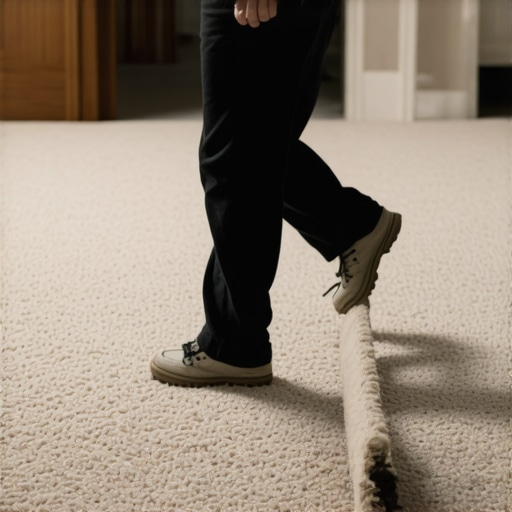
Carpet peaking occurs when compressive forces act upon the seam, forcing the carpet edges upward into a tent-like shape. This mechanical failure is often triggered by thermal expansion or fluctuating humidity, which causes the primary backing and secondary backing to expand against the constraints of the tack strips. To fix this without a full re-stretch, one must neutralize the internal tension at the adhesive bond level using controlled heat and mechanical pressure.
I have spent twenty-five years on my knees, smelling like a mix of WD-40 and oak dust, fixing messes made by installers who didn’t know the difference between a knee kicker and a structural tool. Most guys skip the leveling compound. They think the underlayment will hide the dip. It won’t. I spent three days grinding concrete on a job last month just so the floor wouldn’t click like a castanet. That same logic applies to carpet. If your subfloor is uneven, your carpet seams will peak because the tension is not distributed across a flat plane. I have seen the finest 100 ounce face weight wool ruined by a half-inch dip in the plywood that the installer ignored.
The chemistry of hot melt adhesive
Hot melt seam tape relies on ethylene-vinyl acetate (EVA) copolymers that transition from a solid state to a viscous liquid at approximately 350 degrees Fahrenheit. When a seam peaks, the adhesive bond has usually crystallized in a stressed position, or the yarn fibers have become trapped in the glue line. Successful repair requires reactivating the polymers without causing latex delamination in the carpet backing, which happens if the iron dwells too long in one spot.
The molecular structure of synthetic carpet backing, typically a woven polypropylene, is designed to be stable, but it is not immune to physics. When the room temperature rises, the plasticized components in the backing want to expand. If the carpet was installed too tight, or if the seam was made with a low-melt tape that has a high creep rate, the edges have nowhere to go but up. I prefer a high-grade, wide-profile tape with a heavy adhesive bead. It creates a structural bridge that resists the lateral forces trying to buckle the seam.
“A floor is only as good as the subfloor beneath it; deflection is the enemy of every joint.” – Master Flooring Axiom
Tools for the repair professional
Professional carpet repair requires a seam iron, a seam tractor, and heavy weights to stabilize the thermoplastic bond as it cools. You cannot simply walk on a seam and expect it to stay flat. You need a cool-down period where the adhesive chains can reorganize and lock into a new, flat orientation. Using a star-wheel tractor helps to knit the carpet fibers together while the glue is still in a molten state, ensuring the primary backing is fully embedded in the tape.
- Crain 189 Universal Seam Iron for precise temperature control
- Steel-core seam weights, at least 20 pounds each
- A four-row star-wheel seam tractor
- A specialized moisture meter for subfloor testing
- High-melt professional grade seam tape
The ghost in the expansion gap
Subfloor leveling and perimeter expansion gaps are often overlooked in carpet install projects, yet they dictate the vertical stability of every seam. If the carpet is pinned too tightly against the baseboards, the lateral pressure will eventually find the weakest point, which is almost always the seam. Checking the gully between the tack strip and the wall is the first step in diagnosing if a peak is caused by over-tensioning rather than a failed bond.
| Adhesive Type | Melting Point | Shear Strength | Application |
|---|---|---|---|
| Low-Melt Tape | 250 F | Moderate | Light residential use |
| High-Melt Tape | 350 F | High | Commercial and heavy traffic |
| Reactive Hot Melt | 300 F | Extreme | Permanent structural bonds |
Regional humidity and fiber behavior
Atmospheric moisture plays a massive role in how carpet fibers like nylon or polyester behave over time. In a humid environment, nylon can absorb up to 6 percent of its weight in water, causing the yarns to swell and increase the internal pressure on the seams. Conversely, in dry climates, the latex backing can become brittle, leading to seam splitting or peaking when the heat is finally turned on in the winter.
If you are working in a swampy area like Houston, you better make sure that carpet is acclimated to the HVAC system for 48 hours before you even think about pulling it onto the tack strips. I have seen guys install laminate and carpet in a house with no power, only to have the entire floor buckle three weeks later when the air conditioning kicks in. The moisture moves through the concrete slab, hits the carpet pad, and gets trapped. This vapor pressure can actually lift the carpet off the floor, creating the illusion of a peak.
The 1/8 inch that ruins everything
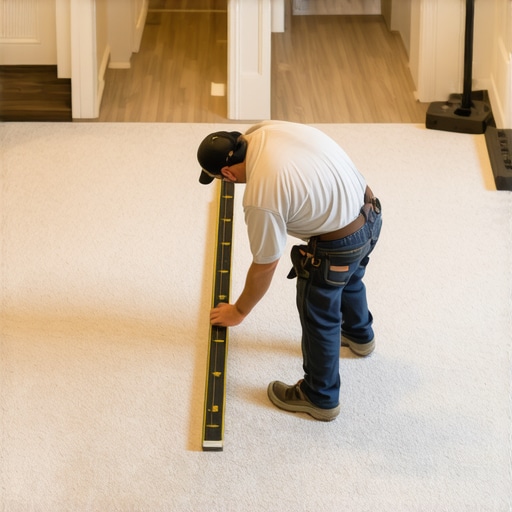
Precision trimming is the difference between a continuous floor and a visible ridge. If the carpet edges are cut even 1/8 of an inch too long, the compression will force the seam upward. This is often what homeowners mistake for a need to re-stretch. In reality, the repair involves peeling back the seam, trimming the micro-excess from the backing, and re-welding the joint. It is a surgical procedure that requires a steady hand and a sharp blade.
“Every installation failure begins with a shortcut taken at the subfloor level; leveling is not an option, it is a requirement.” – Master Flooring Axiom
Gravity as your best friend
Mechanical weighting is the most effective way to flatten a peaking seam without re-stretching the whole room. By heating the seam from the top with a damp cloth and a steam iron, you can soften the adhesive. Once the glue is pliable, you place flat weights over the seam for 24 hours. This forces the carpet to accept a new, flat memory. It is the same principle used in floor leveling, where gravity is the primary tool for achieving a flat plane.
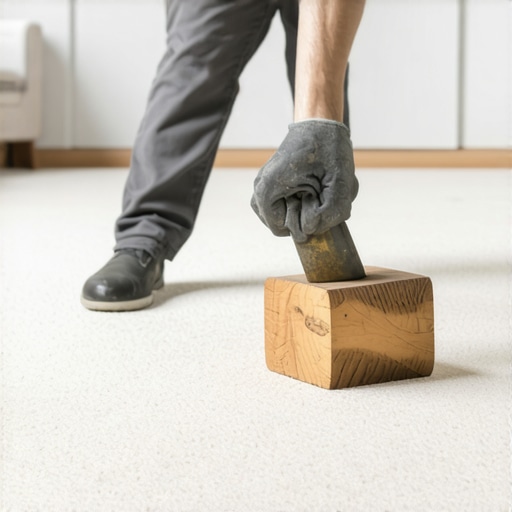
Do not use books or random household items for weights. You need something non-porous and heavy. I use specialized steel bars. If you use something like wood, it can soak up the moisture from the steam and warp, or worse, transfer tannins into your carpet fibers. This is why I tell people to avoid the big-box discount retailers. They do not sell the tools you need for a professional-grade repair. They sell the stuff that gets you into trouble in the first place.
The myth of the perfect stretch
Power stretching is often blamed for peaking, but the real culprit is usually uneven tension. If one side of the seam is stretched more than the other, the seam will twist and peak. A professional installer uses a power stretcher to ensure uniform tension across the entire surface. If you are trying to fix a peak, sometimes the best move is to release the tension at the nearest wall, trim the carpet, and re-hook it onto the tack strip. This relieves the lateral pressure without the need for a total room re-pull.
The chemistry of the latex used in carpet backing has changed over the years. Modern backings are stiffer and less forgiving than the old jute backings. This means that once a peak develops, the stiffness of the material will keep it there unless you use thermal intervention. You have to break the molecular memory of the backing to get it to lie flat again. It is a battle against the polymer structure of the floor.
Maintaining the tension balance
Long-term stability of a carpet install depends on the equilibrium between the stretching force and the grip of the tack strips. If the tack strips are old or the wood is rotting from subfloor moisture, the tension will fail, and the carpet will peak or ripple. Always inspect the perimeter before you start seam repairs. If the foundation is weak, no amount of glue or weights will keep that seam flat for long.
I have seen showers that leaked through the wall and soaked the carpet pad in the adjacent room. The moisture caused the subfloor to swell, which pushed the carpet up at the seam. People thought it was a bad install, but it was a plumbing failure. You have to be a detective in this business. You have to look under the surface to see what is really happening. A peaked seam is just a symptom. The subfloor and the environment are the actual causes.