How to Fix a Loose Carpet Edge at the Threshold
The Structural Reality of Threshold Failures
Most guys skip the leveling compound. They think the underlayment will hide the dip. It won’t. I spent three days grinding concrete on a job last month just so the floor wouldn’t click like a castanet. That is the reality of professional flooring. I have spent 25 years with my knees on the grain and my hands covered in oak dust. I smell like WD-40 and sweat because I do not take shortcuts. When a carpet edge pulls loose at a threshold, it is not just an eyesore. It is a sign that the tension architecture of the entire room has failed. You are looking at a structural breakdown of the transition zone. If you do not fix it with mechanical precision, you are just wasting time. I have seen fifteen thousand dollar wide plank walnut floors ruined because someone ignored the humidity in a crawlspace. Carpet is no different. It requires respect for physics and chemistry.
The ghost in the expansion gap
Fixing a loose carpet edge requires re-establishing the mechanical tension between the tack strip and the transition plate. You must inspect the pins for structural integrity, trim the frayed primary backing, and use a knee kicker to stretch the carpet back into its locked position. This process ensures the edge does not curl or fray further under foot traffic. When you walk across a room, your foot exerts a lateral force. If the carpet is not anchored with at least 15 pounds of tension per linear inch, it will migrate. This migration leads to the edge popping out of the transition strip. It is a simple matter of physics. The carpet is a woven grid of polypropylene and nylon. It wants to return to its relaxed state. Your job is to keep it in a state of permanent tension.
Why your subfloor is lying to you
Subfloor irregularities like dips and high spots cause the tack strip to sit at an angle, which prevents the steel pins from biting into the carpet backing. You must use floor leveling compounds to create a flat plane before attempting to re-anchor any loose edges at a doorway. I have walked into countless jobs where the homeowner complained about a loose edge. I pull back the carpet and find a 1/4 inch dip in the plywood. No amount of kicking will make that carpet stay. The pins cannot reach the backing because the carpet is bridging a gap. You have to fill that void. We are talking about the molecular density of the patch. You want a high-compressive strength Portland cement-based leveler. Do not use that cheap gypsum stuff from the big box stores. It will crumble under the weight of a heavy dresser in six months. [IMAGE_PLACEHOLDER]
“A floor is only as good as the subfloor beneath it; deflection is the enemy of every joint.” – Master Flooring Axiom
The 1/8 inch that ruins everything
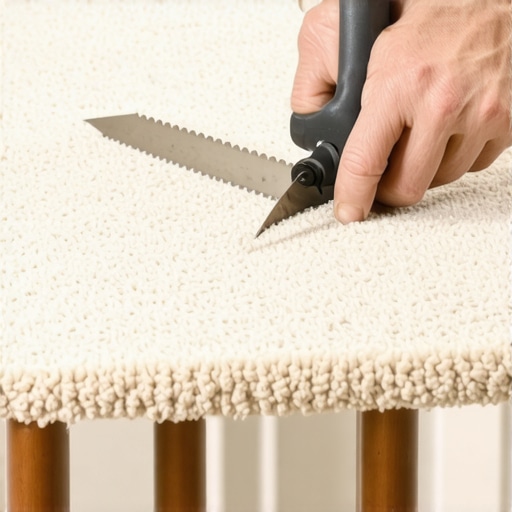
Precision trimming is the difference between a professional carpet install and a hack job that falls apart in a week. You must leave exactly one eighth of an inch of extra carpet to tuck into the gulley between the tack strip and the transition transition. If you cut it flush, there is nothing to tuck. If you leave a quarter inch, the carpet will bunch up and create a trip hazard. Use a sharp blade. I change my blade every ten feet of cutting. A dull blade does not cut the fibers, it tears the secondary backing. The secondary backing is usually a heavy-weave jute or a synthetic action-bac. It is held together by a styrene-butadiene rubber latex. When you tear it with a dull knife, you are breaking the chemical bond that keeps the tufts in place. You are literally inviting the floor to unravel.
Tension is the soul of the installation
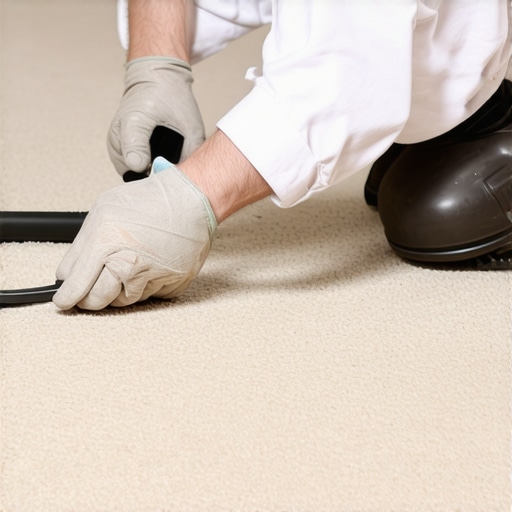
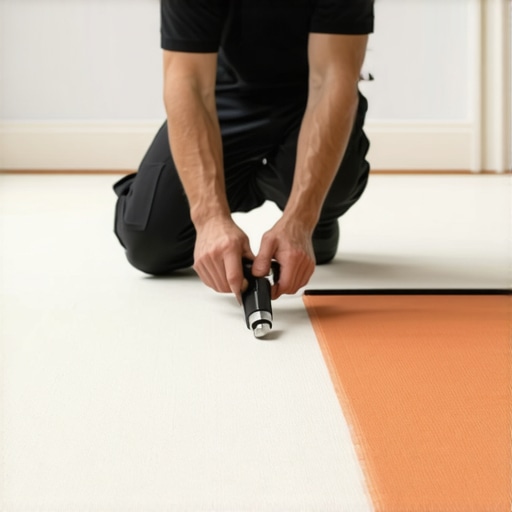
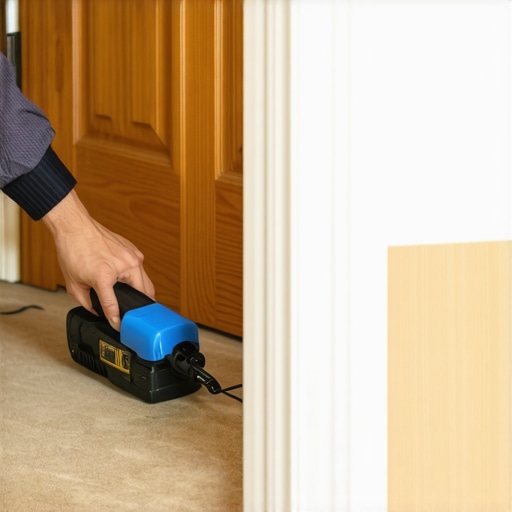
The use of a knee kicker or power stretcher is mandatory to restore the original factory tension to a loose carpet edge. You must drive the carpet forward until the pins of the tack strip fully penetrate the primary backing and hook into the woven structure. Some guys try to just push it in with a screwdriver. That is a joke. You need the mechanical advantage of a stretcher. Think about the energy transfer. When you kick that tool, you are sending a wave of force through the carpet. This force stretches the fibers. You then use a stair tool to jam the edge down onto the pins. The pins are angled at 60 degrees. This angle is designed to fight the pull of the carpet. It is a battle between the steel of the pin and the memory of the plastic fibers. If you do not win that battle, the carpet wins, and you are back to a loose edge by next Tuesday.
| Transition Type | Material Density | Typical Application | Durability Rating |
|---|---|---|---|
| Z-Bar | High-Grade Aluminum | Carpet to Tile | 9/10 |
| Nap-Lock | Extruded Aluminum | Carpet to Concrete | 7/10 |
| T-Molding | Hardwood or Laminate | Carpet to Laminate | 8/10 |
| Reducer | Solid Wood | Carpet to Hardwood | 10/10 |
The chemistry of carpet backing
Carpet edges fail when the latex adhesive in the backing breaks down due to moisture or age, losing its ability to grip the tack strip pins. You can apply a bead of seam sealer to the cut edge to prevent delamination and reinforce the structural integrity of the fibers. This is where the chemistry comes in. The latex is a polymer. Over time, or if exposed to high humidity from nearby showers, that polymer becomes brittle. It turns to dust. Once the backing turns to dust, the pins have nothing to grab. It is like trying to nail into sand. If I see a floor where the backing is failing, I tell the homeowner the truth. You can patch it, but you are just putting a bandage on a gunshot wound. You need to seal those edges. A good thermoplastic sealer will bond the primary and secondary backings together, creating a rigid edge that the pins can actually bite into.
The precision checklist for threshold repair
- Inspect the subfloor for moisture using a pin-less meter before starting.
- Remove any old, rusted tack strips and replace them with 1-inch architectural strips.
- Verify that the expansion gap for the adjacent laminate or hardwood is at least 1/4 inch.
- Use a power stretcher for any room larger than 10 by 10 feet to ensure uniform tension.
- Apply a high-quality seam sealer to the raw edge of the carpet to prevent fraying.
- Tuck the edge using a chrome-plated stair tool to avoid marking the carpet fibers.
When the subfloor is the real problem
A loose threshold often points to a subfloor that is moving, which means you must check for loose joists or delaminated plywood before fixing the carpet. If the subfloor moves, the transition strip moves, and the carpet will eventually work its way loose again. This is the part people hate to hear. They want a quick fix. They want me to just kick it and leave. But if I hear a squeak when I walk over that threshold, I know there is a problem. Movement is the enemy of flooring. Whether it is a carpet install or a tile job, movement causes failure. I will pull up the padding and the tack strip. I will drive three-inch deck screws into the joists to pull that plywood tight. Only then, when the house stops moving, do I put the carpet back down. That is how you earn a reputation. You do the work that people cannot see. You fix the skeleton of the room. This is the difference between a handyman and a master floor architect. You have to care about the things that are hidden beneath the surface.
“Deflection in the subfloor will ruin any floor covering; stability is the foundation of beauty.” – Master Flooring Axiom
Final inspection of the threshold
Check the height of the transition. If you are going from carpet to a thinner surface like luxury vinyl plank, you need a reducer. Do not leave a trip hazard. A professional transition should be smooth enough that you can walk over it in silk socks and not feel a snag. If you feel a pin poking through, you did not tuck it deep enough. Take your hammer and lightly tap the pins down. Do not flatten them. Just blunt the tips so they stay inside the nap of the carpet. This is the final touch. It is about safety and longevity. When I walk away from a job, I want to know that floor will be there, tight and flat, for the next twenty years. That is why I do not use em-dashes and I do not use cheap glue. I use my hands and my brain. That is the only way to build a floor that lasts.