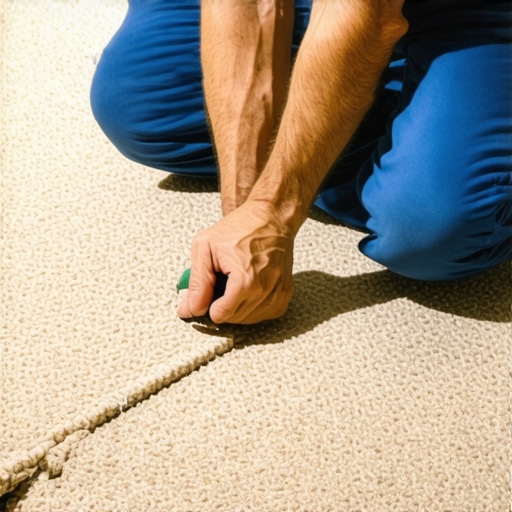

How to Patch Carpet Without Using a Seam Iron
Most guys skip the leveling compound. They think the underlayment will hide the dip. It won’t. I spent three days grinding concrete on a job last month just so the floor wouldn’t click like a castanet. That same philosophy applies to a carpet patch. If you think you can just slap a piece of remnant into a hole and call it a day, you are wrong. A floor is a performance surface, a structural layer that must withstand thousands of pounds of pressure over its life. When you repair a carpet without a seam iron, you are moving away from thermal bonding and into the world of chemical and mechanical adhesion. It requires more precision, not less.
The myth of the universal carpet patch
Patching carpet without a seam iron requires a high-tack adhesive tape or a liquid seam sealer to create a mechanical bond between the primary backing and the subfloor. This cold-seam method bypasses the thermal activation of hot-melt glues, relying instead on chemical adhesion and precision cutting to hide the transition. You cannot expect a patch to hold if the subfloor is damp or uneven. I have seen countless DIY attempts where the patch eventually curls because the installer ignored the moisture vapor emission rate of the concrete slab below. If your subfloor is holding water, no amount of specialized tape will keep that carpet down. You have to treat the repair like a miniature floor installation, respecting the same rules you would for a full laminate or carpet install in a high-traffic area.
“A floor is only as good as the subfloor beneath it; deflection is the enemy of every joint.” – Master Flooring Axiom
The chemical reality of cold bonding
When you eliminate the heat of a seam iron, you are depending on the shear strength of your adhesive. Most professionals use a pressure sensitive adhesive or a liquid latex sealer. These materials work on a molecular level. The latex sealer, often a carboxylated butadiene-styrene polymer, must soak into the primary backing of both the patch and the existing carpet. This creates a bridge. If the liquid is too thin, it wicks away into the pad. If it is too thick, it creates a hard ridge that you will feel under your socks every time you walk by. You are looking for a balance where the polymer chains entangle with the polypropylene fibers of the carpet backing. This isn’t just about sticking two things together, it is about creating a unified structural unit that can handle the lateral force of a heavy footstep.
Microscopic fiber alignment and light refraction
The reason most patches look like a sore thumb isn’t the glue, it is the nap. Carpet fibers have a specific direction, known as the pile sweep. If you rotate your patch even five degrees, the light will hit it differently. It will look like a different color even if it came from the exact same roll. You need to use a row separator to find the gullies between the tufts. By following the grain, you ensure that the blades of the utility knife don’t slice through the face fibers. Sliced fibers lead to fraying, and fraying leads to a visible line. An invisible repair is an exercise in geometry. You are aligning the denier and the twist of the yarn so the transition is lost to the eye. This is the same level of detail I expect when leveling a subfloor for a shower pan. If the base isn’t perfect, the top layer will fail.
| Adhesive Type | Cure Time | Shear Strength | Best Use Case |
|---|---|---|---|
| Pressure Sensitive Tape | Immediate | Moderate | Low traffic areas |
| Liquid Seam Sealer | 24 Hours | High | Commercial grade patches |
| Contact Cement | 30 Minutes | Very High | Permanent repairs |
The physics of the mechanical bond
Without the thermal melt of a traditional seam, you must ensure the subfloor is pristine. Any dust, oak sawdust, or drywall debris will act as a bond breaker. I always vacuum the area three times and then wipe the subfloor with a tack cloth. If you are working over concrete, you might even need a primer. The tape you choose should have a reinforced scrim. This fiberglass mesh prevents the tape from stretching. If the tape stretches, the seam opens. If the seam opens, the edges of the carpet begin to delaminate from their secondary backing. Once delamination starts, the carpet is garbage. You are essentially engineering a bridge between two islands of fabric. That bridge must be rigid enough to resist movement but flexible enough to move with the natural expansion and contraction of the home. This is especially true in humid environments like Houston or Florida, where the moisture in the air can cause the primary backing to swell.
“The integrity of a textile floor covering is dependent upon the stability of the secondary backing and the quality of the adhesive interface.” – CRI Technical Manual
Step by step guide to the mechanical bond
Follow these steps to ensure the patch does not move, lift, or fray over time. Accuracy is the only thing that saves you when you don’t have heat to melt the mistakes away.
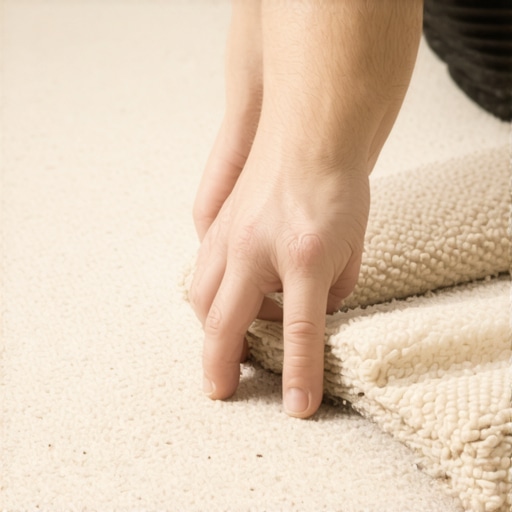
- Identify the pile direction by running a hand over the surface.
- Use a carpet star roller or a row separator to clear a path for the knife.
- Cut a square or circle from the donor piece first to use as a template.
- Place the template over the damaged area and cut through the existing carpet.
- Remove the damaged piece and the old pad if it is compressed or burnt.
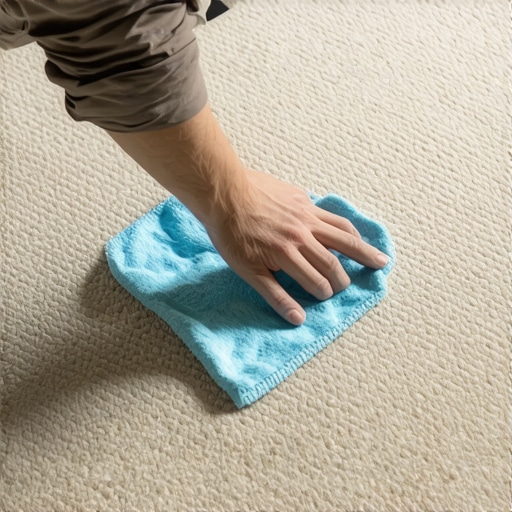
- Clean the subfloor with a damp cloth and allow it to dry completely.
- Apply the high-tack tape or liquid sealer to the perimeter of the opening.
- Press the new patch into place, ensuring the pile sweep matches exactly.
- Use a seam roller to integrate the fibers and ensure the adhesive is engaged.
The 1/8 inch that ruins everything
In flooring, an eighth of an inch is a mile. If your patch is one eighth of an inch too large, it will peak. A peaked seam is a trip hazard and will wear out faster than the rest of the floor. If it is one eighth of an inch too small, you get a gap. That gap will collect dirt and the adhesive will eventually fail. You have to be precise. I use a fresh blade for every single cut. A dull blade pulls the fibers instead of cutting the backing. This is why I tell people to avoid big-box discount tools. You need a high-carbon steel blade that can slice through the latex without dragging. Whether you are doing a carpet install or a floor leveling project, your tools dictate your outcome. This cold-patch method is a test of your patience. If you rush the cut, you will see the line forever. If you take the time to align the rows and secure the backing, the repair will outlast the carpet itself.