How to Match Carpet Pile Direction Across Multiple Rooms
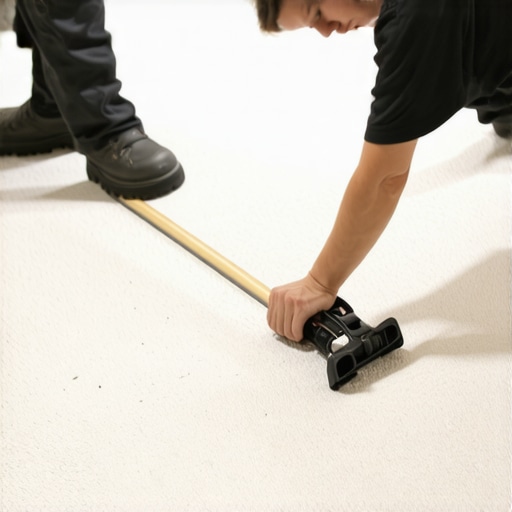
I spent three days grinding concrete on a job last month just so the floor wouldn’t click like a castanet, but the real nightmare started when the broadloom arrived. I once walked into a house where a fifteen thousand dollar custom installation looked like a checkerboard because the installer didn’t respect the nap. If you think matching carpet is just about the color, you are going to end up with a client screaming about shadows. Carpet pile is directional. Every single fiber has a lean that was baked into it during the tufting and heat-setting process. When you ignore that lean, you create a visual disaster where the same roll of carpet looks like two different shades of gray. I have spent twenty five years on my knees with a power stretcher and a kicker, and I can tell you that the physics of light reflection is more important than your aesthetic vision. Stop treating carpet like a blanket and start treating it like a structural engineering challenge. If the subfloor is not right, the carpet will never sit right. If the pile is not matched, the room is a failure. No amount of vacuuming will fix a reversed nap. It is a permanent mistake that screams amateur hour from across the hallway.
The directional grain of the fibers
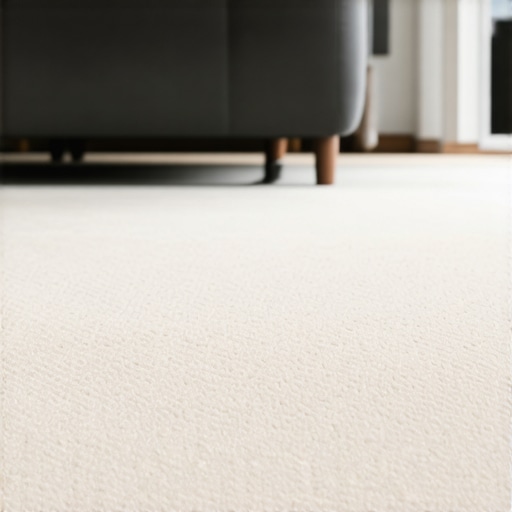
Carpet pile direction refers to the natural slant of the fibers resulting from the manufacturing process on the tufting machine. All broadloom has a nap. This means if you run your hand one way, the fibers stand up and create resistance. If you run it the other way, they lay down flat. In a professional carpet install, every piece in a connected space must have the pile pointing in the same direction. Most people think you just roll it out and cut. That is how you get shading problems. Shading occurs when light hits the side of the fiber instead of the top. If one room has the pile facing the window and the hallway has it facing away, the seam between them will look like a literal cliff. This has nothing to do with the dye lot and everything to do with how the light interacts with the longitudinal axis of the yarn. You need to map out the entire floor plan before you even think about pulling the carpet off the truck.
Identifying the nap with the hand test
To identify the carpet pile direction, perform the hand test by sliding your palm across the surface to feel for resistance or smoothness. When the carpet feels smooth, you are moving with the nap. When it feels rough and the fibers stand up, you are moving against it. I also use a common coin. If you place a quarter on the carpet and tap the surface, the coin will actually move in the direction of the pile. This is physics, not magic. You should mark every piece of carpet on the back with a permanent marker. Draw a big arrow showing the direction of the pile. Do not trust your eyes alone. Factory lighting in a warehouse is different than the natural light in a living room. I have seen guys get fooled by berbers or low profile loops. Even those have a direction. If you miss it, you will see a dark line at every doorway. It makes the house look like it was pieced together from scraps at a discount outlet.
“A floor is only as good as the subfloor beneath it; deflection is the enemy of every joint.” – Master Flooring Axiom
The 1/8 inch that ruins everything
Floor leveling is a mandatory step before you even think about the pile direction because any dip in the subfloor will cause the nap to catch light differently. If your subfloor has a belly in it, the carpet will dive into that hole and the pile will splay out. This creates a false shading effect that looks like a stain. I have used bags of self leveling compound to fix what builders left behind. You cannot hide a bad subfloor with thick padding. In fact, if you use a padding that is too soft, it causes the carpet backing to stretch and distort, which ruins the alignment of the fibers. You want a high density rubber or a heavy felt. This keeps the carpet stable so the pile stays oriented where you put it. Unlike a laminate floor which has a hard wear layer, carpet is a living thing. It moves. It breathes. If the base is not flat, the pile will telegraph every flaw in the house. This is especially true near transition areas like showers or kitchens where the subfloor material often changes.
| Carpet Type | Pile Sensitivity | Nap Detection Method |
|---|---|---|
| Saxony | Extreme | Visual shading and hand test |
| Frieze | Low | Physical friction test |
| Berber | Moderate | Row counting and coin test |
| Cut and Loop | High | Visual pattern alignment |
The structural reality of subfloor prep
Professional carpet installation requires a subfloor that is dry, clean, and within one eighth of an inch over a ten foot span. If you are installing over concrete, you better have a moisture meter. I have seen moisture wicking up through a slab and rotting the latex backing of a carpet in six months. This moisture also causes the pile to lose its heat-set memory. When the fiber loses memory, it goes limp. Now your directional match doesn’t matter because the carpet looks like a wet dog. You need to seal that concrete or use a moisture barrier. When you are moving from a hallway into a room, the subfloor needs to be continuous. If there is a height difference, you need to ramp it. Do not just pull the carpet tight and hope for the best. The tension from the power stretcher will pull the pile open at the transition, exposing the backing. This is why I hate cheap installers. They skip the prep and go straight to the kick. You spend the money on the prep or you spend the money twice on the replacement.
Why lighting exposes your installation sins
Natural light from windows acts as a giant spotlight that reveals any inconsistency in the carpet pile direction or seam quality. My rule is simple. The pile should always point away from the primary light source. This minimizes the shadows cast by the individual fibers. If you point the pile toward a window, every single tuft casts a tiny shadow behind it. This makes the carpet look darker and dirtier than it is. When you move across multiple rooms, you have to decide which light source is the boss. Usually, it is the big window in the Great Room. Everything else in the house should follow that lead. This is where the carpet install gets technical. You might have to use more material to ensure the pile direction stays consistent from the front door to the back bedroom. If you try to save money by turning a piece ninety degrees to fit a closet, you will see it. It will look like a different species of carpet. Do not be cheap with the yardage.
- Inspect the roll for factory defects and side-to-side shading before cutting
- Map the house and mark the pile direction with arrows on the subfloor
- Ensure all seams are parallel to the main light source when possible
- Use a seaming iron at the correct temperature to avoid melting synthetic fibers
- Power stretch the carpet in the direction of the pile to maintain tension
Physics of the seam and the iron
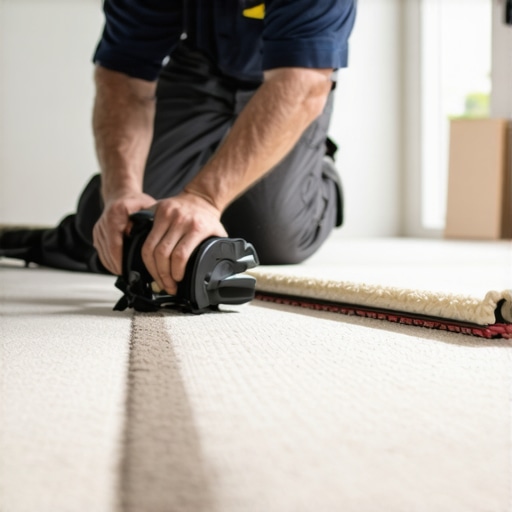
The chemical bond of the seam tape must be achieved at a temperature that melts the adhesive without scorching the carpet backing. Most guys run their irons too hot. They think they are being fast. What they are actually doing is distorting the pile at the edge. When the heat hits that polypropylene backing, it shrinks. Now your pile direction is tilted at the seam. This creates a permanent peak that no amount of rolling will fix. You need a cool down period. I use a seaming weight, but I don’t leave it on too long or it traps moisture. The seam should be invisible. If the pile is matched correctly, the fibers will interlock like a zipper. If the pile is reversed, the fibers will fight each other. They will push apart and leave a gap that looks like a black line. This is where the showers and wet areas come into play. If you have a seam near a bathroom, the humidity can affect the tape. You need a premium grade adhesive tape that is rated for high traffic and moisture. It is about the chemistry of the bond. If the bond fails, the pile direction won’t matter because the floor will be a trip hazard.
Why laminate logic fails in soft flooring
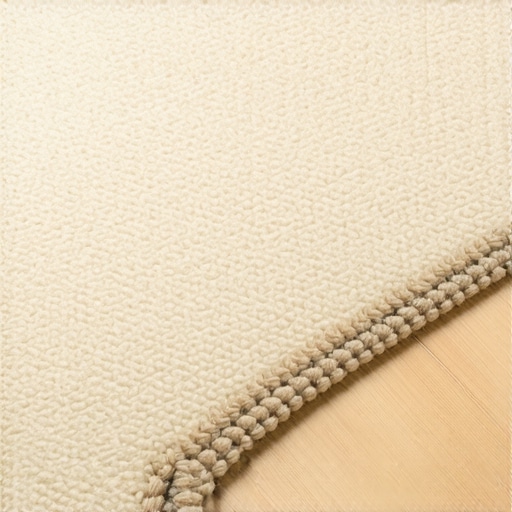
Laminate flooring relies on mechanical locking mechanisms while carpet relies on lateral tension and fiber orientation. You cannot treat a carpet roll like a box of planks. With laminate, you can change direction at a doorway with a T-molding. With carpet, a T-molding is an admission of failure. You want a zero-threshold transition. This requires a master level of planning. You have to think about how the carpet will tuck into the tack strip and how the nap will flow over the edge. If you are going from a bedroom into a hallway, the pile needs to be a continuous river. If you break that river, the house feels small and disjointed. I have spent hours calculating the best layout to minimize waste while keeping the grain straight. It is a puzzle that involves the width of the roll, which is usually twelve or fifteen feet, and the total length of the run. If you get it wrong, you end up with a seam in the middle of a high traffic area. That is where the pile will crush first. Professionalism is about predicting where the wear will happen and protecting the floor before the first footstep.