Why Your Carpet Feels Damp Near the Exterior Wall After a Rainstorm
The 1/8 inch that ruins everything
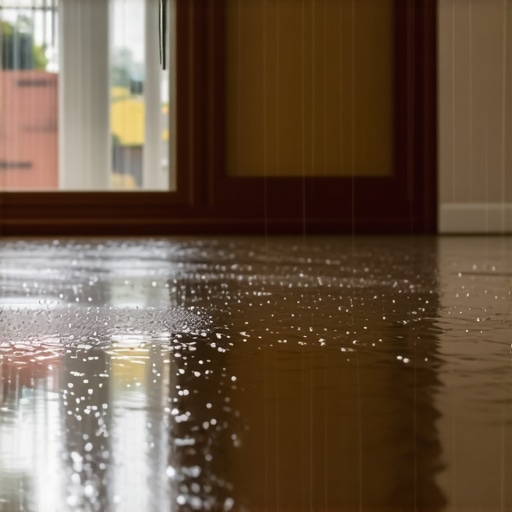
Damp carpet near an exterior wall after rain is typically caused by failed flashing, improper site grading, or hydrostatic pressure forcing moisture through the concrete slab. When exterior soil becomes saturated, water seeks the path of least resistance, often bypassing the sill plate or wicking through the porous subfloor.
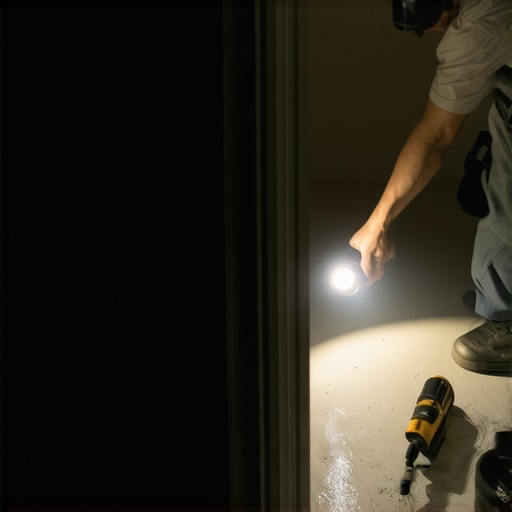
Listen, I have spent thirty years looking at things most homeowners want to ignore. My knees are shot and I smell like WD-40 and oak dust most days. Most guys in this trade will come in, pull up your carpet, and tell you that you need a new pad. They are wrong. Most guys skip the leveling compound. They think the underlayment will hide the dip. It won’t. I spent three days grinding concrete on a job last month just so the floor wouldn’t click like a castanet, only to find the real issue was a hairline crack in the foundation that was drinking rainwater. If you ignore the physics of your subfloor, you are just throwing money into a swamp. A floor is not a decoration. It is a structural engineering challenge that starts three feet underground. When you feel that cold, clammy sensation under your socks after a thunderstorm, you aren’t just dealing with a spill. You are witnessing a failure of the building envelope. You are seeing the result of capillary action where water molecules are literally pulled upward through the microscopic pores of your building materials. It is a slow, silent rot that eats tack strips and breeds microbial colonies before you even see a stain.
The invisible river beneath your tack strip
Groundwater intrusion occurs when the exterior water table rises and creates positive pressure against your foundation. This moisture migrates through concrete pores or the gap between the floor slab and the foundation wall, eventually saturating the carpet pad and the primary backing of the carpet fibers near the perimeter.
Concrete is not a solid block. It is a hard sponge. If you look at a slab under a microscope, you see a network of capillaries formed during the hydration process of the cement. When it rains, the hydrostatic pressure outside the house increases. This pressure pushes water through those capillaries. If the builder did not install a 6-mil poly vapor barrier under that slab, that water has nowhere to go but up into your carpet. I have seen laminate floors buckled three inches off the ground because a guy ignored a damp corner. I have seen showers that were waterproofed perfectly on the walls but leaked at the floor leveling because the installer did not understand bond breakers. The same thing happens with your carpet. The tack strip is made of Douglas fir or plywood. It sits right against that exterior wall. When it gets wet, it swells. The nails rust. The wood rots. This creates a food source for mold. You might think the carpet is the problem, but the carpet is just the victim. The real criminal is the moisture vapor transmission rate (MVTR) of your concrete. If your slab is pushing out more than 3 pounds of moisture per 1,000 square feet over 24 hours, your flooring is doomed. You cannot just dry it out with a fan. You have to stop the physics of the intrusion at the source.
“A floor is only as good as the subfloor beneath it; deflection is the enemy of every joint.” – Master Flooring Axiom
Structural failures that masquerade as humidity
Exterior dampness in carpeting is often the result of failed window seals, blocked weep holes in brick siding, or foundation grading that slopes toward the structure. These mechanical failures allow liquid water to bypass the siding and settle on the subfloor where it pools underneath the carpet.
I remember a job in a rainy climate where the owner swore the floor leveling was off. He thought his floor was tilting. It wasn’t tilting. The carpet install was fine, but the brick masons had covered the weep holes with mortar. When it rained, water trapped behind the brick had no way to escape. It filled the cavity and spilled over the top of the foundation and onto the subfloor. It is simple math. Water goes down. If it cannot go down on the outside, it will go down on the inside. You need to check your gutters. You need to check your downspouts. If your downspout is dumping water two feet from your wall, you are basically hand-feeding a flood to your crawlspace. I have seen homeowners spend thousands on high-end carpet only to have it ruined in a week because they didn’t want to spend fifty dollars on a plastic drainage pipe extension. It makes me sick. You have to be a detective. You have to look at the chemistry of the dampness. If the water is tea-colored, it is coming through wood. If it is clear, it might be a plumbing leak. If there is a white powdery residue, that is efflorescence. That is salt being pushed out of the concrete by moisture. That is the sign of a slab that was never properly sealed.
| Material Type | Max Moisture Content | Primary Failure Mode |
|---|---|---|
| Concrete Slab | 3.0 lbs (CaCl Test) | Adhesive Re-emulsification |
| Plywood Subfloor | 12% MC | Delamination and Fungal Growth |
| Solid Hardwood | 6-9% MC | Cupping and Crowning |
| LVP / Laminate | 75% Relative Humidity | Locking Mechanism Failure |
The chemical warfare inside your carpet pad
Carpet pads act as a secondary reservoir for moisture, trapping liquid against the subfloor and preventing evaporation. The polyurethane foam in most pads will degrade when exposed to consistent moisture, leading to a breakdown of the material and the release of volatile organic compounds.
Most people think the carpet is what smells. It is not. It is the pad. The pad is a cell-structure foam. When water hits it, it gets trapped in those cells. Even if you run a dehumidifier, you are only drying the top 1/8 inch of the carpet fibers. The pad stays wet for weeks. This is where the chemistry gets nasty. The moisture reacts with the old adhesives used to stick the pad to the floor. If you have an old carpet install, that glue might be a multi-purpose adhesive that is water-soluble. The water turns the glue back into a sticky, smelly liquid. This is called re-emulsification. It is a mess to clean up. I have had to scrape floors for days because of this. You also have the issue of the secondary backing of the carpet. Most carpets are held together with latex. When latex stays wet, it undergoes hydrolysis. The bond between the fibers and the backing breaks down. This is why you see carpet start to wrinkle or “delaminate” near wet walls. It is literally falling apart at a molecular level. You cannot save it once it reaches that point. You have to tear it out. You have to fix the leak. You have to level the floor if it is pitted. Then you start over with a closed-cell underlayment that won’t drink the rain.
- Inspect exterior grading to ensure a 6-inch drop over 10 feet.
- Clear all debris from brick weep holes and window tracks.
- Test concrete moisture using a calcium chloride kit or pinless meter.
- Check the sill plate for signs of wood rot or water staining.
- Verify that the carpet tack strip is not blackened or rusted.
The ghost in the expansion gap
Modern flooring requires a perimeter expansion gap to account for material movement, but this gap often becomes a conduit for moisture if the exterior seal is breached. Proper installation requires a balance between allowing the floor to breathe and ensuring the building envelope remains airtight against vapor.
I have seen guys jam carpet so tight against a baseboard that the subfloor can’t move. Then they wonder why the floor buckles when the humidity hits 60 percent. But the real problem with that gap near an exterior wall is that it is a direct line to your foundation. If your siding is not lapped correctly, or if your vapor barrier stops six inches short of the wall, you have an open door for moisture. I once saw a luxury laminate job fail because the installer didn’t use a moisture-resistant sealant at the perimeter in a room near a bathroom and an exterior wall. Rainwater wicked under the baseboard and hit the cut edge of the laminate. Laminate is basically compressed sawdust. It soaked up that water like a thirsty dog. Within two hours of the storm ending, the floor was peaked like a mountain range. While most people want the thickest underlayment, too much cushion actually causes the locking mechanisms on LVP to snap under pressure. It is the same with carpet. If you have a pad that is too thick and it gets wet, it creates a trampoline effect that pulls the carpet off the tack strip. You need stability. You need a subfloor that is flat within 3/16 of an inch over 10 feet. If you don’t have that, the moisture will pool in the low spots and you will never get the smell out. You have to be precise. You have to be a stickler for the rules. The TCNA and NWFA don’t write those manuals for fun. They write them because water is the universal solvent and it wants to destroy your house.
“Subfloor preparation is 90% of the job; the finished surface is merely the evidence of your labor.” – Master Flooring Axiom
The solution for a permanent dry zone
Fixing a damp carpet requires a multi-stage approach including exterior water mitigation, subfloor sealing with an epoxy moisture vapor barrier, and the use of synthetic, inorganic carpet pads. These steps ensure that even if the building envelope is stressed, the interior flooring remains isolated from moisture.
Stop looking for a quick fix. A fan and a prayer won’t fix a foundation leak. You need to get outside and look at your house while it is raining. See where the water is pooling. If you see a lake against your siding, that is your problem. Once you fix the outside, you have to treat the inside like a surgery. Pull back the carpet. Throw away the wet pad. It is garbage now. Scrape the floor down to the bare substrate. If it is concrete, use a floor leveling compound that is rated for high moisture environments. Not the cheap stuff. Use the high-strength, polymer-modified cement. Then, apply a moisture vapor barrier. I like the epoxy-based ones that you roll on. They soak into the pores and plug them up. It turns your floor into a submarine hull. For the carpet install, use a synthetic pad made of recycled fibers or a antimicrobial rubber. These don’t provide a food source for mold. They don’t break down when they get damp. And for the love of everything holy, make sure your installer leaves the proper gaps. Don’t let them hide a wet subfloor under a new carpet. It is like putting a clean shirt on without taking a shower. It might look good for an hour, but the problem is still there, and it is only going to get worse the next time the clouds roll in.