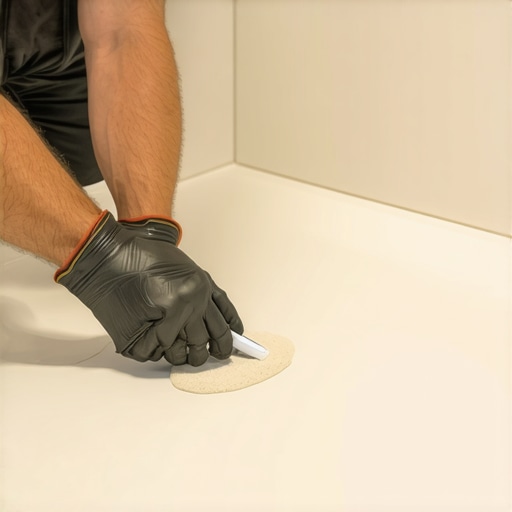
How to Seal a Shower Bench Corner Without Using Silicone
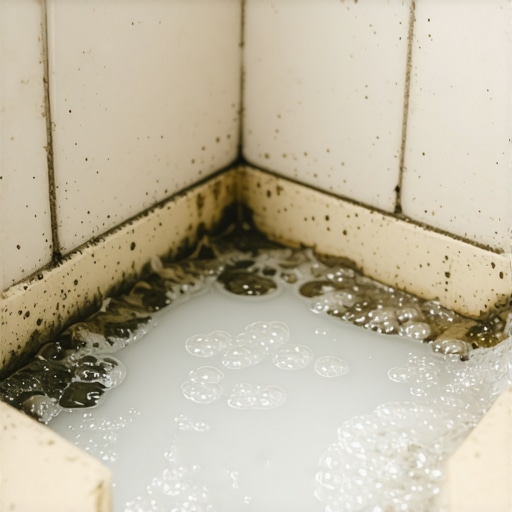
Most guys skip the leveling compound. They think the underlayment will hide the dip. It won’t. I spent three days grinding concrete on a job last month just so the floor wouldn’t click like a castanet. That same mindset applies to shower benches. People think a bead of silicone will save a bad build. It won’t. I have pulled apart hundreds of showers where the silicone looked fine on the surface while the 2×4 framing underneath was rotting into a black sludge. Silicone is a surface fix for a structural problem. It peels. It attracts mildew. It fails because it relies on a mechanical bond that degrades in the presence of constant moisture and alkaline soap scum. When you are building a bench, you are building a dam. If you do not seal the corner with structural integrity, the physics of water will win every time.
The myth of the flexible joint
Sealing a shower bench corner without silicone requires high performance epoxy grout or moisture cured urethane sealants that create a chemical bond with the tile substrate. These materials offer superior shear strength and mold resistance compared to standard silicone caulking. You must ensure the bench is sloped correctly first. Water does not just sit on a bench. It migrates. Through capillary action, it finds the tiny microscopic gaps between your tile and the wall. If you rely on silicone, you are relying on a product that has a limited lifespan and zero structural value. I prefer using epoxy systems or hybrid polymers that actually become part of the assembly. We are talking about the molecular level where the resin occupies the pores of the tile. This is not just a surface smear. It is an architectural weld.
“A floor is only as good as the subfloor beneath it; deflection is the enemy of every joint.” – Master Flooring Axiom
The chemistry of epoxy resins in wet environments
Epoxy grout serves as a waterproof sealant because it is non porous and maintains a rigid yet durable bond that resists the movement of water molecules. Unlike cementitious grout, epoxy does not require a secondary sealer and will not crack under the minor shifts of a shower bench. To understand why this works, you have to look at the cross linking polymers. When you mix the part A resin with the part B hardener, a chemical reaction creates a plastic like substance that is impervious to water. I have seen epoxy joints last twenty years without a single leak. The trick is the application. You have to pack that corner tight. If there is a void behind the tile, water will find it. I always tell my guys to treat the corner like a pressure vessel. If it cannot hold air, it cannot hold water.
Why your subfloor is lying to you
Subfloor stability dictates the success of a shower bench seal because any deflection in the floor joists will transfer directly to the bench corners. If the floor moves even 1/32 of an inch, a standard sealant will snap or pull away from the tile edge. This is why I obsess over floor leveling. If I am installing laminate or carpet install nearby, I check the transition heights. But in a shower, the stakes are higher. You are dealing with hydrostatic pressure. If the floor under the shower pan flexes, the bench, which is anchored to the wall and the floor, becomes a lever. It will rip itself away from the wall. You need to use a high modulus sealant like an MS Polymer or a Polyurethane if you are not using epoxy. These materials have higher tensile strength than silicone. They can actually hold the bench together while keeping the water out.
| Sealant Type | Adhesion Strength | Mold Resistance | Expected Lifespan |
|---|---|---|---|
| Epoxy Grout | High | Excellent | 20+ Years |
| MS Polymer | Medium-High | Good | 10-15 Years |
| Urethane Caulk | High | Moderate | 10 Years |
| Standard Silicone | Low | Low | 2-5 Years |
The 1/8 inch that ruins everything
Maintaining a precise 1/8 inch gap at the change of plane allows for the proper depth of sealant to achieve a long term waterproof bond. Shallow joints fail because there is not enough material to handle the expansion and contraction of the different building materials in the shower. When wood studs, cement board, and ceramic tile meet, they all move at different rates. This is thermal expansion. If you cram the tile tight into the corner, it will tent and pop. If you leave a gap and fill it with a high quality urethane, the sealant acts like a shock absorber. But it is a shock absorber with teeth. It bites into the edge of the tile and does not let go. This is the structural zooming I talk about. You are looking at the bond line. If that bond line is too thin, it shears. If it is deep, it survives.
- Ensure the bench has a 1/4 inch per foot slope toward the drain.
- Clean the tile edges with denatured alcohol to remove all dust and oils.
- Use a backer rod in deep corners to save on sealant and improve performance.
- Apply the sealant in a continuous bead without air pockets.
- Tool the joint with a dry finger or a specialized tool to avoid introducing soap water.
Fabricating the zero maintenance corner
Solid surface materials like quartz or granite eliminate the need for corner sealants by allowing for a mitered or overlapping joint that can be fused with color matched resin. This creates a monolithic surface that is physically impossible for water to penetrate through the corner. This is the gold standard. Instead of tiling the top of the bench and the face of the bench and hoping the grout holds, you use a single slab. You overhang the front. You tuck the wall tile over the back of the slab. Now, gravity is on your side. Water has to go uphill to get behind that bench. I hate seeing guys tile a bench with 2×2 mosaics. That is a thousand failure points waiting to happen. Give me a solid piece of stone and a high quality hybrid polymer any day. It is faster, cleaner, and it never leaks.
“Tile is a finish, not a waterproof barrier; the integrity of the system lies in the membranes and seals hidden from view.” – Master Flooring Axiom
The ghost in the expansion gap
Thermal movement in showers causes invisible shifts in the bench structure that will eventually destroy weak silicone seals. Utilizing a moisture cured polyurethane sealant provides the elasticity needed to survive these cycles without losing adhesion to the tile or stone. Think about the temperature swing. You turn on the hot water and the tile expands. You turn it off and it shrinks. Over a year, that corner moves thousands of times. Silicone is like a rubber band that has been left in the sun. It gets brittle. Polyurethane stays beefy. It stays tough. When I am doing a carpet install in a master bedroom, I do not worry about the humidity much. But three feet away in that shower, it is a war zone. You need materials that are rated for immersion. If it is not rated for underwater use, keep it out of my shower.
The chemistry of moisture cured urethanes
Urethane sealants cure by reacting with the humidity in the air to form a tough elastomeric seal that is significantly more durable than silicone. These products are often used in commercial roofing and expansion joints because they can handle extreme environmental stress. I have used these on high end commercial jobs where the architect was breathing down my neck about warranties. They are harder to tool than silicone. They are messy. You will get it on your hands and it will be there for a week. But that is the point. If it is hard to get off your skin, it is going to be hard for the water to push it off the tile. You want that aggressive adhesion. You want the sealant to be the strongest part of the corner, not the weakest link. That is how you build a shower that lasts a lifetime.