How to repair a snag in a Berber carpet
The anatomy of a loop pile disaster
Berber carpet snags occur when a single loop of yarn is pulled from the primary backing, often creating a linear run that compromises the structural integrity of the entire floor. To fix this, you must understand the polypropylene weave and the latex adhesive bond that keeps these olefin or nylon fibers anchored to the secondary backing. Repairing a snag requires surgical precision and the right cyanoacrylate adhesive or hot melt resin to prevent the unraveling of the tufted loops.
I have spent twenty five years on my knees, smelling like floor wax and sawdust, fixing the mistakes of installers who think carpet is just a rug you throw over a slab. I remember a job in a high rise downtown. The owner had a $12,000 custom Berber. One loose thread caught on a vacuum beater bar and it unzipped thirty feet of yarn before they could hit the power switch. It looked like a crime scene. Most guys would have told them to replace the whole room. I spent three days re-burring those loops. A floor is a performance surface. If you do not respect the physics of the weave, the weave will eventually betray you.
The physics of the loop and the pull
Loop pile density and yarn twist levels determine how a Berber carpet reacts to mechanical stress from foot traffic or pets. When a loop snag happens, the tension is distributed unevenly across the internal grid of the carpet. This creates a stress fracture in the latex seal that holds the yarn in place. If you do not address the molecular bond between the fiber and the backing material, the snag will grow under the weight of furniture or even the simple act of walking. It is not just about aesthetics. It is about tensile strength. You are essentially performing a skin graft on a structural membrane.
“A floor is only as good as the subfloor beneath it; deflection is the enemy of every joint.” – Master Flooring Axiom
Why your vacuum is a carpet assassin
Beater bars and rotating brushes are the primary causes of Berber snags because they apply vertical lift and lateral torque simultaneously. To protect your high traffic carpet, you must use a vacuum with adjustable height settings and the ability to disable the brush roll. Berber is a tufted product. This means the yarn is pushed through a primary backing and then locked with a chemical layer. When a vacuum pulls a loop, it breaks that chemical lock. Once the lock is gone, the yarn is free to slide out like a loose thread on a cheap suit.
The precise chemistry of carpet adhesives
Carpet repair adhesives must have a high solids content and a low viscosity to penetrate the fibrous matrix of the backing. Using the wrong glue, like a standard craft glue or a high moisture wood glue, will result in a brittle bond that snaps the first time someone steps on it. You need a thermoplastic resin or a solvent-based contact cement that remains flexible after curing. The evaporation rate of the solvent dictates how long you have to position the loop before the polymer chains begin to lock together. If you wait too long, the bond is weak. If you go too fast, you trap gases that cause delamination.
| Fiber Type | Janka Rating Equivalent | Acclimation Time | Moisture Tolerance |
|---|---|---|---|
| Nylon Berber | Moderate | 48 Hours | High |
| Olefin Berber | Low | 24 Hours | Excellent |
| Wool Berber | High | 72 Hours | Low |
| Polyester | Moderate | 48 Hours | Medium |
A surgical intervention for your floor
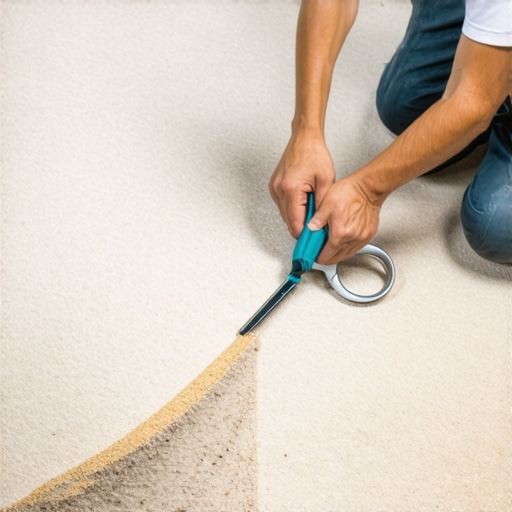
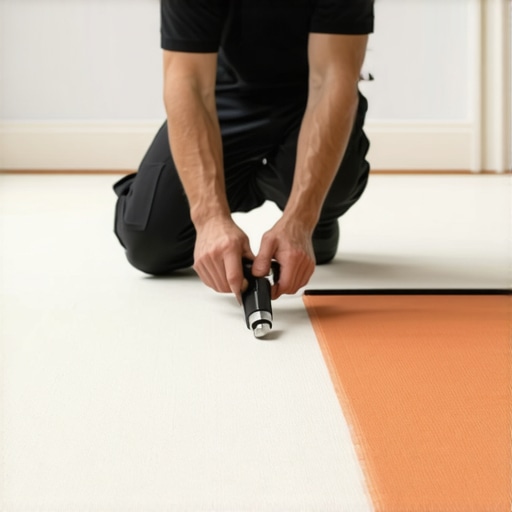
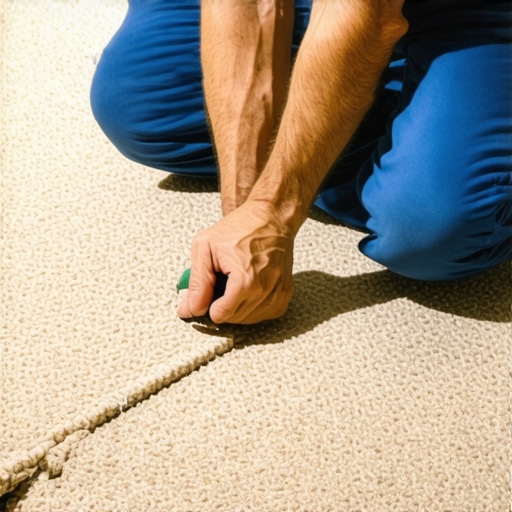
Repairing a carpet run involves cleaning the damaged channel and re-seating the yarn strand using a fine-tipped applicator. You cannot just glob glue on the surface. You have to get the adhesive down into the backing void. Use duckbill shears to trim any frayed filaments without cutting the structural loops. The goal is to recreate the uniform surface tension that the carpet mill achieved during the manufacturing process. Any deviation in height will create a wear point that will fail within six months.
- Inspect the snag for primary backing damage.
- Trim excess filaments with precision snips.
- Apply low-moisture adhesive to the base of the loop.
- Insert the yarn back into the original punch hole.
- Apply pressure for sixty seconds to set the chemical bond.
- Check the ambient humidity to ensure proper curing.
The ghost in the expansion gap
Perimeter tension is what keeps a carpet flat, but it is also what makes a snag so dangerous. When the power stretcher was used during the carpet install, the backing was put under extreme tension. A snag is a release valve for that tension. If you ignore it, the carpet can start to ripple or buckle near the repair site. This is why I always check the tack strips around the baseboards before I start a repair. If the subfloor is damp, the wood tack strips will soften, and the tension will pull the repair apart before the glue even dries.
The 1/8 inch that ruins everything
Subfloor levelness affects how mechanical loads are transferred through the carpet cushion to the yarn. If there is a 1/8 inch dip in the plywood or concrete, the carpet will flex more in that spot. This deflection puts constant vertical stress on your snag repair. I have seen guys try to fix snags over a cracked concrete slab without using a leveling compound first. It never works. The floor moves, the glue cracks, and the loop pops back out. You have to stabilize the foundation before you can fix the surface.
“Every installation failure can be traced back to a technician who ignored the moisture meter or the level.” – Master Flooring Axiom
The regional climate expert perspective
The relative humidity in your home changes the elasticity of the fibers. In high-humidity regions like the Gulf Coast, nylon fibers absorb moisture and expand, making the snag more likely to unravel. In arid climates like Arizona, the latex backing becomes brittle and can crack, making the yarn fall out of the matrix. You must adjust your adhesive choice based on these environmental variables. A water-based adhesive in a damp basement is a recipe for mold and failure. You need moisture-cured polymers in those conditions.
Preventive maintenance for high traffic loops
Furniture glides and area rugs are the best defense against Berber damage. When moving a heavy sofa, the friction can catch a protruding loop and rip it out before you even feel the resistance. Use non-marring plastic glides to distribute the static load. Also, avoid looped pile in rooms where pets with claws spend time. A dog’s nail is essentially a hook designed to find the weakest loop in your flooring system. It is engineering common sense. Do not put a high-tension weave in a high-impact environment.
Why your subfloor is lying to you
Concrete slabs often look dry on the surface, but they hold alkaline moisture deep within the capillary structure. This moisture can travel up through the carpet pad and attack the adhesive used in your snag repair. This is why floor leveling and vapor barriers are not optional. If you are doing a carpet install over a freshly poured slab, you must wait for the calcium chloride test results. If the vapor emission rate is too high, your repair will fail, and your carpet will smell like damp earth within a month. Do not trust your eyes. Trust the meter.