The secret to cutting carpet around a floor radiator
I spent twenty five years with my knees on the plywood and my lungs full of oak dust. Most guys in this trade think they can just slap down some padding and kick a carpet into place. They are wrong. Most guys skip the leveling compound. They think the underlayment will hide the dip. It won’t. I spent three days grinding concrete on a job last month just so the floor wouldn’t click like a castanet. That is the reality of professional work. When you approach a floor radiator, you are not just dealing with a physical obstacle. You are dealing with a thermodynamic engine that will attempt to destroy your installation through thermal expansion and fiber degradation over the next decade. If you do not respect the heat, the carpet will eventually pull away or melt at the edges.
The hidden physics of carpeting around a cast iron radiator
Cutting carpet around a floor radiator requires a series of surgical relief cuts and mechanical anchoring that account for the thermal expansion of both the radiator pipes and the subfloor. You must ensure that the carpet is tensioned away from the heat source while maintaining a tight, tucked aesthetic. This process involves the use of a specialized carpet awl and a sharp linoleum knife to prevent the fraying of the primary backing which is often made of heat-sensitive polypropylene. If the cut is too tight, the pipe will rub and wear the fibers. If it is too loose, you see the subfloor. Precision is the only path to a professional finish.
“A floor is only as good as the subfloor beneath it; deflection is the enemy of every joint.” – Master Flooring Axiom
The first thing you have to understand is the subfloor leveling near the radiator legs. Often, the weight of a cast iron radiator causes the joists to sag over fifty years. This creates a bowl effect. If you try to stretch a carpet over a bowl, you get wrinkles that no power stretcher can fix. You have to lift the radiator, which is a two-person job, and apply a high-compression floor leveling compound. I use a cementitious self-leveler that can withstand the heat cycles without cracking. The chemistry of the bond is vital. You want a product with high polymer content so it remains slightly flexible. Without this, the radiator legs will eventually crush the leveler into a fine powder, and your carpet will lose its tensioning anchor points.
The anatomy of a relief cut
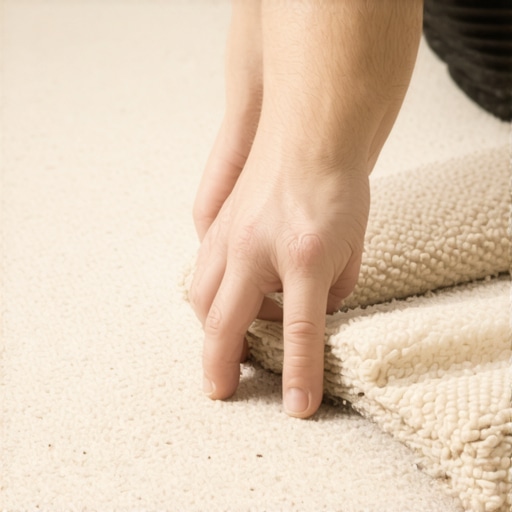
A relief cut is a strategic incision made from the edge of the carpet to the center of a radiator pipe to allow the material to wrap around the obstacle. This cut must be made from the back of the carpet to ensure the blade does not catch and pull individual tufts. You are essentially creating a keyhole. The secret is the Y-cut at the base of the pipe. By creating two small diagonal snips at the end of your main straight cut, you allow the carpet to wrap the circumference of the pipe without bunching up. This is where the amateurs fail. They make a single slit and hope for the best. The result is a bump that looks like a molehill in your living room.
Think about the molecular structure of the carpet backing. Most modern carpets use a secondary backing of woven synthetic material. When you apply heat from a radiator, that synthetic material wants to move. If you have not used a seam sealer on your relief cuts, the heat will cause the edges to fray. I always use a cool-set thermoplastic adhesive on the edges of my radiator cuts. It creates a hard plastic rim that the heat cannot penetrate. This prevents the carpet from “blossoming” over time. It is about longevity, not just how it looks the day I pack up my tools.
| Material Type | Heat Resistance | Expansion Rate | Recommended Near Radiators |
|---|---|---|---|
| Nylon Carpet | High | Low | Yes |
| Polypropylene | Low | High | No |
| Laminate | Medium | High | With Gaps |
| Engineered Wood | High | Medium | Yes |
Thermodynamics of floor leveling near heat sources
Floor leveling around a radiator requires a specific chemical approach because the heat from the pipes accelerates the drying time of the compound too rapidly. If the compound dries too fast, it becomes brittle and loses its structural integrity. You must pre-dampen the subfloor or use a high-quality primer to slow down the moisture loss. I have seen guys pour leveler around a hot pipe and watch it spider-web in minutes. That is a failure of planning. You turn the heat off twenty four hours before you pour. You keep it off until the leveler has reached its full Shore D hardness. This is the difference between a floor that lasts and one that fails in a year.
When we talk about showers of heat, we are talking about the convective loop created by the radiator. This loop carries dust and moisture. If your carpet install is not sealed against the baseboards near the radiator, the convection will pull dust from under the floor and deposit it on the surface of the carpet. This is called filtration soiling. It looks like a dark ring around your radiator. The only way to stop it is to ensure your tack strips are set exactly 1/4 inch from the radiator legs and that the carpet is tucked firmly into the gully. I use a heavy-duty stair tool to drive that carpet down until it bites the wood.
The 1/8 inch that ruins everything
The tolerance for a radiator pipe cut is exactly one eighth of an inch to allow for the vibration of the plumbing without catching the carpet fibers. If the carpet touches the pipe, the vibration of the boiler system will act like a slow saw. Over months, it will cut through the backing. You need that tiny gap. To hide the gap, you do not use more carpet. You use a radiator escutcheon, which is a metal ring that snaps around the pipe. This covers your relief cut and provides a professional, finished look. I never leave a job without snapping those rings into place. It is the signature of a master.
- Ensure the radiator is cold before starting any cuts.
- Use a fresh blade for every pipe to ensure clean edges.
- Apply seam sealer to every relief cut to prevent delamination.
- Check the moisture content of the subfloor with a pin-meter.
- Set tack strips in a U-pattern around the radiator legs.
- Use a power stretcher to pull the carpet toward the radiator, not away from it.
“Precision in the subfloor is the only way to guarantee the performance of the finish material.” – TCNA Handbook Reference
A hierarchy of heat resistant flooring materials
Selecting the right material is the first step in avoiding a disaster near a heat source like a floor radiator or a wood stove. While many homeowners want the plush feel of carpet, laminate or engineered wood often perform better in high-heat zones. However, if carpet is the requirement, nylon is the only choice. Polyester and polypropylene have melting points that are dangerously close to the operating temperature of some steam radiators. I have seen carpet actually fused to the floor because the homeowner used a cheap remnant near an old steam pipe. It is a fire hazard and a mess to clean up.
Laminate is another beast entirely. If you are doing a laminate install near a radiator, you have to leave a massive expansion gap. Laminate is basically sawdust and glue. It moves. If you tight-fit laminate around a radiator pipe, the first time the heat kicks on in November, the floor will buckle in the center of the room. I have seen floors rise six inches off the joists because someone forgot a 1/2 inch gap. It is about the physics of the material. Wood and wood-composites are hygroscopic. They breathe. Carpet does not breathe in the same way, but the backing expands and contracts with the temperature. You have to be the master of those dimensions. You have to think like the material.
The mechanics of the tack strip geometry
Positioning tack strips around radiator legs requires a specialized layout to ensure the carpet stays taut despite the multi-directional pull of the stretch. You cannot just run a straight line of strips. You have to contour them. I cut my strips into two-inch pieces and bridge them around the legs. This allows me to hook the carpet from every angle. It is a slow process. It hurts the fingers. But it is the only way to ensure that the carpet does not develop a sag near the heat source. If the carpet sags, it touches the pipe. If it touches the pipe, it dies.
The secret to cutting carpet around a floor radiator is not just the cut. It is the prep. It is the leveling. It is the understanding of how heat moves through a room. You are not just an installer. You are a structural engineer of the walking surface. Every cut you make is a calculation. Every tack you drive is an insurance policy against a callback. I do not do callbacks. I do it right the first time because I respect the physics of the floor. You should do the same. This is the trade. This is the craft. Don’t let a radiator beat you.