
Why your new carpet has lines that won’t go away
I spent three days grinding concrete on a job last month just so the floor wouldn’t click like a castanet, and that is the same level of obsession you need when troubleshooting carpet lines. I once walked into a luxury penthouse where the owner was ready to sue the manufacturer because their brand-new, plush saxony had dark, wavy streaks through the center of the room. They thought it was a manufacturing defect or a stain. It wasn’t. It was pile reversal, also known as watermarking, and no amount of cleaning was going to fix it because the issue was physical, not chemical. Most guys skip the leveling compound and think the padding will hide the sins of the subfloor. It won’t. If your subfloor has a dip or a crown, the way the light hits the carpet fibers changes at that exact coordinate, creating a permanent shadow that looks like a line. This is the reality of floor physics that big-box retailers never mention when they sell you on a quick carpet install.
The chemical reality of pile reversal
Pile reversal or watermarking occurs when carpet fibers permanently change their orientation in specific patches. This phenomenon is not a manufacturing defect but a hydraulic and structural reaction to local pressure and subfloor topography. It creates permanent light and dark areas that resemble water spills. To understand why these lines won’t go away, we have to zoom into the molecular structure of the carpet fiber itself. Most modern carpets are made of synthetic polymers like nylon 6,6 or polyester. These fibers are extruded, twisted, and then heat-set to maintain their shape. When a carpet is installed, the fibers are all leaning in the same direction, which we call the factory nap or lay. However, when the carpet is subjected to specific walking patterns or uneven pressure from the subfloor, those fibers can start to tip in the opposite direction. Because the fiber is a translucent or reflective cylinder, light hitting the side of the fiber looks different than light hitting the tip. When a section of fibers flips, it creates an optical difference that looks like a dark or light line. Once those fibers are ‘set’ in that new direction through traffic and humidity, they are almost impossible to flip back. This is not a flaw in the carpet, it is a law of physics. We see this often in high-traffic corridors where the constant pivot of a foot at a doorway creates a permanent swirl or line. Unlike roll crush, which is temporary, pile reversal is a permanent change in the carpet’s structural geometry.
“A floor is only as good as the subfloor beneath it; deflection is the enemy of every joint.” – Master Flooring Axiom
The ghost of the manufacturing process
Roll crush is a temporary condition where the weight of the carpet roll flattens the pile during storage or transport. These lines usually run the width of the carpet and appear at regular intervals. They generally disappear after several weeks of traffic and regular vacuuming in a climate-controlled environment. If you see lines that are perfectly parallel and spaced about three to four feet apart, you are likely looking at roll crush. This happens because a 12-foot roll of carpet weighs several hundred pounds. The fibers at the center of the roll are under immense pressure for months. When we unroll it during a carpet install, those fibers are literally gasping for air. In my 25 years on the job, I have seen homeowners panic the moment the last tack strip is tucked, but I tell them to give it thirty days. The heat in the house and the humidity in the air help the synthetic polymers regain their ‘memory.’ However, if the installer didn’t use a power stretcher and instead relied on a knee-kicker, those lines might stay longer because the tension isn’t uniform across the room. Proper carpet install requires stretching the backing to the point of mechanical tension, which helps the pile stand upright. If the carpet is loose, the fibers will continue to lean and emphasize any manufacturing lines. This is why floor leveling is just as vital for carpet as it is for laminate or showers. A flat surface ensures that the tension is distributed evenly, preventing the peaks and valleys that catch the light and look like permanent marks.
Why your subfloor is lying to you
Many people assume that carpet is a soft, forgiving material that hides a bad subfloor. That is a lie. If you are installing carpet over a concrete slab that has a 1/4 inch dip, the carpet pad will eventually compress into that dip. As the pad loses its loft, the carpet backing follows. This creates a subtle trough. When you walk across the room, your foot hits the edge of that trough at an angle, pushing the fibers away from the center of the dip. Over six months, you will see a dark line form exactly where the subfloor was uneven. This is why I spend so much time on floor leveling. I treat a carpet subfloor the same way I treat a subfloor for a high-end laminate or even a tiled shower. If the foundation isn’t flat, the finish material will fail. In regions like the Pacific Northwest, where humidity stays high, the moisture can actually migrate through the slab and soften the latex adhesive in the carpet backing. This makes the fibers even more prone to shifting and ‘tracking’ those permanent lines. You need to check the moisture vapor emission rate (MVER) before you even think about laying down a pad. If the slab is ‘sweating,’ your carpet lines are the least of your problems, you are looking at potential mold and adhesive failure.
| Factor | Impact on Carpet Lines | Mitigation Strategy |
|---|---|---|
| Fiber Shape | Trilobal reflects more light | Choose delta-shape for hiding |
| Pad Density | High density reduces crushing | Use 8lb minimum for high traffic |
| Subfloor Flatness | Dips cause pooling | Use floor leveling compound |
| Install Method | Knee-kicking causes ripples | Require power stretching |
The 1/8 inch that ruins everything
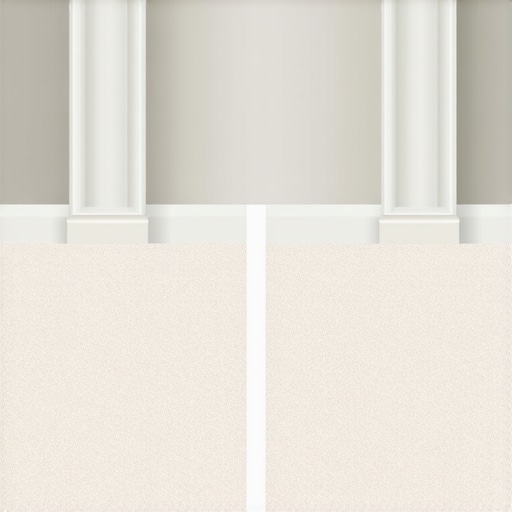
Seam peaking is a structural issue where the carpet edges lift at the join, creating a visible line that looks like a ridge. This is caused by the tension of the carpet pulling against the seam tape on an uneven subfloor. It is a mechanical failure of the installation process. When we seam two pieces of carpet together, we use a hot-melt adhesive tape. If the subfloor is not perfectly flat, the tension from the power stretcher will pull the two pieces of carpet upward, creating a ‘peak.’ This peak catches the light from windows or lamps, casting a shadow on one side and a highlight on the other. It looks like a permanent white or dark line running across the room. I have seen guys try to fix this by putting heavy books on the seam, but that is a temporary fix. The only real solution is to ensure the subfloor is flat within 1/8 of an inch over a 10-foot span. If I see a ridge in the plywood or a hump in the concrete, I am not laying carpet until I grind it down or fill it in. This is the same level of precision required for laminate or showers, yet carpet installers often skip it because they think the ‘fluff’ will hide it. It won’t. The fluff actually magnifies the shadow.
“The pile of the carpet should be vacuumed against the direction of the lay to minimize permanent shading.” – Carpet Maintenance Protocol
- Check subfloor flatness with a 10-foot straightedge before installation.
- Verify that the carpet pad density matches the manufacturer’s requirement for the specific carpet weight.
- Always use a power stretcher to ensure the primary backing is under proper mechanical tension.
- Acclimate the carpet to the home’s temperature and humidity for at least 48 hours before cutting.
- Seal all concrete slabs to prevent moisture from emulsifying the backing adhesives.
The vacuum cleaner deception
Vacuum tracking is the most common cause of temporary lines in new carpet, particularly in high-pile saxony or plush styles. These lines are caused by the brush roll and suction orienting the fibers in opposing directions. While common, they can lead to permanent shading if the carpet is not regularly groomed. I tell my clients that if they hate lines, they bought the wrong carpet. A high-cut pile is like a field of wheat. If you walk through it, you leave a trail. If you want a floor that looks the same regardless of traffic, you need a frieze or a low-loop Berber. A frieze has a very high ‘twist’ count. The fibers are twisted so tightly that they kink over, which means the light hits them from every possible angle, hiding tracks and lines. In contrast, a plush carpet has very little twist, meaning the fibers stand up like soldiers. The moment one soldier falls out of line, you see it. To manage these lines, you need to use a vacuum with adjustable height settings. If the vacuum is too low, it creates too much friction, which generates heat. That heat can actually ‘re-set’ the synthetic fibers in the wrong direction, turning a temporary vacuum track into a permanent line. It is a slow, mechanical degradation of the carpet’s aesthetic. If you are in a dry climate like Arizona, static electricity can also play a role, causing fibers to cling together in clumps and creating the appearance of ‘parting’ lines. Using a humidifier can actually help the carpet fibers stand more independently, reducing the visual impact of tracking. Flooring is an engineering challenge, and the carpet is just the top layer of a complex system involving chemistry, physics, and atmospheric conditions.