How to Salvage Your Carpet After a Kitchen Sink Overflow
How to Salvage Your Carpet After a Kitchen Sink Overflow
I have spent twenty-five years on my knees with a moisture meter and a level. I have seen the same mistake repeated a thousand times. Homeowners think a kitchen sink overflow is just a puddle. They think a few towels and a desk fan will fix it. They are wrong. I once walked into a house where they dried the carpet after a leak, only to find black mold eating the subfloor six months later. The homeowner thought the surface was dry, but the moisture was trapped in the cells of the plywood. The structural integrity of the home was compromised because they ignored the physics of water. A floor is not a decoration. It is a performance surface. When water hits that surface, you are no longer a homeowner. You are a structural engineer in a race against microbial growth. If you do not understand the capillary action of carpet fibers or the moisture vapor transmission rates of your subfloor, you will lose your floor and your health. This is a technical breakdown of how to win that war. You must move fast. You must move with precision.
The 48 hour window of doom
Salvaging carpet after a kitchen sink overflow requires immediate water extraction, high-volume air movement, and industrial dehumidification. If the water remains for more than 48 hours, the carpet backing will likely delaminate. You must identify if the water is Category 1 or 2 before attempting any DIY restoration. Water is a biological clock. In the first few minutes, it moves through the carpet fibers via capillary action. It hits the secondary backing and then the latex adhesive. If the water is from a clean source, like a supply line, you have a chance. If it is from the sink drain, it is Category 2 or 3 water. That means it contains bacteria, soap scum, and organic matter. This organic matter is fuel for mold. You cannot just dry Category 2 water. You have to sanitize it. Most guys skip the leveling compound and the deep extraction. They think the underlayment will hide the dip. It won’t. I spent three days grinding concrete on a job last month just so the floor wouldn’t click like a castanet. The same logic applies here. If the subfloor stays wet, the carpet is a lost cause.
“Secondary backing delamination occurs when the latex adhesive loses its cohesive strength due to prolonged moisture exposure.” – Flooring Structural Manual
Why your subfloor is lying to you
The subfloor often appears dry to the touch while holding massive amounts of liquid within its internal structure. Plywood and OSB act as sponges that swell when the moisture content exceeds 16 percent. This swelling is irreversible and will cause the carpet to ripple and the tack strips to rot. You have to look at the molecular level. Wood is made of cellulose and lignin. When water enters, the hydrogen bonds in the wood fibers are disrupted. The wood expands. Even if the carpet feels dry, the subfloor is likely still saturated. I use a pin-style moisture meter to check the subfloor. If the reading is above 12 percent, you are in the danger zone. You cannot just blow air on top of the carpet. You have to lift the carpet and dry the subfloor directly. If you leave the carpet down, you are creating a greenhouse. You are trapping heat and moisture. That is exactly where mold loves to live. I have seen people try to save a hundred dollars on a rental fan only to spend ten thousand on mold remediation. It is a foolish trade.
| Fiber Type | Moisture Absorption Rate | Salvage Potential | Risk of Delamination |
|---|---|---|---|
| Nylon | High | Moderate | High |
| Polyester | Low | High | Moderate |
| Olefin | Very Low | Very High | Low |
| Wool | Extreme | Low | Extreme |
The physics of the extraction process
Professional water extraction uses high-velocity suction to pull liquid from the deepest parts of the carpet pad and the subfloor. A standard wet-dry vacuum is insufficient for this task because it lacks the sealed lift capacity to overcome the surface tension of the water trapped in the pad. You need a weighted extractor. This tool uses the weight of the operator to compress the carpet and pad while the vacuum pulls. It is about the physics of pressure. If you do not remove the water from the pad, you are just drying the tips of the fibers. The pad is a cellular foam. It has millions of tiny pockets that hold water. Think of it like a sponge wrapped in a plastic bag. If you do not squeeze the sponge, it stays wet. This is why many pros just rip the pad out. It is cheaper to replace the pad than it is to dry it. I always tell my clients to buy a high-grade 8-pound density pad. It resists water better than the cheap 4-pound stuff. But even the best pad will fail if it sits in water for three days.
The ghost in the expansion gap
Moisture will migrate to the perimeter of the room and hide in the expansion gaps between the subfloor and the wall plates. This hidden water will wick up into the drywall through capillary action if it is not addressed with targeted airflow. This is the secret killer of floors. You think you have the middle of the room dry, but the edges are still soaked. You have to pull up the baseboards. You have to see what is happening behind the wood. If the tack strips are black, they are rotting. If the nails are rusted, the water has been there too long. I have seen guys try to paint over water-stained baseboards. That is like putting a bandage on a broken leg. You have to address the root cause. You need to use air movers that are designed to push air along the floor and up into the wall cavity. This creates a high-pressure zone that forces the moisture out of the expansion gap. It is a noisy process, but it is the only way to save the structure.
“A floor is only as good as the subfloor beneath it; deflection is the enemy of every joint.” – Master Flooring Axiom
Anti-microbial warfare and ph levels
Chemical treatment of a wet carpet must focus on stabilizing the ph levels and killing fungal spores without damaging the integrity of the synthetic fibers. Most household cleaners are too alkaline and will strip the stain-resistant coating off the carpet. You need a professional-grade anti-microbial. These are designed to work on the molecular level. They break down the cell walls of bacteria. But you have to be careful. If you use too much, you leave a residue. That residue will attract dirt like a magnet. Your carpet will look clean for a week, and then it will turn black. This is called rapid resoiling. It happens because the soap or the anti-microbial is still sticky. You have to rinse the carpet with a slightly acidic solution to neutralize the cleaners. This is the chemistry of flooring. It is not just about water. It is about balance. I see people dump bleach on their carpet. That is a death sentence. Bleach will eat the latex backing and turn your carpet into a pile of loose hair.
The checklist for carpet recovery
- Stop the source of the water immediately.
- Identify the water category to ensure safety.
- Extract as much liquid as possible with industrial equipment.
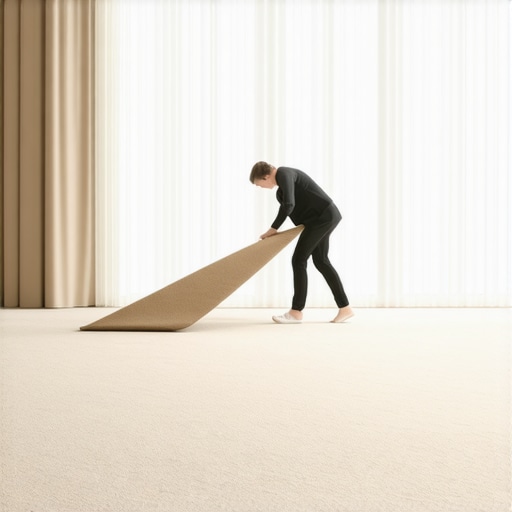
- Lift the carpet to inspect the pad and subfloor.
- Remove and discard the pad if it is heavily saturated.
- Deploy high-velocity air movers every 10 to 15 feet.
- Use an LGR dehumidifier to pull moisture from the air.
- Monitor moisture levels daily with a professional meter.
- Apply a ph-balanced anti-microbial treatment.
- Re-install the carpet only when the subfloor is below 12 percent moisture.
When to pull the plug and rip it out
Deciding to replace the carpet is necessary when delamination occurs or when Category 3 water has contaminated the fibers. If the carpet backing separates from the face fibers, the floor will never be stable again and must be discarded. I hate telling a homeowner they need new floors, but I hate lying more. If you can grab the carpet and the layers feel like they are sliding against each other, the glue is gone. The latex has hydrolyzed. It will never get its strength back. Your carpet will always have bubbles and ripples. It will look like a topographical map of the Andes. Also, if the water came from the sewer or a backed-up sink with food rot, you are playing with your health. The fibers are porous. They hold pathogens. No amount of cleaning will get every single microscopic bug out of a thick pile carpet. Sometimes the best tool in a flooring professional’s kit is a utility knife. You cut it out, you bleach the slab or the subfloor, and you start over. It is the only way to be sure. I have seen too many families get sick because they tried to save a few dollars on a contaminated carpet. Do not be that person. Understand the limits of the materials. Respect the physics of the house.