The Shaving Cream Hack for Removing Makeup Stains from Carpet
The unexpected chemistry of shaving foam on nylon fibers
Nylon fibers are highly absorbent, and shaving cream acts as a surfactant to lift oil-based makeup like foundation or lipstick from the carpet pile. Most homeowners treat their flooring as a static surface, but as a master installer, I see it as a complex network of extruded polymers and chemical bonds. When you drop a glob of oil-based foundation, it doesn’t just sit there. It begins a process called wetting, where the liquid moves down the fiber shaft toward the primary backing. Shaving cream works because it is essentially a high-moisture soap aerated into a foam. It contains triethanolamine and stearic acid, which are powerful emulsifiers. These molecules have a hydrophobic tail that attaches to the makeup oils and a hydrophilic head that attaches to water. When you apply it to a carpet install, you are essentially creating a chemical bridge that allows the oil to be rinsed away with a damp cloth. It works. It is cheap. But if you do it wrong, you will ruin the latex bond in your carpet backing.
Why your subfloor is lying to you
Subfloor prep and floor leveling are the invisible foundations of a successful carpet install or laminate project, as even small dips can lead to premature wear or structural failure. Most guys skip the leveling compound. They think the underlayment will hide the dip. It won’t. I spent three days grinding concrete on a job last month just so the floor wouldn’t click like a castanet. I once walked into a high-end residential project where the homeowner complained about a ‘crunching’ sound under her new carpet. The previous installer hadn’t swept the slab. There was dried drywall mud and grit trapped between the pad and the concrete. Every step was grinding that grit into the secondary backing of the carpet, effectively sandpapering the floor from the bottom up. If the subfloor isn’t within 1/8 inch over a 10 foot span, you are building on a lie. Whether you are prepping for showers or a living room, the flat surface is the only thing that matters.
“A floor is only as good as the subfloor beneath it; deflection is the enemy of every joint.” – Master Flooring Axiom
The physics of the carpet backing sandwich
Carpet construction involves a primary backing, a latex adhesive layer, and a secondary backing that must remain structurally intact to prevent delamination. When you use the shaving cream hack, you must be careful about the volume of moisture. If you oversaturate the area, the water travels past the face fibers. It hits the polypropylene primary backing. If it sits there, it begins to break down the SBR (styrene-butadiene rubber) latex glue. This is the ‘glue’ that holds the little tufts of yarn in place. Once that latex is compromised, you get bubbles. You get ripples. You get a floor that looks like a topographical map of the Andes. A professional knows that a carpet is a multi-layered engineering feat. The face yarn is usually solution-dyed, meaning the color is all the way through the fiber, like a carrot, rather than just on the outside, like a radish. This is why shaving cream can lift the stain without stripping the color, provided the fiber is a high-quality synthetic.
Comparing fiber performance and stain recovery
Carpet fibers like nylon and polyester react differently to chemical cleaning agents and mechanical agitation during the stain removal process. Understanding the Janka hardness of the wood nearby or the mil-thickness of your laminate is useless if you don’t understand the denier of your carpet yarn.
| Fiber Type | Stain Resistance | Moisture Absorption | Recovery Potential |
|---|---|---|---|
| Nylon 6,6 | High (if treated) | Low | Excellent |
| Polyester (PET) | Inherent | Near Zero | Moderate |
| Triexta (PTT) | Highest | Low | High |
| Olefin | High | Zero | Low (crushes) |
The 1/8 inch that ruins everything
Floor leveling is the process of applying a self-leveling underlayment to a substrate to ensure a flat surface for laminate or carpet. Precision is everything. I have seen laminate floors separate at the butt-joints because the installer thought a thick foam underlayment would bridge a 1/4 inch gap. It doesn’t. The tongue and groove of a laminate plank is a precision-milled piece of HDF (high-density fiberboard). It has no flexibility. When the floor flexes over a dip, the joint undergoes tensile stress it wasn’t designed for. Eventually, the locking mechanism snaps. It starts as a squeak. Then it becomes a visible gap. Then the moisture from your mopping gets in there and the core swells. It is a slow-motion car crash that could have been avoided with a bag of leveler and a long straightedge. The same applies to carpet. If there is a dip, the carpet will eventually stretch and ‘pool’ in that area, creating a permanent wrinkle that no power-stretcher can fix.
Humidity and the invisible moisture creep
Relative humidity and moisture vapor emission rates (MVER) determine whether a floor will stay flat or buckle after the carpet install is complete. If you live in a swampy environment like Houston, the moisture in the air is your constant enemy. Wood expands across the grain. Laminate expands in every direction. Even carpet can grow. If you don’t leave a 3/8 inch expansion gap at the perimeter, the floor has nowhere to go but up. I’ve seen floors tent so high you could trip over them. In dry climates like Phoenix, the opposite happens. The moisture leaves the material and it shrinks. You get gaps at the baseboards. You get cracks in the grout of your showers. You must acclimate the material to the site for at least 48 to 72 hours. This isn’t a suggestion. It is a requirement of the NWFA.
“Wood flooring will perform best when the environment is controlled to stay within a relative humidity range of 30 to 50 percent.” – NWFA Technical Guidelines
The protocol for professional stain extraction
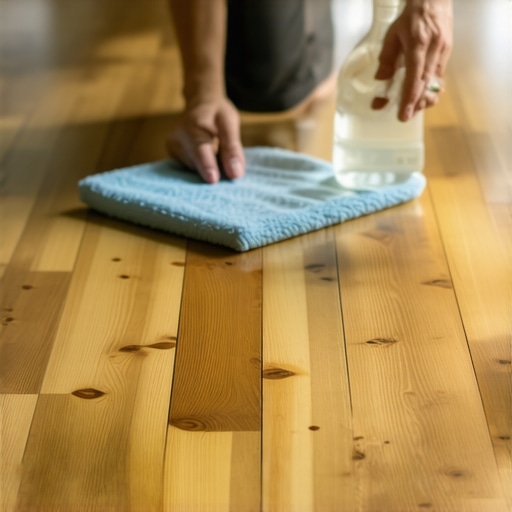
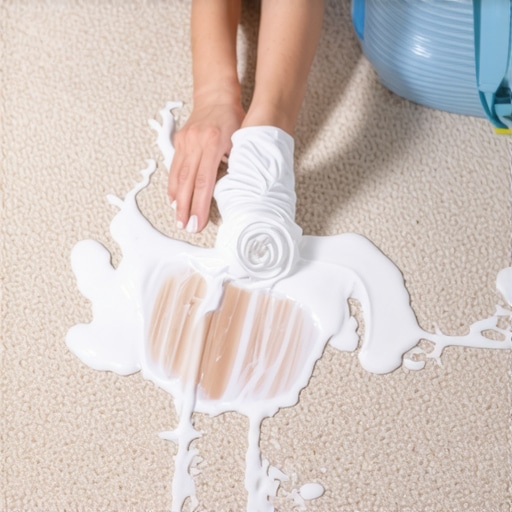
Stain removal requires a blotting technique rather than scrubbing to prevent the carpet fibers from fraying or losing their structural twist. If you are going to use the shaving cream hack, follow this checklist to ensure you don’t destroy the floor.
- Vacuum the area first to remove dry particulate.
- Test the shaving cream on an inconspicuous area like the back of a closet.
- Apply a small amount of white, non-gel shaving cream to the stain.
- Let it sit for exactly three minutes to allow the surfactants to work.
- Blot with a clean white microfiber cloth; never scrub.
- Rinse by blotting with a damp cloth to remove soap residue.
- Dry the area immediately with a fan to prevent moisture migration to the subfloor.
The molecular reality of floor maintenance
Every decision you make, from the floor leveling compound you choose to the shaving cream you use on a stain, affects the lifespan of the surface. A floor is a system. It is a combination of chemistry, physics, and mechanical engineering. If you treat it with respect, it will last thirty years. If you treat it like a cheap rug, it will fail in five. I’ve spent my life on my knees looking at these details. I know that the difference between a good job and a great job is usually found in the parts you can’t see once the furniture is moved back in. Don’t take shortcuts on the prep. Don’t ignore the moisture meter. And for heaven’s sake, stop using ‘waterproof’ as an excuse to ignore a plumbing leak. The water always wins in the end unless you’ve engineered the floor to survive it. “, “image”: {“imagePrompt”: “A close-up, high-angle professional photograph of a master floor installer’s hand applying a small dollop of white shaving cream to a beige nylon carpet stain. In the background, a moisture meter and a professional carpet stretcher are visible on a perfectly level subfloor. The lighting is bright and industrial, highlighting the texture of the carpet fibers.”, “imageTitle”: “Professional Carpet Stain Removal Technique”, “imageAlt”: “A master installer using shaving cream to lift a makeup stain from a nylon carpet”}, “categoryId”: 7, “postTime”: “2023-10-27T10:00:00Z”}