The Carpet Seam Iron Mistake That Will Ruin Your New Flooring
Most guys skip the leveling compound. They think the underlayment will hide the dip. It won’t. I spent three days grinding concrete on a job last month just so the floor wouldn’t click like a castanet. That experience reminded me that flooring is not a cosmetic layer but a structural engineering challenge. When I walk onto a job site, I smell the alkalinity of the concrete and the VOCs of the adhesive before I even see the material. A floor is a system, and if you treat it like a rug, you are going to fail. I have seen fifteen thousand dollar projects go to the landfill because an installer thought they could eyeball the moisture levels or rush a carpet seam. This is about the physics of the bond and the chemistry of the subfloor.
The heat that kills your carpet investment
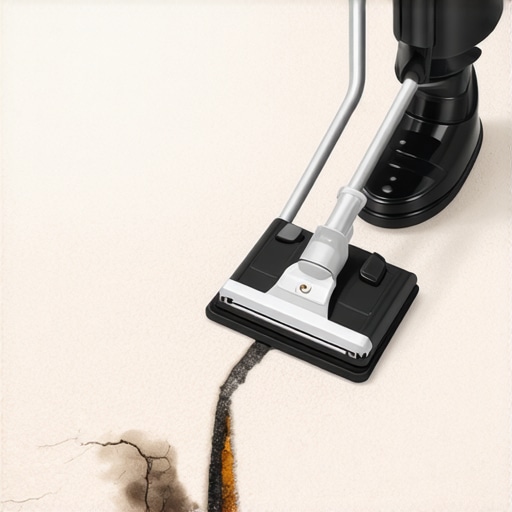
Carpet seam iron mistakes occur when thermoplastic adhesives are overheated or underheated, leading to delamination of the primary backing and eventual seam peaking. An installer must maintain a consistent iron temperature between 325 and 375 degrees Fahrenheit to ensure the hot-melt glue penetrates the carpet fibers without scorching the synthetic yarns or the action-bac structure. If the iron sits too long, it cooks the glue, making it brittle. If it moves too fast, the bond never reaches the molecular integrity required to withstand the tension of a power stretcher. You cannot fix a burnt seam. Once those fibers are melted, the structural profile of the carpet is compromised forever.
“A floor is only as good as the subfloor beneath it; deflection is the enemy of every joint.” – Master Flooring Axiom
The structural reality of a botched seam
The structural integrity of a carpet installation depends on the mechanical bond between the seam tape and the secondary backing of the material. When you use a seam iron incorrectly, you create a weak point that will eventually pull apart under foot traffic or furniture movement. This is not just about looks. A split seam allows moisture and dirt to penetrate the pad and subfloor, leading to mold growth and plywood rot. I always tell my apprentices that a seam is a weld. In the world of floor leveling and laminate, we talk about expansion gaps, but in carpet, the seam is the only thing holding the tensioned system together. If that weld fails, the entire room loses its dimensional stability.
Why your subfloor is lying to you
Floor leveling is the most ignored phase of a professional carpet install because people assume the padding will mask subfloor imperfections. In reality, a dip in the plywood or a hump in the concrete creates a hollow spot where the carpet seam will flex every time someone steps on it. This constant vertical deflection acts like a hinge, slowly snapping the dried adhesive inside the seam tape. You need to use a straight edge to find every variation exceeding one-eighth of an inch over a ten-foot radius. If you do not grind the high spots and fill the low spots with a high-compression portland-based patch, your new floor is already on a countdown to failure.
| Material Type | Heat Sensitivity | Acclimation Time | Bond Strength |
|---|---|---|---|
| Nylon Carpet | Moderate | 24 Hours | High |
| Polyester Carpet | High | 24 Hours | Medium |
| Olefin Fiber | Extreme | 48 Hours | Low |
| Wool Luxury | Low | 72 Hours | Very High |
The chemistry of adhesive failure
Hot-melt adhesives used in carpet installation are polymers that transition from a solid state to a liquid state under heat. When the seam iron passes over the seam tape, it triggers a chemical wetting of the carpet backing. If the subfloor moisture is too high, that latent vapor will flash off as steam, creating micro-bubbles in the glue line. This is why floor leveling and moisture testing are required even for textile coverings. We see this often in showers and bathrooms where high humidity migrates through the threshold. The vapors attack the thermoplastic bond from underneath, leading to a sticky residue that never truly re-hardens, causing the seam to crawl.
“Moisture vapor emission rate must not exceed three pounds per one thousand square feet over twenty four hours.” – Industry Standard
The checklist for a professional installation
- Verify subfloor moisture content using a calibrated pin meter.
- Ensure floor leveling meets ASTM F710 standards for flatness.
- Check iron temperature with an infrared thermometer before seaming.
- Use a carpet tractor to embed the fibers into the molten glue.
- Wait for the seam to cool completely before using a power stretcher.
The ghost in the expansion gap
Laminate flooring and luxury vinyl require expansion gaps because they are floating systems, but carpet is a fixed-tension system. Many installers fail to realize that the perimeter tack strips are the structural anchors for the seam. If the tack strips are loosely nailed or if the subfloor is crumbling, the tension will pull directly on the seam adhesive. In humid environments, the wood subfloor expands, which can actually compress the seam and cause it to peak upward. This is why acclimation is not a suggestion but a requirement. You need to let the carpet and the subfloor reach an equilibrium moisture content before you ever plug in the iron. I have seen expensive broadloom shrink by half an inch in dry climates because it was installed straight off the truck.
The one eighth inch that ruins everything
Precision in flooring is measured in fractions of an inch. When cutting a seam, if the row-cutting tool is off by just one eighth of an inch, the edges will overlap or have a gap. An overlap creates a visible ridge that wears down faster than the rest of the floor, while a gap exposes the glue line to dirt. This dirt acts as an abrasive, grinding away at the adhesive every time someone walks across the room. The physics of the pile must be perfectly aligned so the tufts lean in the same direction. If you reverse the nap, the seam will look like two different colors because of the light refraction. This is the level of detail that separates a master installer from a handyman. Do not let a simple tool mistake turn your renovation into a liability. Professional floor leveling and proper heat application are the only ways to ensure your carpet lasts for twenty years instead of twenty months. It is about respecting the craft and understanding the materials. If you shortcut the prep, the finish will fail. That is the unfiltered truth of the flooring trade.