The ‘Wet Sponge’ Check for Porous Concrete Before Leveling
The day I ground a slab for seventy two hours
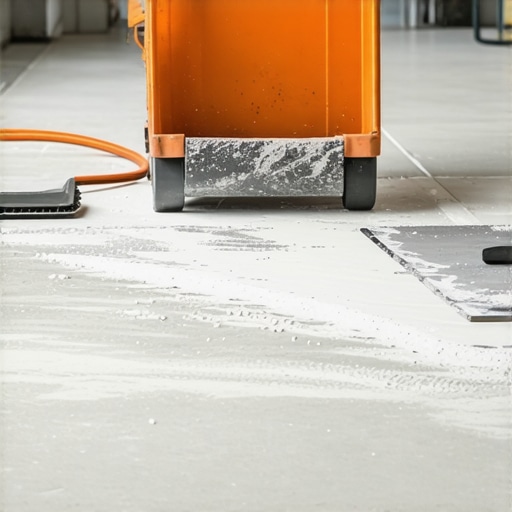
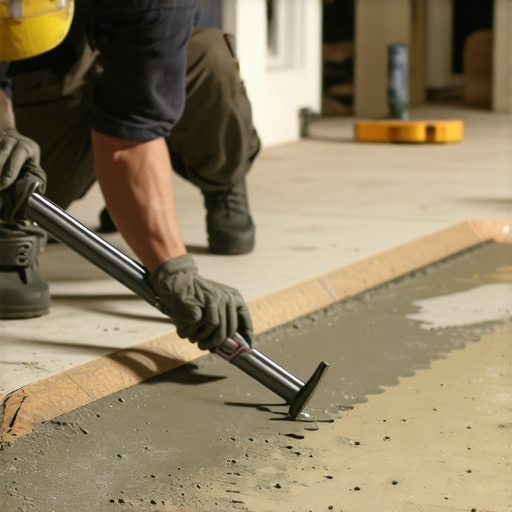
The wet sponge test is a diagnostic procedure used to determine the porosity of a concrete slab by observing the absorption rate of water droplets placed on the surface. This manual test dictates whether you need a specialized primer or if the substrate requires mechanical profiling to ensure the floor leveling compound adheres correctly without delaminating or bubbling over time. Most guys skip the leveling compound. They think the underlayment will hide the dip. It won’t. I spent three days grinding concrete on a job last month just so the floor wouldn’t click like a castanet. The homeowner had bought a high end laminate, but the slab was a topographical map of the Rocky Mountains. They wanted a quick fix. I told them there are no quick fixes when your subfloor is lying to you. If you pour leveler on a slab that has not been tested for porosity, you are basically throwing money into a trash compactor. I have seen fifteen thousand dollar wide plank walnut floors cup until they looked like potato chips because the installer did not respect the moisture coming up through the concrete. It is about the physics of the bond. If the concrete is closed off by sealers or heavy burnishing, that leveler will just sit on top like a pancake on a frozen lake. It will crack. It will crunch. It will fail. Under my nails, there is always a bit of gray dust, a reminder that every beautiful floor is only as good as the gritty, ugly work done beneath it.
How the wet sponge test reveals concrete secrets
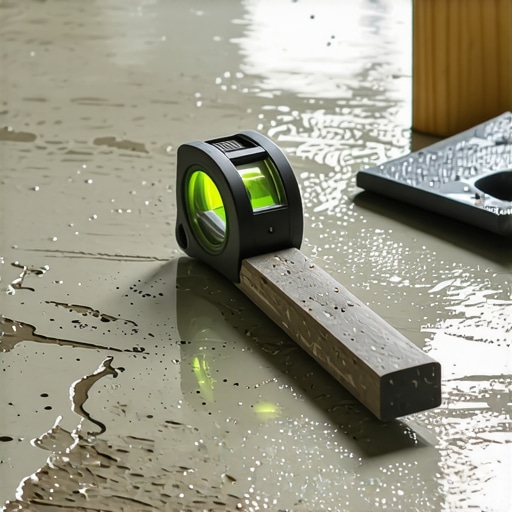
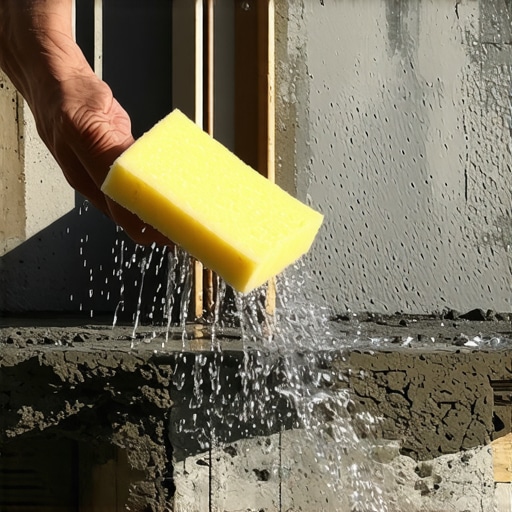
Determining the porosity of your concrete involves placing small beads of water on different sections of the slab and timing how long they take to disappear into the pores. If the water beads up and stays there for more than ten minutes, you are dealing with a non-porous surface that will reject standard primers. Concrete is a breathing, moving organism. It has capillary veins that either pull moisture in or push it out. When you are prepping for showers or a complex laminate layout, you need to know if those capillaries are open. In a humid environment, a slab might be saturated. In a dry climate, it might be so thirsty it sucks the water out of your leveling compound too fast, causing it to shrink and crack. This is the molecular reality of the job site. You are not just laying a floor, you are managing a chemical reaction between the substrate and the adhesive. I always carry a dense grout sponge and a spray bottle of clean water. I do not trust my eyes. I have seen slabs that looked rough but were actually coated in a thin layer of chemical curing compound that acts like a raincoat. If you do not find that out now, you will find it out when the carpet install starts pulling the leveler off the floor because the tack strips are under tension.
“A floor is only as good as the subfloor beneath it; deflection is the enemy of every joint.” – Master Flooring Axiom
The chemistry of a proper concrete primer bond
A primer acts as the bridge between the old concrete and the new leveling material, and its effectiveness depends entirely on the porosity revealed by the sponge test. For porous slabs, an acrylic primer will soak into the open pores, creating a mechanical anchor. For non-porous slabs, you often need an epoxy-based primer with a sand broadcast to create an artificial profile. This is where the chemistry gets intense. If the water from the sponge test disappeared in less than thirty seconds, the concrete is hyper-porous. You might need two coats of primer just to stop the concrete from ‘drinking’ the water out of the leveler. If the leveler loses its water too fast, it cannot hydrate the cement particles properly. You end up with a brittle, dusty surface that lacks structural integrity. I have walked onto jobs where the leveler was so soft you could scratch it with a fingernail. That is a failure of prep, not the product. We talk about mil-thickness of wear layers on luxury vinyl, but we should be talking about the micron-depth of primer penetration. That is what keeps the floor quiet and stable for thirty years.
| Substrate Condition | Water Absorption Time | Required Action |
|---|---|---|
| Highly Porous | 0 to 30 seconds | Double prime with diluted acrylic |
| Moderately Porous | 30 to 120 seconds | Standard single coat primer |
| Non-Porous | More than 5 minutes | Mechanical grinding or epoxy bond |
| Sealed/Burnished | Never absorbs | Diamond grinding is mandatory |
The ghost in the expansion gap
Expansion gaps are the intentional spaces left at the perimeter of a floor to allow for the natural movement of materials due to changes in temperature and humidity. Without these gaps, even the best floor leveling job will not save your floor from buckling. People think waterproof means stable. That is a lie. Every material expands and contracts. While most people want the thickest underlayment, too much cushion actually causes the locking mechanisms on LVP to snap under pressure. This happens because the subfloor has a dip and the underlayment allows the joint to flex too far. It is like a paperclip being bent back and forth until it snaps. I have seen it happen in hundreds of homes. The sponge test tells me how to fix the dip so the underlayment does not have to do a job it was not designed for. You need to keep those gaps clear of debris. A single screw or a piece of dried leveler in that gap acts like a fulcrum. The floor moves, hits that point, and then it has nowhere to go but up. That is how you get peaks in the middle of your living room.
Why your subfloor is lying to you
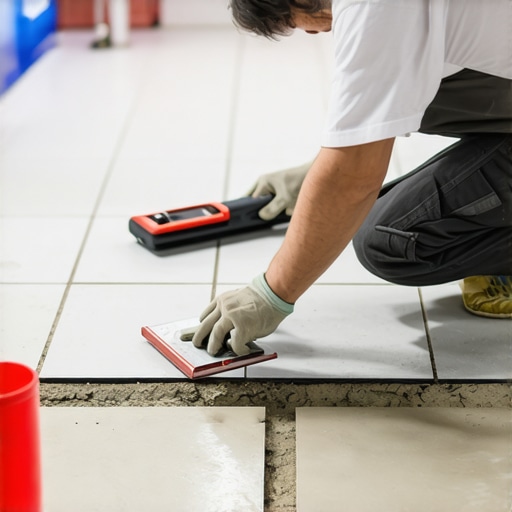
A subfloor may appear flat to the naked eye, but using a ten foot straightedge often reveals deviations that exceed the industry standard of one eighth of an inch over ten feet. This is the limit for most laminate and hardwood manufacturers. If you ignore this, you are asking for trouble. Carpet install can hide some of these sins, but even then, you will feel the dips under your feet. It feels like walking on a trampoline. For showers, the stakes are even higher. If the slab is not leveled and sloped correctly, water will pool in the corners, leading to mold and structural rot. The wet sponge test ensures that when we apply our waterproofing membranes, they are actually sticking to the concrete and not just floating on a layer of dust. I have seen guys try to use thin-set to level a floor. Thin-set is an adhesive, not a leveler. It shrinks as it cures. If you use it to fill a half-inch hole, it will be a three-eighths-inch hole by tomorrow morning. Use the right tool for the job.
- Check the slab for any oil, wax, or paint overspray.
- Perform the wet sponge test in at least five locations per room.
- Grind down any high spots using a diamond cup wheel.
- Vacuum the floor with a HEPA filter to remove all micro-dust.
- Apply the primer based on the absorption rates you recorded.
- Mix the self-leveling compound with a high-speed mixer to avoid lumps.
The physics of moisture in subfloor preparation
Moisture vapor emission rate or MVER measures the amount of water vapor escaping from a concrete slab, which can destroy adhesives and cause flooring failure if not addressed. The sponge test is the quick field check, but a calcium chloride test or an in-situ RH probe test is the professional standard. If the concrete is pushing water out, your leveler might stay on, but your flooring adhesive will turn into a gooey mess. It is called re-emulsification. I have pulled up carpets where the glue was still wet five years after the install. It smelled like a swamp. That is what happens when you do not check the slab. In places like Houston, the humidity is a constant battle. In a dry area like Phoenix, the concrete is so dry it can be brittle. You have to adapt your technique to the climate. If the slab is sweating, you need a moisture vapor barrier. This is a thick, epoxy-based coating that chokes off the moisture so your floor stays dry. It is expensive, but it is cheaper than doing the job twice.
“Cementitious underlayments require a minimum compressive strength of 3000 psi for commercial traffic areas to prevent indentation.” – TCNA Handbook
The one eighth inch that ruins everything
Small variances in subfloor height lead to structural failure in click-lock flooring systems by putting excessive stress on the tongue and groove joints. When you walk across a floor with a dip, the boards deflect. This movement slowly shears the locking mechanism. One day you hear a pop, and that is the end of your floor. The wet sponge test ensures your leveling compound bonds well enough to fill those eighth-inch dips permanently. I do not care how much the flooring cost. If the subfloor is trash, the floor is trash. I have installed cheap laminate on a perfectly leveled slab that looked better than expensive white oak on a wavy subfloor. It is about the foundation. You have to be a stickler for the details. You have to be the guy who is still on his knees with a level when everyone else has gone home. That is how you build a reputation. That is how you ensure the showers do not leak and the carpet does not ripple. Final thoughts on the matter are simple. Respect the slab. Test the porosity. Level the dips. If you do not have the time to do it right, you definitely do not have the time to do it again.