Why Your Shower Curb is Leaking onto the Bathroom Floor
The three days of grinding concrete
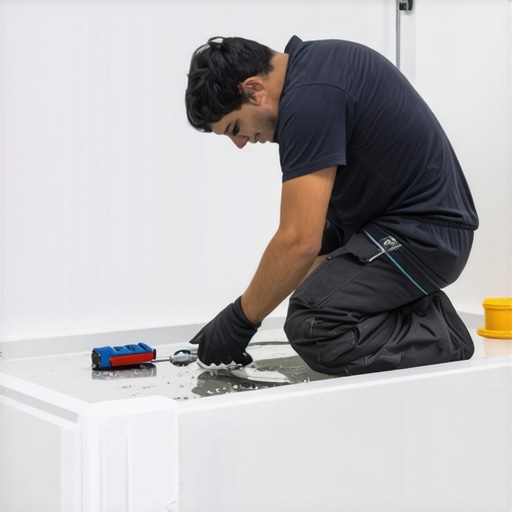
Shower curb leaks often originate from subfloor failures where a lack of precision during the initial floor leveling process creates a structural dip that traps water. I spent three days grinding concrete on a job last month just so the floor wouldn’t click like a castanet. The homeowner thought the issue was the tile, but the reality was a 1/2 inch deviation in the slab. When you have a dip near a shower entrance, the water that inevitably splashes out has nowhere to go but down into the substrate. This moisture finds the path of least resistance, usually through the nail holes in the curb or the gaps in the thin-set. If the subfloor is not perfectly flat, the entire waterproofing system is under constant tension. Structural integrity starts with the grinder and the level, not the grout. It will buckle if you ignore the slab. Water follows gravity. Gravity loves a dip.
The invisible failure of the curb liner
A leaking shower curb is usually caused by fasteners puncturing the waterproofing membrane on the top or inside face of the curb. Most installers make the mistake of nailing their cement board directly through the liner. This creates a direct conduit for moisture to wick into the wooden framing. Once that wood absorbs water, it expands. This expansion cracks the grout lines and the tile bonds, leading to a catastrophic failure that ruins your carpet install or nearby laminate. The chemistry of a proper bond requires an undisturbed membrane. We use modified thin-set with high polymer content to ensure that the tile stays put without the need for mechanical fasteners that compromise the water barrier. You cannot fix a punctured liner with a bit of caulk and hope. It will rot. The moisture will migrate into the hallway.
“A floor is only as good as the subfloor beneath it, deflection is the enemy of every joint.” – Master Flooring Axiom
The physics of the capillary crawl
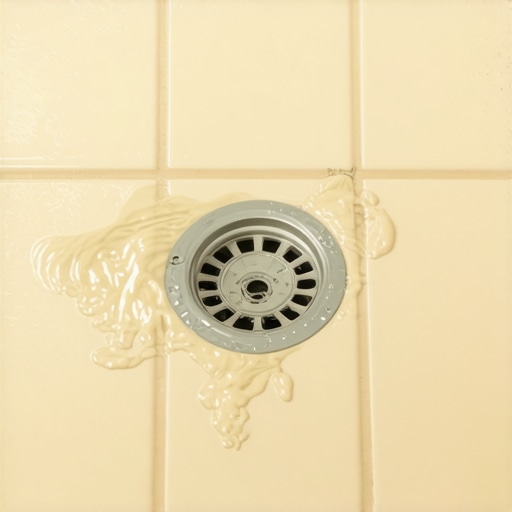
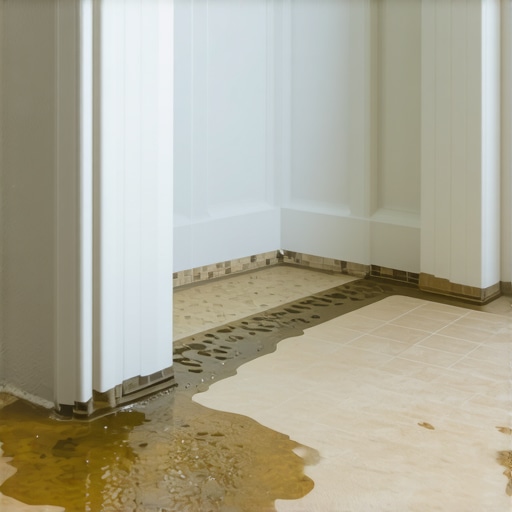
Capillary action allows water to move upward through the tiny pores of cementitious grout and unsealed mortar beds. Even if your curb looks solid, the water is moving behind the scenes. This is why a pre-pitch is mandatory under the liner. If the liner sits on a flat floor, the water that passes through the grout sits in the mortar bed and goes sour. Eventually, the hydrostatic pressure pushes that water up and over the curb. This is why you see damp spots on the drywall outside the shower. It is not a splash. It is a slow, structural migration. The Tile Council of North America (TCNA) defines the requirements for these slopes clearly. Failure to follow them is professional negligence. You are building a bathtub, not just a floor. The physics of water movement cannot be ignored by a lazy installer. Every degree of slope matters for the life of the home.
The mistake of the heavy vanity
Laminate flooring fails near showers because installers often lock the planks down with heavy bathroom fixtures, preventing the necessary expansion and contraction. When the shower curb leaks even a small amount, the laminate planks soak up that moisture at the edges. Because the floor is pinned under a vanity or a heavy transition strip, it cannot move. The result is peaking at the seams. I have seen entire bathrooms where the floor looked like a mountain range because someone forgot a 1/4 inch gap. You must treat the floor as a living thing. It breathes. It moves. If you choke it, it will break. This is especially true in high-humidity zones like the Gulf Coast or the Pacific Northwest where the ambient air is already fighting your floor’s stability.
| Waterproofing Method | Failure Risk | Drying Time | Best Use Case |
|---|---|---|---|
| Liquid Membrane | Low | 24 Hours | Complex geometries and small curbs |
| Sheet Membrane | Very Low | Immediate | Large format tile and steam showers |
| Traditional PVC Liner | High | N/A | Standard tubs with no curb requirements |
Standards for the wet area transition
The transition between tile and carpet requires a moisture-resistant tack strip and a sealed subfloor to prevent mold growth. If you are doing a carpet install right next to a master shower, you are playing with fire if that curb is not 100 percent sealed. Moisture will wick into the carpet pad and create a colony of black mold before you even smell it. We use synthetic tack strips in these areas because wood strips will rot and lose their grip. The NWFA and TCNA have overlapping standards when it comes to where the wet zone ends and the dry zone begins. Do not assume the transition strip will save you. It is a cosmetic piece, not a structural dam.
“Waterproofing must be continuous and integrated into the drain system to prevent subfloor saturation.” – TCNA Handbook Handbook Section B415
Checklist for a leak-proof shower curb
- Verify the pre-pitch under the liner is at least 1/4 inch per foot.
- Ensure no fasteners are driven into the top or inside of the curb.
- Check the floor leveling within a 5-foot radius of the shower door.
- Apply a liquid waterproof membrane over the entire curb and 6 inches up the wall.
- Perform a 24-hour flood test before any tile is installed.
The ghost in the expansion gap
Expansion gaps are the lungs of a floor and blocking them with silicone or heavy trim is a recipe for a laminate disaster. When water leaks from a curb, it flows toward the walls. If there is no gap, the pressure has nowhere to go but up. I have seen floor leveling jobs ruined because the installer filled the perimeter gap with leveling compound. That is a rookie mistake. You need that 1/4 inch of empty space. It is the only thing protecting your investment from the natural movement of the house. The house shifts. The floor moves. The gap allows this to happen without a catastrophic failure. If you see a floor that is tight against the wall, expect it to fail within two seasons.
Why your subfloor is lying to you
A subfloor may look dry but the moisture content can be high enough to ruin a carpet install over time. Always use a moisture meter. I don’t care if the concrete is twenty years old. Hydrostatic pressure can pull moisture from the ground through the slab and into your flooring. If your shower curb is leaking, it is adding to this subterranean reservoir. You end up with a saturated slab that will never hold an adhesive. The chemical bond of your modified thin-set or carpet glue will emulsify and fail. You will be left with a sticky, stinking mess. Leveling is not just about being flat. It is about being dry and stable. Anything less is just a temporary decoration. Real flooring is engineering. It is the foundation of the room’s health. Treat it with the respect it deserves or pay the price later. “