Why Your Shower Head Is Leaking Behind the Wall
I spent three days grinding concrete on a job last month just so the floor wouldn’t click like a castanet. The homeowner thought I was overcharging for prep work until I showed him the moisture map. A tiny leak behind the shower wall had traveled twelve feet under his expensive engineered hardwood. Most guys skip the leveling compound. They think the underlayment will hide the dip. It won’t. I have seen fifteen thousand dollar wide-plank walnut floors look like potato chips because an installer ignored a damp crawlspace or a slow plumbing leak. You cannot build a skyscraper on a swamp and you cannot put a premium floor on a compromised subfloor. Every single installation failure I have seen in twenty five years started with the homeowner ignoring the physics of moisture. Flooring is a structural engineering challenge. It is not just something you walk on. It is a system of layers that must work in harmony with the building envelope and the plumbing integrity of the structure. If your shower head is leaking behind the wall, you are not just losing water. You are losing the foundation of your bathroom floor.
The silent erosion beneath your tile
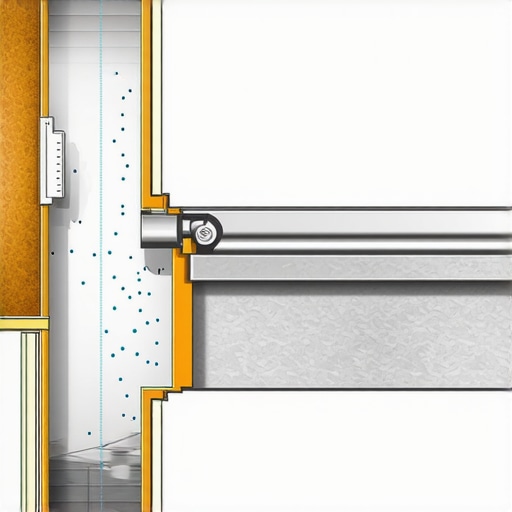
Shower head leaks that occur behind the wall are catastrophic because they bypass the primary waterproof membrane of the shower enclosure. This water follows the vertical path of the plumbing riser, saturating the wooden studs and eventually pooling on the subfloor assembly. Once the moisture reaches the floor leveling layer, it begins a process of hydrostatic pressure build up that can delaminate tiles and rot structural joists. This is not a cosmetic issue. It is a 100 percent failure of the building envelope. When water exits a pinhole leak in a copper pipe, it does not just drop. It clings to the pipe through surface tension. It travels until it finds a horizontal surface. In most modern homes, that surface is the floor plate of the wall. This wood plate is usually Douglas Fir or SPF lumber. It acts like a giant wick. The wood fibers draw the water in through capillary action. The cellulose walls of the wood cells expand. This expansion is relentless. It exerts hundreds of pounds of pressure per square inch against the surrounding materials. If your bathroom has a carpet install in the adjacent bedroom, that water will eventually migrate into the carpet pad, creating a dark, damp environment where mold colonies thrive before you even smell the dampness.
“A floor is only as good as the subfloor beneath it; deflection is the enemy of every joint.” – Master Flooring Axiom
Gravity and the path of least resistance
Water migration patterns inside a wall cavity are governed by surface tension and gravity. When a shower riser leaks, the moisture often travels along the pvc pipes or copper lines until it hits the subfloor. This is where the real damage to your laminate or hardwood begins. The moisture does not stay in one spot. It moves through the pores of the concrete or the layers of plywood. If you have a concrete slab, the water fills the microscopic voids. Concrete looks solid but it is actually a hard sponge. It has a network of capillaries that can pull water upward or outward. This is why you see efflorescence, that white powdery salt, on the surface of your grout. The water is evaporating and leaving the minerals behind. If you have a wooden subfloor, the situation is worse. Plywood is held together by resins. Constant moisture causes those resins to break down. This is called delamination. The layers of the wood start to peel apart. You might notice a soft spot near the bathroom door. That is not a floor problem. That is a structural failure caused by the shower leak twelve feet away.
Why floor leveling compound is not a waterproof membrane
Floor leveling materials are designed to create a flat surface for the finished floor, but they are often gypsum-based or portland cement-based and highly porous. If water from a leaking shower head reaches the leveling compound, the compound will absorb the moisture and lose its compressive strength. This leads to cracked grout lines and loose tiles. Many DIY installers think that pouring a thick layer of leveler will fix a problematic subfloor. This is a myth. Leveler is meant for flatness, not structural rigidity. If the wood beneath it is rot-softened, the leveler will simply crack when you walk on it. You need to understand the chemistry here. Most self-leveling underlayments use long-chain polymers to help them flow. These polymers are sensitive to constant saturation. When they get wet, they can revert to a semi-liquid state or simply crumble into dust. I have seen jobs where I could scoop out the leveling compound with a kitchen spoon because a shower leak had been feeding it water for six months. You must address the source of the moisture before you even think about the floor prep.
The physics of expansion gaps and moisture traps
Laminate floors and engineered hardwood require a specific expansion gap around the perimeter of the room to allow for natural movement. When a shower leak introduces excess humidity into the air or direct water into the subfloor, these materials expand beyond their design limits. Laminate is particularly vulnerable. It is made of high-density fiberboard which is essentially compressed sawdust and glue. When sawdust gets wet, it expands and never returns to its original size. This is called peaking. The edges of the planks push against each other and lift up, creating a trip hazard. People often blame the manufacturer for a bad floor, but the fault usually lies with the plumbing or the subfloor moisture levels. Professional installers use a calcium chloride test or a pinless moisture meter to check the subfloor before installation. If the meter reads above 12 percent for wood or 3 pounds for concrete, we don’t install. We wait. We find the leak. We fix the source. A single leaking shower head can raise the relative humidity in a bathroom from 40 percent to 90 percent in a matter of hours. That humidity is absorbed by the underside of your flooring, causing it to cup or crown.
| Material Type | Moisture Tolerance | Expansion Rate | Best Use Case |
|---|---|---|---|
| Solid Hardwood | Low | High | Climate controlled areas |
| Engineered Wood | Medium | Moderate | Stable subfloors |
| Laminate (HDF) | Very Low | Extreme | Dry residential zones |
| Luxury Vinyl (SPC) | High | Low | Kitchens and baths |
| Ceramic Tile | High | None | Wet areas with membrane |
The chemistry of subfloor rot and fungal growth
Fungal spores are present in almost every environment, but they require water and cellulose to grow into a colony. A leaking shower head provides the water, and your subfloor provides the food. Within 48 to 72 hours of a leak starting, mold can begin to colonize the back of your drywall and the top of your joists. This is not just a health hazard. It is a structural threat. The fungi produce enzymes that break down the lignin in the wood. This is what we call dry rot, though it is anything but dry. The wood becomes brittle and loses its load-bearing capacity. If you are planning a carpet install, you must be extremely careful. Carpet is a filter. It traps these spores. The carpet pad acts like a petri dish. If you have a hidden leak, your carpet will become a breeding ground for organisms that cause respiratory issues. I have pulled up carpets where the padding had completely disintegrated into a black sludge because of a slow leak behind the shower. The homeowner never saw a puddle. They just wondered why the room always smelled a little musty. They spent money on air purifiers when they should have spent it on a plumber and a new subfloor.
“Saturation is the death of the assembly; once the fiber saturation point is reached, structural failure is inevitable.” – TCNA Technical Manual
The 1/8 inch that ruins everything
Flatness tolerances for modern flooring are incredibly strict. Most click-lock laminate and luxury vinyl systems require the subfloor to be flat within 1/8 inch over a 10 foot radius. If a shower leak causes your subfloor to swell by just a fraction of an inch, it creates a high spot. When you walk over that high spot, the locking mechanism of the floor is put under tension. These plastic or wood fiber tongues are only a few millimeters thick. They are not designed to hold the weight of a human while being flexed over a hump. They will eventually snap. Once the lock breaks, the planks will start to separate. You will see gapping. You will hear creaking. This is why floor leveling is the most important part of the job. But you cannot level over a moving target. If the wood is still swelling because of a leak, your leveling compound will crack. You must stabilize the environment. This means fixing the shower leak, running a dehumidifier for a week, and checking the moisture levels every day until they are stable. Only then can you break out the grinder and the self-leveler.
Essential diagnostics for the professional installer
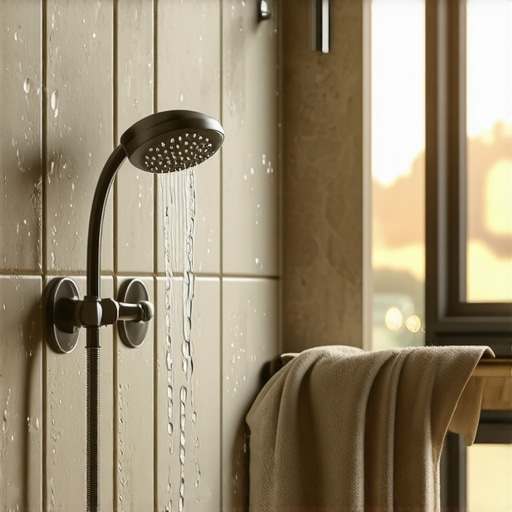
Identifying a hidden leak requires more than just looking for water on the floor. You have to be a detective. Start by checking the escutcheon plate behind the shower head. If it is not sealed with silicone, water can run down the pipe and straight into the wall. Look at the grout lines in the corners of the shower. If they are cracked, water is getting behind the tile. Here is a professional checklist for diagnosing the health of your floor and walls.
- Check the shower arm connection for thread leaks inside the wall cavity.
- Use an infrared camera to look for cold spots on the floor and walls that indicate moisture.
- Inspect the subfloor from the crawlspace or basement for water staining or efflorescence.
- Test the moisture content of the subfloor with a professional meter near the bathroom transition.
- Look for buckling or peaking in adjacent laminate or hardwood planks.
- Check for mold growth along the baseboards or at the bottom of the drywall.
- Assess the integrity of the carpet pad if there is a carpet install nearby.
The tragedy of the unacclimated laminate
Acclimation is the process of letting your flooring reach an equilibrium moisture content with the room it will live in. If you have a shower leak, the humidity in that room is spikey and unpredictable. If you install laminate or hardwood while the leak is active, the wood will acclimate to a high-moisture environment. Once the leak is fixed and the room dries out, the floor will shrink. This leads to massive gaps and dry-cupping. I have seen beautiful oak floors develop gaps big enough to drop a nickel through because they were installed in a house with an active plumbing leak. The wood flooring association standards are very clear on this. You must test the air temperature and the relative humidity. You must test the subfloor. You must test the flooring itself. If these three numbers don’t align, the tools stay in the truck. It does not matter if the homeowner is in a hurry. A fast floor is a failed floor. You have to respect the physics of the material. Wood is a living, breathing thing. It reacts to its environment. If you don’t control the environment, the environment will destroy your floor.
Structural reinforcement and subfloor preparation
Floor leveling often involves more than just pouring liquid. Sometimes it requires sistering joists or adding blocking to stop the deflection. If a shower leak has compromised a joist, no amount of thin-set or leveling compound will make that floor solid. You have to get under the house and mechanically reinforce the structure. We use structural screws and construction adhesive that is rated for high-moisture environments. Once the structure is rigid, we apply a vapor barrier or a moisture mitigation system. For concrete, this might be a two-part epoxy coating that stops vapor emission. For wood, it might be an uncoupling membrane like Schluter-Ditra. This membrane allows the subfloor and the tile to move independently, preventing cracks. It also acts as a waterproof layer to protect the subfloor from future surface spills. This is the difference between a builder-grade job and a master installation. We think about the next twenty years, not the next twenty minutes. We prepare for the leak that hasn’t happened yet while fixing the one that already did.