Why Your Carpet Installer Shouldn’t Use a Knee Kicker for Everything
The myth of the carpet kicker and the violence of improper stretching
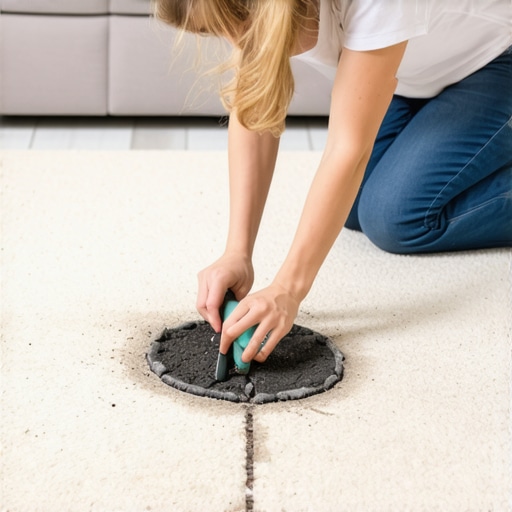
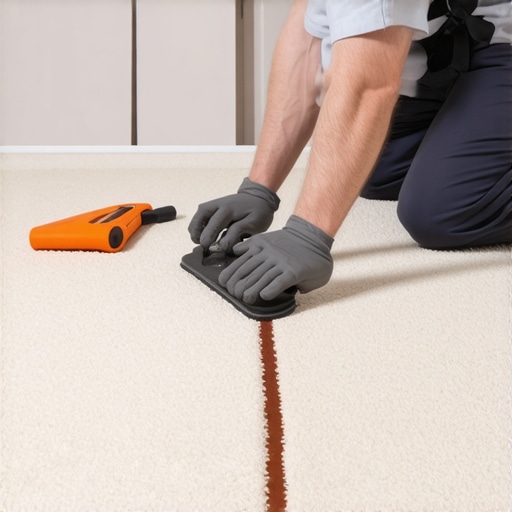
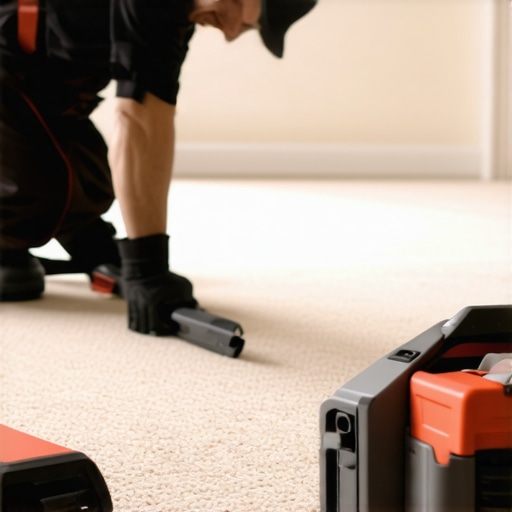
A knee kicker is a positioning tool designed for small areas and transitions, but it lacks the mechanical advantage required to properly tension a carpet across a large room. Most guys skip the leveling compound. They think the underlayment will hide the dip. It won’t. I spent three days grinding concrete on a job last month just so the floor wouldn’t click like a castanet. This lack of attention to detail starts with the subfloor and ends with a loose, wrinkled carpet that delaminates within two years. When an installer relies solely on a knee kicker, they are essentially gambling with the structural integrity of the textile. The tool is designed to nudge the carpet onto the tack strip or to navigate tight corners like closets or stairs. It is not designed to stretch 20 linear feet of heavy-backed broadloom. Using a kicker for the whole job leads to uneven tension, which eventually manifests as those unsightly ripples that homeowners trip over. These ripples are not just an aesthetic annoyance. They represent the physical breakdown of the carpet backing. Once the latex bond between the primary and secondary backing is stressed by localized, violent impact from a kicker, the floor is effectively ruined.
Why your subfloor is lying to you
Subfloor flatness is the most ignored variable in modern flooring, leading to catastrophic failure in laminate and LVP installations. You cannot expect a finished surface to be better than the material underneath it. Most concrete slabs are poured with a tolerance that is acceptable for structural integrity but disastrous for thin-plank flooring. When I walk onto a job site, the first thing I do is pull out a 10-foot straightedge. If I see a gap larger than 3/16 of an inch over a 10-foot span, the work stops. We start talking about floor leveling compounds and mechanical grinding. If you ignore these dips, your laminate floor will bounce. Every time you walk across it, the tongue-and-groove locking mechanism is subjected to vertical shear force. Eventually, the plastic or fiberboard tabs will snap. This is the clicking sound homeowners hate. It is the sound of a floor dying because someone was too lazy to mix a bag of self-leveling underlayment. The chemistry of these levelers is fascinating. Modern polymer-modified self-levelers use high-flow technology to create a glassy surface, but they require a specific primer to bond to the host substrate. Skipping the primer is a recipe for the leveler to de-bond and crack under the weight of the furniture.
| Tool Type | Primary Function | Mechanical Advantage | Risk Level | ||||
|---|---|---|---|---|---|---|---|
| Knee Kicker | Nudging and Stairs | Low (Manual Impact) | High (Backing Damage) | Power Stretcher | Room Tensioning | High (Geared Lever) | Low (Uniform Pull) |
| Straightedge | Levelness Check | N/A | None |
The physics of the power stretcher and the CRI standards
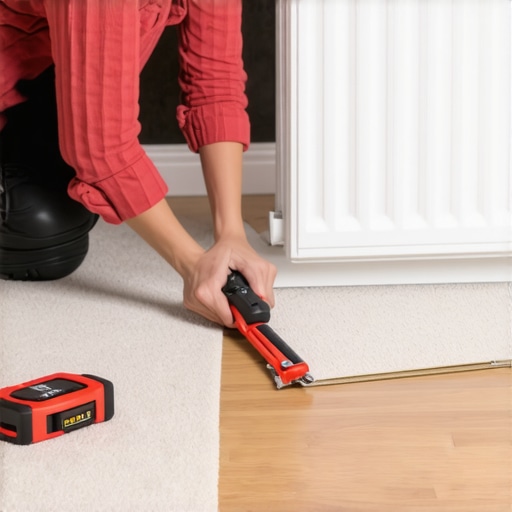
The Carpet and Rug Institute (CRI) 105 standard clearly mandates the use of a power stretcher for all residential carpet installations to ensure long-term performance. A power stretcher works by bracing against one wall and using a geared lever to pull the carpet toward the opposite wall. This creates a uniform, longitudinal tension that a human knee simply cannot replicate. The amount of force required to properly stretch a modern synthetic carpet is significant. We are talking about stretching the material approximately 1 percent to 1.5 percent in both directions. Without this tension, the carpet will expand and contract with humidity changes, leading to permanent buckles. I have seen $80 per yard wool carpets destroyed because an installer thought his quadriceps were stronger than a steel lever.
“A floor is only as good as the subfloor beneath it; deflection is the enemy of every joint.” – Master Flooring Axiom
This axiom applies to every surface from carpet to tile. If the substrate moves, the finish fails. In showers, this movement is even more dangerous because it leads to moisture intrusion.
The ghost in the expansion gap
Laminate flooring is a floating system that requires a strict perimeter expansion gap to accommodate the hygroscopic movement of the wood fiber core. Many installers tight-fit the laminate against the baseboards because it looks cleaner. This is a death sentence for the floor. During the summer, when the relative humidity in the house rises, the HDF core of the laminate absorbs moisture and expands. If there is no gap at the wall, the floor has nowhere to go but up. It will peak at the joints or buckle in the center of the room. I always tell clients that the baseboard or shoe molding is there for a reason. It hides the essential 3/8 inch gap that allows the floor to breathe. This movement is not optional. It is a physical certainty. When you combine a lack of expansion gaps with a subfloor that is not level, you create a perfect storm of structural instability. The floor becomes a giant drum, echoing every footstep and eventually pulling itself apart at the seams.
- Check subfloor for moisture content using an electronic pin meter
- Ensure concrete slab is within 3/16 inch flatness over 10 feet
- Acclimate laminate or hardwood in the room for at least 72 hours
- Use a 6-mil poly film moisture barrier over all concrete substrates
- Verify that the power stretcher head is adjusted for the specific pile height
The chemistry of the shower pan and waterproofing
Tile failure in showers is almost always a result of poor substrate preparation and a misunderstanding of capillary action. When we talk about showers, we are talking about managing water at the molecular level. The old way of doing things, the