Why your floor leveler is taking three days to dry
The physics of slow drying self leveling compound
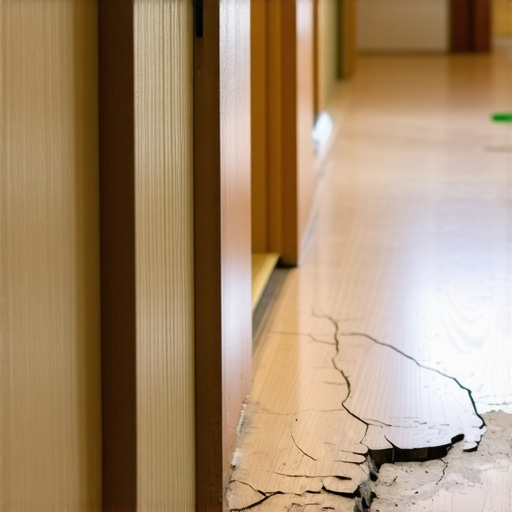
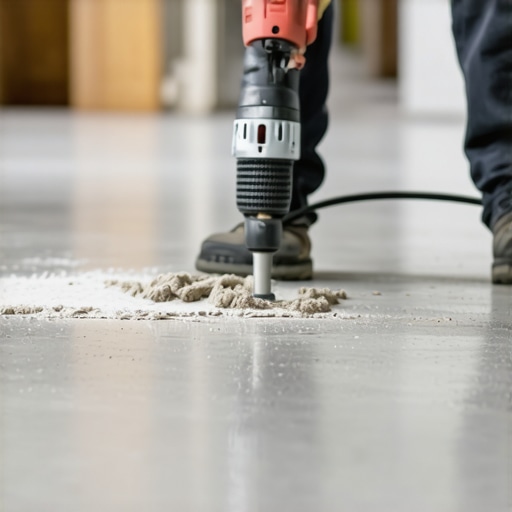
A self leveling underlayment that remains tacky or wet after forty eight hours usually indicates a failure in environmental control or a fundamental error in the water to powder mixing ratio. Most cementitious levelers are designed to be walkable in four hours and ready for floor covering in twenty four. If yours is still soft, you are likely dealing with high ambient humidity, a non porous substrate, or an oversaturated chemical mix that has stalled the hydration process. Most guys skip the leveling compound. They think the underlayment will hide the dip. It won’t. I spent three days grinding concrete on a job last month just so the floor wouldn’t click like a castanet. That job taught me that if you do not respect the chemistry of the pour, the house will remind you of your failure every time you walk across the room. Leveling is not just about a flat surface. It is about creating a structural bond that can withstand the thousands of pounds of pressure exerted by furniture and foot traffic over decades. When that leveler stays wet, the bond is compromised.
The ghost in the expansion gap
Moisture trapped within the molecular structure of the leveling compound cannot escape if the dew point in the room is too close to the surface temperature. This is the primary reason for a three day delay. If you are working in a basement in a humid climate like the coastal Carolinas, the air is already saturated. The water in the leveler has nowhere to go. I have seen guys try to install laminate over leveler that was still off gassing. The results are always catastrophic. The laminate absorbs that moisture, the tongue and groove joints swell, and the entire floor peaks within forty eight hours. You must use a moisture meter. Do not trust your eyes. The surface might look light gray and dry, but the core of a half inch pour could still be a slurry. I once walked into a house where a fifteen thousand dollar wide plank walnut floor was cupping so bad it looked like a potato chip because the installer didn’t check the crawlspace humidity or the leveler moisture content. It was a total loss.
“A floor is only as good as the subfloor beneath it; deflection is the enemy of every joint.” – Master Flooring Axiom
Why your subfloor is lying to you
Substrate porosity determines how quickly the water is pulled out of the leveling compound from below while the air dries it from above. If you are pouring over a sealed concrete slab or an old epoxy coating, the leveler can only dry in one direction. This effectively doubles the curing time. Most installers forget to perform a water drop test. If you drop a bead of water on your concrete and it beads up instead of soaking in, your leveler is going to sit there like a puddle on a raincoat. The chemistry of these products relies on a mechanical bond. When the leveler cannot penetrate the pores of the concrete, it floats. It stays wet. It eventually becomes brittle and cracks. You need a primer that is appropriate for the substrate. Using a non porous primer on a porous floor or vice versa is the quickest way to ruin a thousand dollar pour. I have spent decades on my knees with a moisture meter and a level and I can tell you that the floor never lies. It will tell you exactly where you cut corners.
| Condition | Typical Drying Time | Technical Impact |
|---|---|---|
| Low Humidity 30% | 4 to 6 Hours | Rapid hydration and polymer cross linking |
| High Humidity 80% | 48 to 72 Hours | Saturated air prevents evaporation of excess water |
| Non Porous Slab | 24 to 36 Hours | Single direction drying slows chemical cure |
| Oversaturated Mix | Indefinite | Chemical bond failure and chalky finish |
The 1/8 inch that ruins everything
The thickness of the pour is a non linear factor in drying times where a half inch pour takes significantly more than twice as long to dry as a quarter inch pour. When you get into deep fills, the heat generated by the exothermic reaction of the cement can actually be trapped. If it gets too hot, it dries too fast and cracks. If it stays cool and damp, it stalls. This is why professional installers use a spiked roller. You have to break the surface tension and release the air bubbles. If those bubbles stay trapped, they create voids. Voids lead to structural failure under the weight of a refrigerator or a heavy bathtub. In a shower install, this is even more critical. If your leveler is not fully cured before you apply a waterproofing membrane like Kerdi, you are trapping water inside your subfloor. That water will eventually rot your joists or grow mold that will make the homeowners sick. It is a liability nightmare.
- Always use a calibrated measuring bucket for water.
- Check the room temperature and ensure it is between 65 and 75 degrees.
- Turn off the HVAC to prevent skinning during the first hour.
- Use a moisture meter to verify the substrate is below 4 percent.
- Never add more water to a bucket that has already started to set.
“Substrate preparation is 90 percent of a successful installation; moisture is the silent killer of floor integrity.” – TCNA Industry Standard
The danger of the heavy kitchen island
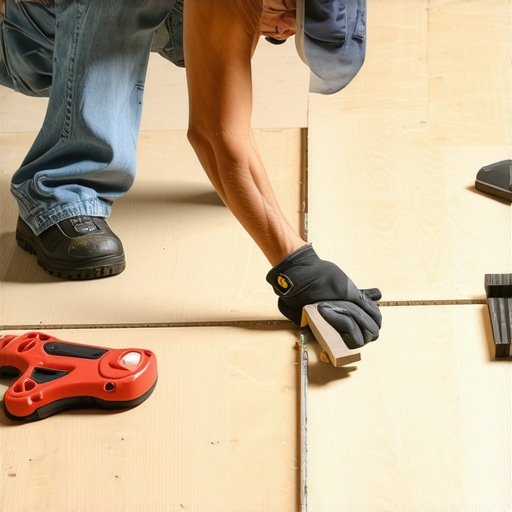
Locking a floating floor down with heavy cabinetry or a kitchen island prevents the natural expansion and contraction required by the material. When people ask why their floor is buckling, I look at the island. If you poured leveler and it took three days to dry, and then you rushed the install and put a three hundred pound marble island on top, you have created a pressure cooker. The leveler will continue to release moisture for weeks. That moisture is now trapped under the vapor barrier of the LVP or laminate. Since the floor cannot move, the pressure builds until the joints snap. I have seen click lock floors that sounded like gunshots when they finally gave way. The sound of a failing floor is the sound of money leaving your pocket. While most people want the thickest underlayment, too much cushion actually causes the locking mechanisms on LVP to snap under pressure. You need a dense, high quality underlayment that provides support, not a mattress. A leveler that takes too long to dry often results in a soft surface that cannot support these loads.
The chemical reality of polymer modification
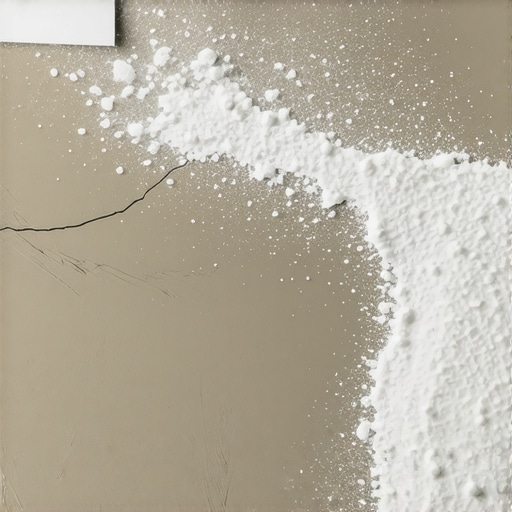
Modern self levelers are not just cement but are complex mixtures of calcium aluminate, portland cement, and powdered polymers. These polymers need to cross link to provide the flexural strength required for modern flooring. If the water content is too high, the polymers are diluted. They cannot find each other to form the lattice structure needed for strength. This results in a floor that looks dry but is soft enough to gouge with a fingernail. If you find yourself three days in and the floor is still soft, you have to make a hard choice. You can wait another two days, or you can rip it out. Installing over soft leveler is a guarantee of a callback. In my shop, a callback is a sin. We do it right the first time because my knees cannot handle doing it twice. Smelling the floor wax and the oak dust of a finished job is the only reward worth having. Don’t let a bad mix or a humid day steal that from you.