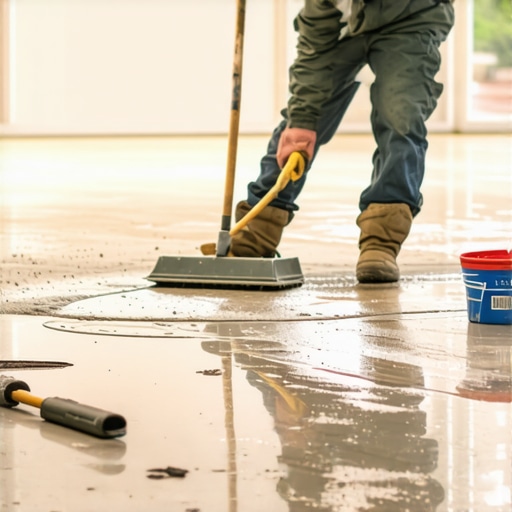
Why Your Floor Leveler Is Taking Days to Dry and What to Do
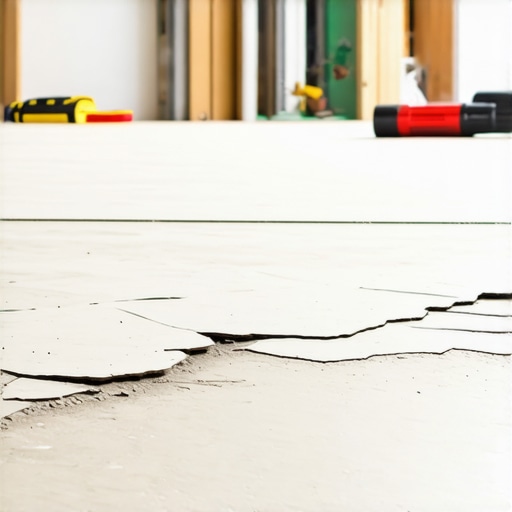
Most guys skip the leveling compound. They think the underlayment will hide the dip. It won’t. I spent three days grinding concrete on a job last month just so the floor wouldn’t click like a castanet. I have spent twenty-five years on my knees with a moisture meter and a level. I have seen every disaster you can imagine. I once walked onto a job site where a homeowner had poured forty bags of self-leveling underlayment over a plywood subfloor without a single drop of primer. It looked like a dried-out lake bed. It was cracking, peeling, and three days later, it was still soft enough to leave a thumbprint in. Flooring is not a cosmetic choice. It is a structural engineering challenge. When your leveler is not drying, you are not just waiting on water to evaporate. You are witnessing a stalled chemical reaction.
The science of stagnant water
Floor leveler stays wet because of high ambient humidity, low substrate porosity, or improper mixing ratios. When the air is saturated, the water in the leveler has nowhere to go. If the subfloor was not primed correctly, the leveler cannot bond or dry at the pace the manufacturer intended. This is not just about time. It is about the physics of hydration versus evaporation. Most modern levelers use calcium aluminate cement which requires a precise amount of water to trigger the crystalline growth that provides strength. If you added too much water, you have effectively drowned the chemistry. The water sits there with no purpose, unable to leave the matrix because the air is too heavy or the floor is too cold.
“A floor is only as good as the subfloor beneath it; deflection is the enemy of every joint.” – Master Flooring Axiom
Why your primer matters more than the leveler
Priming the subfloor is the most frequent point of failure in a self-leveling project. A primer acts as a bridge between the old substrate and the new leveler. If you are pouring over concrete, that slab is a giant sponge. Without a primer, the concrete sucks the water out of the leveler too fast, which stops the chemical reaction and leaves you with a dusty, weak mess. However, if you use the wrong primer or apply it too thick, it creates a waterproof skin. This skin prevents the leveler from anchoring into the pores of the concrete. When that happens, the moisture in the leveler can only escape through the top surface. This doubles or triples the dry time. I see this in showers all the time. People try to level a shower floor and wonder why it is still tacky forty-eight hours later. It is because they sealed the floor so tight that the water is trapped in a bucket of its own making.
The mistake of the bucket and the scale
Measuring water by eye is the fastest way to ruin a floor installation. Manufacturers give you a range, usually something like 5.5 to 6 quarts of water per 50-pound bag. If you go to 6.5 quarts because you want it to flow easier, you have changed the density of the material. The extra water separates the polymers from the cement. You will see a white, chalky film on top of the floor. That film is proof that the leveler has