Why Your Floor Leveler Is Peeling Up in Sheets
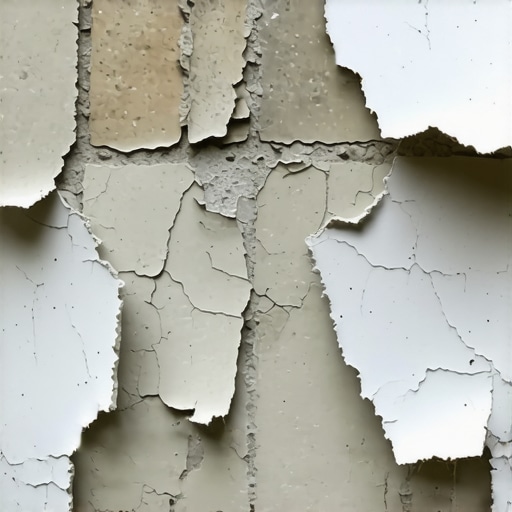
I spent three days grinding concrete on a job last month just so the floor wouldn’t click like a castanet. Most guys skip the leveling compound or they slap it down like they are painting a fence. They think the underlayment will hide the dip. It won’t. I walked onto a site last Friday where the self leveling underlayment was coming up in pieces the size of dinner plates. You could hear it crunching under your boots. It felt like walking on potato chips. This happens because people treat flooring like a cosmetic choice when it is actually a high stakes game of structural engineering and chemical bonding. If your leveler is peeling, you didn’t just have a bad day. You had a systemic failure of the bond between the substrate and the topping. Understanding the physics of this failure is the only way to prevent your next laminate or carpet install from becoming a total loss. Most installers do not understand that concrete is a living and breathing sponge. It has pores. It has latent materials on the surface. If you do not address those factors, your leveler is just a giant sheet of brittle rock sitting on top of a dusty floor.
The tragedy of the hollow sound
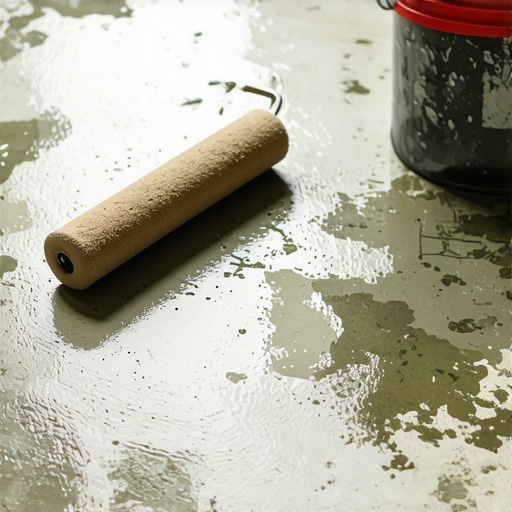
Floor leveler peeling occurs when the tensile strength of the leveling compound exceeds the bond strength to the concrete substrate. This failure is often caused by laitance, moisture vapor transmission, or improper priming. When the leveler cures, it shrinks slightly, creating internal tension forces that pull away from the subfloor. A floor is only as good as the subfloor beneath it; deflection is the enemy of every joint. That is a rule we live by. If the bond is weak, the leveler wins the tug of war and snaps off the surface. You end up with a hollow sound under your LVP or carpet that ruins the entire feel of the home. [IMAGE_PLACEHOLDER]
“A floor is only as good as the subfloor beneath it; deflection is the enemy of every joint.” – Master Flooring Axiom
The invisible skin on your concrete slab
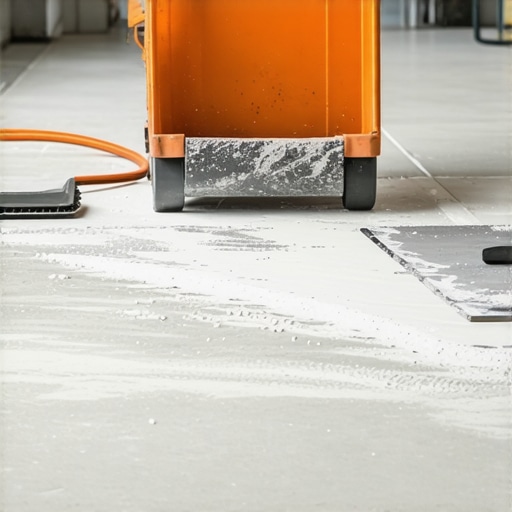
Laitance is a weak, milky layer of cement and sand fines that rises to the surface of concrete during the curing process. This layer is essentially a bond breaker that prevents self leveling underlayment from grabbing the structural slab. If you do not mechanically remove this surface contamination through grinding or shot blasting, your leveler is merely sticking to a thin layer of dust. I see this in new builds all the time. The builder pours the slab, it looks smooth, and the flooring guy thinks he is good to go. He is not. That smooth surface is a lie. It is a fragile skin that will shear off the moment the leveler starts to pull during its hydration cycle. You need to achieve a Concrete Surface Profile of at least two or three to ensure the mechanical lock is permanent. Without that profile, you are just pouring money down the drain.
Why moisture is a silent saboteur
Moisture vapor transmission or MVT is the movement of water vapor from the soil through the porous concrete slab. High relative humidity within the slab creates osmotic pressure that pushes against the bottom of the leveling compound. This pressure is strong enough to delaminate the bond, especially in older homes without a vapor barrier under the slab. I have seen leveler peel up in sheets because the installer ignored a calcium chloride test. They thought the floor looked dry. In reality, the slab was pumping out moisture like an engine. When that moisture hits the dense, non porous leveler, it gets trapped. The alkaline salts in the concrete then begin to break down the adhesive bond of the primer. This leads to efflorescence, which is that white crusty powder you see under the peeled sheets. If you are doing a carpet install or laying laminate, that moisture will eventually rot your flooring too.
The chemical betrayal of the wrong primer
Priming the subfloor is the most critical step that installers rush or skip entirely. A high quality acrylic primer or epoxy moisture mitigation system is required to seal the pores of the concrete. If the concrete is too porous, it will suck the water out of the leveling compound before it has a chance to hydrate and bond. This results in a flash dry scenario where the leveler becomes brittle and powdery at the interface. You need the primer to act as a bridge. It needs to penetrate the slab and provide a sticky surface for the leveler to grab. I prefer a two coat system. The first coat should be diluted to soak in deep. The second coat should be full strength to create that film. If you see bubbles in your leveler, that is air escaping from the slab because you didn’t prime it correctly. Those bubbles are weak points where the peeling will start.
| Primer Type | Drying Time | Best Use Case | Bond Strength |
|---|---|---|---|
| Acrylic Primer | 1 to 3 Hours | Standard absorbent concrete | Moderate |
| Epoxy Primer | 6 to 12 Hours | Moisture mitigation and non porous surfaces | Extreme |
| Polyurethane | 2 to 4 Hours | Fast track renovations | High |
Mixing ratios and the physics of failure
Water to powder ratios are not suggestions. They are laws of chemistry. Adding too much water to your self leveling underlayment to make it flow easier is a recipe for disaster. Excessive water causes segregation of the aggregates. The heavy sand sinks to the bottom, and the light polymers and water rise to the top. This creates a weak, chalky surface that will eventually peel in sheets. It also leads to shrinkage cracks. When that extra water evaporates, the leveler shrinks more than it was designed to. This creates massive lateral tension. If the bond to the subfloor isn’t perfect, the leveler will curl at the edges. Once a corner curls, the whole sheet is going to go. I use a graduated cylinder for every single bag. No guessing. No eyeballing it. If you want a floor that lasts twenty years, you follow the bag instructions to the milliliter.
“Successful installation of floor covering requires a subfloor that is clean, dry, and structurally sound.” – TCNA Handbook Standards
The impact of structural deflection
Deflection refers to the vertical movement of a floor system under a load. If you are applying floor leveler over a plywood subfloor, the joist spacing and subfloor thickness are vital. While most people want the thickest underlayment, too much cushion actually causes the locking mechanisms on LVP to snap under pressure. Similarly, too much leveler on a bouncy floor will cause the leveler to crack and delaminate. Leveler is rigid. Wood is flexible. If you don’t use a fiber reinforced leveler or a latex additive, the first time someone walks across the room, the bond will break. You cannot put a stone product over a trampoline and expect it to stay. I always check the L over 360 rating before I even open a bag of leveler. If the floor moves, the leveler will peel. It is that simple.
- Grind the surface to remove all paint, oil, and laitance.
- Perform a water bead test to check for porosity.
- Vacuum the floor twice to ensure zero dust remains.
- Apply the correct primer based on the slab moisture levels.
- Use a spiked roller to remove air bubbles during the pour.
- Maintain consistent room temperature to prevent uneven drying.
The 1/8 inch that ruins everything
Expansion gaps are the breathing room of your floor. If you pour leveler tight against the walls or around a shower drain without using foam expansion tape, you are inviting failure. As the house settles and the temperature changes, the slab and the leveler move at different rates. Without a gap, the leveler has nowhere to go but up. It will buckle and peel at the perimeter. I have seen entire rooms where the leveler stayed bonded in the middle but snapped off the edges like a biscuit because the installer didn’t leave a 1/8 inch gap. In humid regions like New Orleans, this is even more critical because the wood framing expands so much. You have to respect the movement of the building. A floor is not a static object. It is a moving part of the machine that is your home. Treat it with the respect the physics demand, or you will be back in six months with a chipping hammer and a very angry customer.