The ‘Ice Cube’ Trick for Fixing Heavy Furniture Dents in Carpet
How the Ice Cube Trick Restores Crushed Carpet Fibers Through Molecular Hydration
I spent three days grinding concrete on a job last month just so the floor wouldn’t click like a castanet. That was for a high-end laminate job, but the principles of structural integrity apply just as heavily to the world of carpet. I once walked into a penthouse where the owner had moved a grand piano that had sat in the same spot for twelve years. The indentations weren’t just dents. They were craters that looked like the carpet had been steamrolled into the subfloor. Most installers would tell you to live with it or replace the room. I grabbed a bag of ice and a heavy-duty steamer. People think flooring is just something you walk on, but it is a complex system of polymers and backing materials that respond to physics. If you do not understand how a fiber reacts to pressure and moisture, you are just guessing. Use a moisture meter before you start saturating your floor. A carpet install is only as good as the maintenance that follows it.
The molecular reality of crushed nylon
Nylon carpet fibers possess a molecular memory that allows them to return to their original shape when specific thermal and hydration triggers are applied. The **ice cube trick** works because the **slow melting process** provides a controlled release of **moisture** into the **crushed pile**, allowing the **hydrogen bonds** within the **synthetic polymers** to break and reform in their upright state. This is not magic. It is basic chemistry. When heavy furniture sits on a carpet for years, the weight forces the air out of the fiber core and compresses the latex bonding agents in the secondary backing. To fix this, you need to penetrate the fiber without soaking the subfloor. If you are dealing with a basement install where humidity is already high, you must be careful not to trigger mold growth in the padding. Most homeowners fail because they rush the process. You cannot just splash water on it and expect the fibers to stand up. The slow drip of a melting ice cube is the key to deep penetration without saturation.
Why some carpet dents never go away
Permanent fiber deformation occurs when the structural integrity of the primary backing is compromised by excessive PSI over a prolonged duration. If the furniture leg was narrow and the piece was exceptionally heavy, the **pressure** might have fractured the **polypropylene ribbons** that hold the **yarn twists** in place. In these cases, the **ice cube method** will only provide a surface-level fix. You have to look at the **Janka hardness** of the floor beneath if it were wood, but with carpet, we look at the **density of the pad**. A cheap, low-density foam pad will bottom out under a heavy dresser, leaving the carpet to take the full force of the load. This is why I always tell my clients that the pad is more important than the carpet itself. If your subfloor had issues that required **floor leveling** before the carpet went down, those dips will collect more furniture weight and make dents deeper. It is a physical reality that an uneven floor creates uneven wear patterns. You see this in **showers** with poor drainage and you see it in living rooms with poor leveling.
“A floor is only as good as the subfloor beneath it; deflection is the enemy of every joint.” – Master Flooring Axiom
The chemistry of water and polymer memory
Synthetic fibers like nylon and polyester are engineered with a specific glass transition temperature that dictates how they respond to heat and moisture. When you apply a **frozen ice cube** to a **crushed carpet dent**, you are utilizing the **enthalpy of fusion** to manage the **moisture delivery**. As the ice melts, the water is at a consistent temperature that slowly swells the **cellulose or plastic cells** of the fiber. If the carpet is a wool blend, the reaction is even more dramatic because wool is naturally hygroscopic. It wants to take in that water. I have seen guys try to use boiling water, but that is a mistake. High heat can melt the **bonding glue** in the carpet backing, leading to delamination. You want a slow, cold soak followed by a gentle lifting of the pile. This maintains the **twist lock** of the yarn. If you lose the twist, you lose the carpet. It will just look like a fuzzy mess instead of a professional floor.
Step by step guide to the ice cube method
Restoring a carpet indentation requires a systematic approach involving hydration, dwell time, and mechanical agitation of the fibers. Follow these steps to ensure you do not damage the **secondary backing** or the **underlayment**. This process is particularly effective on **cut-pile carpets** where the fiber ends are exposed and can easily absorb the melting ice.
- Vacuum the area thoroughly to remove any dry soil that could turn into mud when wet.
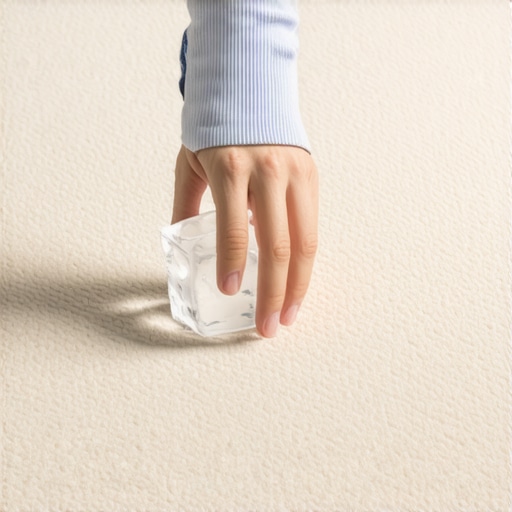
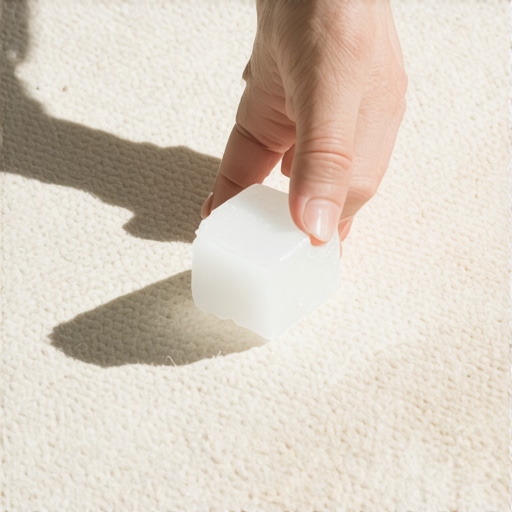
- Place enough ice cubes to completely fill the indentation without overflowing into the surrounding dry carpet.
- Allow the ice to melt completely over a period of four to six hours. Do not touch it.
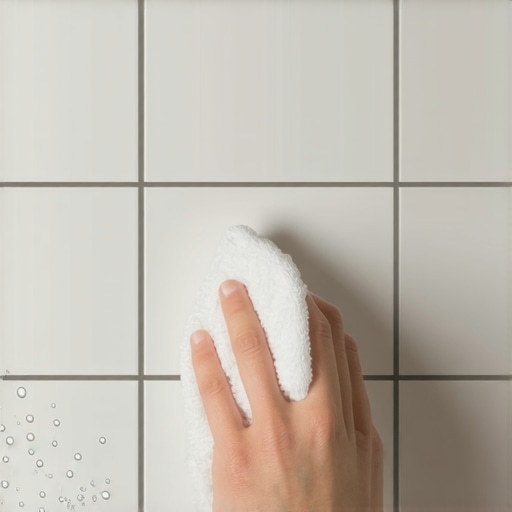
- Blot the excess moisture with a clean, white micro-fiber towel to prevent dye transfer.
- Use a blunt object, such as the edge of a stainless steel spoon, to gently lift the fibers back into an upright position.
- Brush the area with a carpet rake or a stiff nylon brush to blend the texture with the rest of the room.
| Fiber Type | Resilience Rating | Hydration Response | Best Fix Method |
|---|---|---|---|
| Nylon 6,6 | High | Excellent | Ice Cube and Steam |
| Polyester (PET) | Medium | Moderate | Heavy Steaming |
| Wool | Superior | High | Mist and Brush |
| Olefin | Low | Poor | Mechanical Grooming |
Why the underlayment matters more than the fiber
The density and thickness of the carpet pad determine the floor’s ability to distribute load and resist permanent crushing. Many people buy a thick, soft pad because it feels good underfoot, but **too much cushion** actually causes the **locking mechanisms** on a **laminate** floor to snap and causes carpet fibers to stretch beyond their elastic limit. For heavy furniture, you want a high-density rebond pad or a synthetic fiber pad. If the pad is too soft, the furniture leg sinks until it hits the subfloor, trapping the carpet in a vice. I have seen $80-a-yard broadloom ruined in two years because the homeowner insisted on a cheap 1/2 inch 4-pound pad. It is like putting a Ferrari engine in a lawnmower frame. It will not hold up. When we do a **carpet install**, we check the subfloor for any moisture issues. If you have a damp slab, that moisture will rise into the pad and weaken the carpet backing, making it even more susceptible to denting. This is why **floor leveling** and moisture barriers are non-negotiable steps in a professional build.
“Deflection in the subfloor is the silent killer of all finished surfaces, from tile to textile.” – Master Flooring Axiom
The risk of mold in the primary backing
Over-saturating a carpet during the dent removal process can lead to moisture entrapment and fungal growth within the pad. This is the dark side of the **ice cube trick**. If you have a room with poor airflow or high humidity, like a bedroom near a suite of **showers**, that water has nowhere to go. It sits in the **polyurethane foam** of the pad and starts to smell. I always tell people to use a fan after they have lifted the dent. You want the surface to be dry to the touch within two hours of the ice melting. If the water reaches the subfloor, you have used too much. For large furniture like sectional sofas, do not do all the dents at once if the room is small. The cumulative moisture can spike the humidity in the room and affect the tension of the carpet. A wet carpet expands, and if it stays wet too long, it will develop ripples that require a professional re-stretch. It is a domino effect of bad physics.
Beyond the ice cube for permanent damage
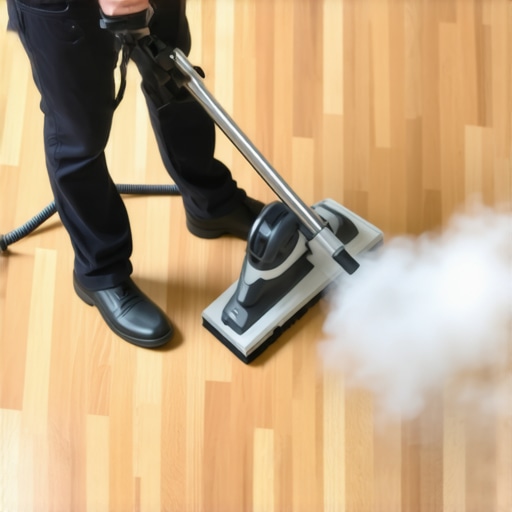
When the ice cube trick fails, the issue is likely a permanent fracture of the fiber or a collapsed pad structure. At this point, you are looking at more aggressive restoration or localized repair. You can try a professional grade **steamer**, but you must keep the head moving to avoid scorching the **synthetic yarns**. If the carpet is **laminate** or another hard surface, you wouldn’t use ice. You would be looking at board replacement or using a wax fill kit. For carpet, if the dent is dead, you might have to cut out the affected area and seam in a donor piece from a closet. This is why you always keep the remnants from your **carpet install**. You never know when a heavy armoire is going to retire a section of your floor. The physics of weight distribution cannot be ignored. Use furniture coasters. They increase the surface area and reduce the PSI on the fibers. It is the only way to truly prevent the problem before it starts. Prevention is cheaper than restoration every single time. Stop treating your floor like a rug and start treating it like the engineered surface it is. Follow the standards set by the industry and your floors will last twenty years instead of five. It really is that simple if you have the right tools and the patience to use them correctly.