Why Your Carpet Seams Are Turning Black After Vacuuming
I spent three days grinding concrete on a job last month just so the floor would not click like a castanet. Most guys skip the leveling compound because they think the underlayment will hide the dip. It will not. That same laziness is exactly why you see black lines appearing at your carpet seams. You think your vacuum is failing you. It is not. Your house is acting like a giant straw, and your carpet is the filter. This phenomenon is technically known as filtration soiling. It happens when air is forced through small gaps in the subfloor or along the perimeter of a room. As the air passes through the carpet fibers, the carpet acts as a filter, trapping microscopic particles of dust, soot, and carbon. Over time, these particles build up and create a dark, greasy-looking line that no amount of standard vacuuming will remove. It is a structural failure disguised as a cleaning issue. Most homeowners think they can just scrub it away. They are wrong. You are looking at a complex interaction of air pressure, subfloor integrity, and particulate physics.
The physics of the black line phenomenon
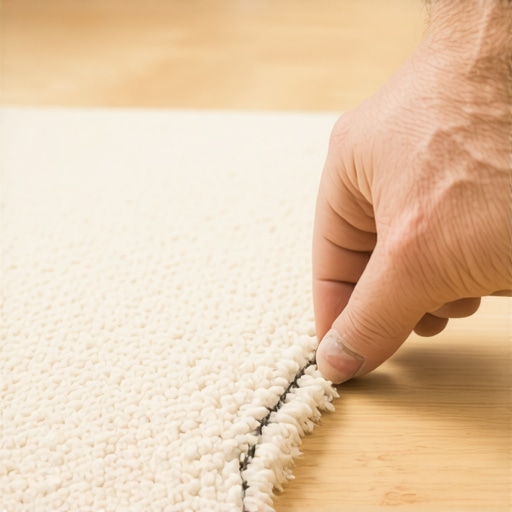
Filtration soiling occurs when air moves through carpet fibers due to pressure differences between rooms or floor levels. The carpet acts as a high-efficiency particulate air filter. When the air moves through the gap between the subfloor and the baseboard, or through a poorly sealed carpet seam, the fibers trap pollutants. These pollutants include carbon from candles, fireplace soot, and cooking oils. They also include fine dust from the crawlspace or basement. The reason the line turns black is that these particles are often oily. Once they bond with the nylon or polyester of your carpet, they create a permanent stain. It is not just dirt. It is a chemical bond. I have seen guys try to steam clean these lines away only to have them return in two weeks because the air is still moving through the same gap. If you do not stop the airflow, you will never stop the staining.
“A floor is only as good as the subfloor beneath it; deflection is the enemy of every joint.” – Master Flooring Axiom
Why your subfloor is lying to you
Subfloor gaps are the primary conduits for the air that causes filtration soiling at carpet seams. If your installer did not tape the seams of your plywood or OSB, or if there are structural gaps where the wall meets the floor, you have an airflow problem. Air follows the path of least resistance. In a house with a crawlspace, the pressure is often higher beneath the floor than inside the living space. This pressure differential pushes air up through every crack. If your carpet has a seam right over a gap in the subfloor, that seam becomes the exit point for all that dirty air. The backing of the carpet is porous. Even the latex used to bond the primary and secondary backings is not airtight. When you run your vacuum, you are momentarily increasing that pressure differential. You are literally pulling the soot out of the subfloor and into your carpet fibers. This is why the lines often seem to appear or get worse right after you clean.
The mechanics of a failed carpet install
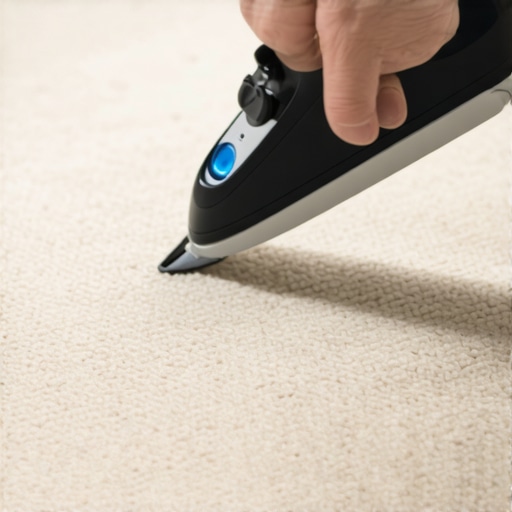
Proper carpet installation requires seam sealing and subfloor preparation to prevent air bypass and filtration soiling. Most installers are in a rush. They use a standard seam iron and a piece of tape, but they do not check if the subfloor beneath is airtight. In a professional carpet install, the edges of the carpet must be sealed with a specialized seam sealer. This liquid thermoplastic or acrylic resin creates a barrier. Without it, the cut edges of the carpet are open. These open edges allow air to pass through the vertical profile of the seam. If the subfloor has not been leveled with a high-quality compound like a Portland-based leveler, the carpet will bridge over low spots. This creates a plenum, a space where air can gather and then be forced through the seam. It is basic fluid dynamics. You cannot expect a soft textile to perform like a solid surface if the foundation is full of holes. I have walked onto jobs where the subfloor had half-inch gaps between the plywood sheets. No wonder the carpet looked like a zebra after six months. You have to seal those gaps with silicone or a floor patch before the pad even goes down.
The role of HVAC and internal pressure
Your heating and cooling system creates the pressure imbalances that drive dirty air through your carpet seams. When the furnace kicks on, it creates a vacuum in certain parts of the house and positive pressure in others. If your return air vents are blocked or insufficient, the system will pull air from anywhere it can. That means it pulls air from the attic, the garage, or the crawlspace. This air is not filtered by your high-dollar HVAC filter. It is filtered by your carpet. This is especially common in homes with