How to Tell if Your Laminate Installer Skipped the Moisture Barrier
The silent evidence of a missing vapor retarder in your flooring installation
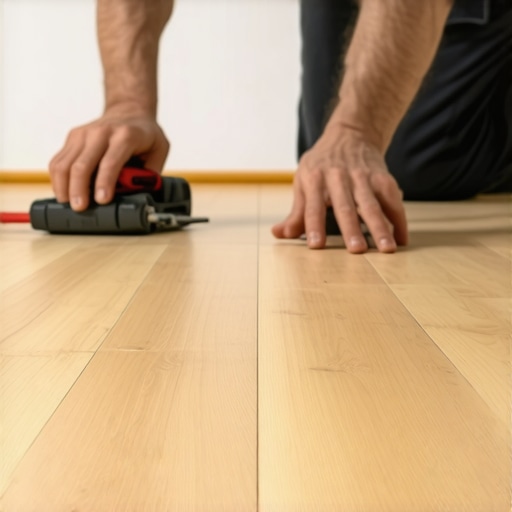
I have spent twenty-five years with sawdust under my nails and the smell of WD-40 on my clothes. My knees have the calluses to prove I have spent more time on subfloors than in my own bed. Most guys skip the leveling compound. They think the underlayment will hide the dip. It will not. I spent three days grinding concrete on a job last month just so the floor would not click like a castanet. That job taught me that shortcuts are the most expensive things a contractor can sell you. When it comes to laminate flooring, the biggest shortcut is ignoring the moisture barrier. A moisture barrier is a simple sheet of 6-mil polyethylene plastic, yet it represents the only thing standing between your expensive planks and the hydrostatic pressure of the earth. If your installer skipped it, the floor is already on a countdown to failure. You need to know the signs before the warranty period expires and the contractor vanishes.
The silent killer under your planks
A moisture barrier is mandatory for any laminate floor installed over a concrete slab or any subfloor where moisture vapor could migrate from below. This plastic layer prevents water molecules from entering the high-density fiberboard core of the laminate. Without it, the wood fibers will swell, leading to peaked joints, buckling, and eventually the growth of mold. I have walked into thousands of homes where the owner thought their floor was defective, only to find a bone-dry concrete slab was actually breathing out gallons of water vapor every single month. Concrete is a sponge. It never stops holding moisture. If you do not see a plastic film peeking out from behind your baseboards, you have a structural problem that no amount of cleaning will fix.
“A floor is only as good as the subfloor beneath it; deflection is the enemy of every joint.” – Master Flooring Axiom
The molecular mechanics of vapor transmission
Water vapor moves from areas of high concentration to low concentration. This is basic physics. In a house, the concrete slab is almost always more humid than the air in your living room. The slab pushes water vapor upward. This process is called hydrostatic pressure. When that vapor hits the bottom of a laminate plank, it meets the HDF core. High-density fiberboard is made of compressed wood fibers and resin. These fibers are hygroscopic, meaning they want to drink that water. As they absorb the vapor, the hemicellulose in the wood expands at a cellular level. This expansion is not uniform. The bottom of the board expands more than the top, causing the plank to curl. We call this cupping. If the installer skipped the 6-mil poly, you are essentially asking your floor to act as a dehumidifier for your foundation.
The click that warns of future failure
If you hear a hollow clicking or a squelching sound when you walk across the room, the installer likely ignored the moisture requirements. Laminate flooring requires a flat surface and a vapor retarder to maintain its structural integrity and prevent the locking mechanisms from grinding against each other. When moisture gets into the joints, it softens the tongue and groove system. The wax coating that many manufacturers apply to the edges can only do so much. Once the core is compromised, the friction between the planks increases. This produces a distinct, high-pitched clicking sound. If the floor was installed correctly with a moisture barrier and proper floor leveling, it should be silent. A noisy floor is a floor that is fighting against its own subfloor.
| Barrier Type | Thickness (mils) | Perm Rating | Best Use Case |
|---|---|---|---|
| Standard Polyethylene | 6-mil | Less than 0.1 | Standard Concrete Slabs |
| Reinforced Poly | 10-mil | Less than 0.05 | Below Grade Basements |
| Integrated Film | 3-mil | Varies | Pre-attached Underlayment |
The anatomy of a ruined plank
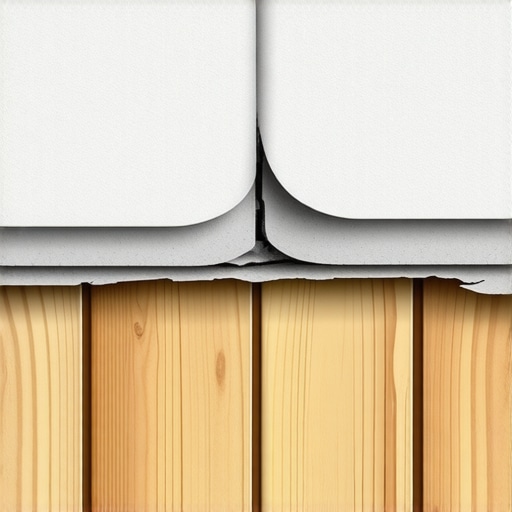
When I look at a failed floor, I look at the seams. If the edges of your laminate are raised, forming a little mountain at every joint, that is called peaking. This is different from cupping. Peaking happens when the planks expand so much that they have no room to go. They press against each other until the edges lift. This is a classic sign of moisture absorption. If you take a moisture meter and probe the expansion gap at the wall, you will likely find readings above 12 percent. For a stable laminate floor, you want to see numbers closer to 7 or 8 percent. Any higher and the resin bonds in the core start to fail. I have seen floors where the swelling was so aggressive it actually pushed the baseboards off the wall. That is the power of water.
“Moisture testing is not an optional luxury but a structural requirement for every laminate installation over concrete.” – NWFA Technical Manual
Checking the perimeter for the blue plastic flag
One of the easiest ways to tell if your installer was lazy is to pull a single piece of baseboard or a transition strip. A professional installer will always run the moisture barrier up the wall by about two inches before trimming it. This creates a bathtub effect that protects the edges of the planks. If you pull a transition strip in a doorway and see nothing but bare concrete or a thin foam pad, you have been cheated. Many modern underlayments claim to be 2-in-1 or 3-in-1, meaning they have a plastic film attached to the foam. However, even these require the seams to be taped with a specific moisture-proof tape. If the installer just laid the padding down without taping the rows together, the moisture barrier is effectively useless. Water vapor will find the gap between the rows faster than you can say wood rot.
Mandatory post-installation checklist
- Check the expansion gaps at the walls by removing a vent cover.
- Look for a visible plastic film behind the baseboards.
- Listen for crunching sounds that indicate grit or moisture under the planks.
- Use a non-invasive moisture meter to check the perimeter of the room.
- Verify that the installer used waterproof tape on all underlayment seams.
The physics of hydrostatic pressure in slabs
Concrete is never truly dry. Even a slab that is fifty years old will fluctuate in moisture content based on the water table and the season. In regions with high humidity, such as the coastal South, the slab can become a literal pump. Without a 6-mil poly barrier, the laminate acts as a lid on a pot of boiling water. The steam has nowhere to go but into the wood. This is why many manufacturers will void your warranty immediately if you cannot prove a moisture barrier was used. They know the chemistry of their product cannot withstand the constant assault of alkaline salts and water vapor rising from the ground. I have seen $10,000 floors ruined in six months because someone wanted to save $50 on a roll of plastic.
Why the thicker pad might be your enemy
Here is a piece of information most big-box stores will not tell you. While most people want the thickest underlayment possible for comfort, too much cushion actually causes the locking mechanisms on laminate to snap under pressure. If your installer used a thick, soft foam without a dedicated vapor barrier, the floor will bounce. Every time you step on a plank, the tongue and groove system flexes. If moisture has already softened those joints, they will shear off. You want a high-density underlayment that is thin but firm. If the installer tried to fix an uneven floor by doubling up on the padding instead of using a self-leveling compound, the floor is doomed. Padding is for comfort, not for structural correction.
Saving the installation from a total loss
If you have confirmed that the moisture barrier is missing, you have to act fast. If the floor has not started to peak or cup yet, you might be able to save it by carefully deconstructing the floor, laying down the proper 6-mil poly, and reinstalling the planks. However, if the joints are already swollen, the planks are garbage. You cannot un-swell HDF core once the fibers have saturated. I always tell homeowners to watch their installer like a hawk during the first hour. If you do not see them rolling out plastic and taping seams, stop the job. It is better to have a difficult conversation on day one than a ruined house on day ninety. Flooring is not just about what you see on top. It is about the engineering of the layers you will never see again. Respect the subfloor, or the subfloor will eventually destroy your investment.