Why Your Laminate Floor Sounds Hollow When You Walk
The haunting echo of a cheap installation
The sound of a clicking heel on a laminate floor can be the most annoying noise in a modern home. It is a sharp, percussive tap that vibrates through the entire room, making even the most expensive planks feel like thin plastic. This happens because your floor is essentially a giant drum head. When there is a gap between the laminate and the subfloor, you are creating an acoustic chamber. Every step compresses that air, forcing a sound wave to bounce off the hard structural base and back through the plank. Most people blame the material. They think they bought a bad product. In reality, they almost always have a subfloor problem. I have spent twenty-five years on my knees with a level and a grinder, and I can tell you that the floor is only as good as what is underneath it.
“A floor is only as good as the subfloor beneath it; deflection is the enemy of every joint.” – Master Flooring Axiom
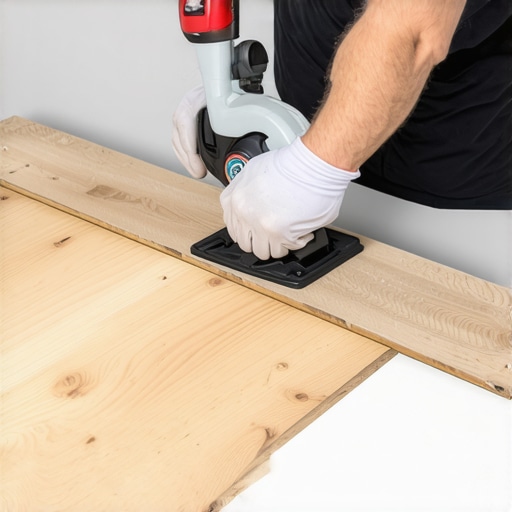
Most guys skip the leveling compound. They think the underlayment will hide the dip. It won’t. I spent three days grinding concrete on a job last month just so the floor wouldn’t click like a castanet. The homeowners had purchased a high-end 12mm laminate with an attached pad, but the slab was a disaster. It looked like the surface of the moon. If I had just laid the floor over those dips, the first time they walked on it, the locking mechanisms would have groaned and the whole room would have sounded like a hollow box. You cannot skip the prep work. If you do, you are just waiting for the floor to fail. Floor leveling is not a suggestion. It is a structural requirement for any floating system.
The science of the drum effect
Laminate floors sound hollow because of air gaps between the flooring planks and the subfloor. This occurs when the subfloor is not perfectly level, causing the floating floor to bounce and vibrate against the structural base. High-density underlayment and proper floor leveling are required to eliminate this acoustic resonance. When you walk across a floor, you are applying downward pressure. If that floor is suspended even an eighth of an inch above the plywood or concrete, it must travel through that space before it hits the bottom. That travel creates noise. It also puts immense stress on the tongue and groove joints. If you hear a hollow sound, you are hearing the sound of your floor slowly breaking itself apart. The physics of sound transmission dictate that a solid mass will always be quieter than a layered mass with air gaps. This is why a glued-down hardwood floor sounds like a solid thud, while a poorly installed laminate sounds like a snare drum.
The 1/8 inch that ruins everything
Subfloor flatness tolerances are the most ignored specification in the flooring industry, leading to hollow sounds and joint failure. Most manufacturers require a subfloor to be flat within 3/16 of an inch over a 10-foot radius. Anything beyond this creates a bridge where the flooring spans over a valley. I often see installers try to fix this by doubling up on underlayment. This is a massive mistake. While most people want the thickest underlayment, too much cushion actually causes the locking mechanisms on LVP and laminate to snap under pressure. The floor needs to be supported by a firm, flat surface. If the padding is too soft, the floor deflects too much when you step on it. This vertical movement pulls the joints apart and creates a squeaking or clicking sound. You want a high-density underlayment, something like felt or heavy rubber, rather than the cheap blue foam that comes in big-box rolls.
| Underlayment Type | Density Rating | Sound Reduction (IIC) | Best Use Case |
|---|---|---|---|
| Basic Foam | Low | 50-55 | Budget rentals only |
| Felt Pad | High | 65-70 | Maximum sound dampening |
| Cork Overlay | Medium | 60-62 | Natural antimicrobial use |
| Rubber Underlay | Very High | 70+ | Commercial grade silence |
The density of the core board itself also matters. High-Density Fiberboard (HDF) is the industry standard for quality laminate. If you buy the cheap stuff from a liquidator, you are likely getting Medium-Density Fiberboard (MDF). MDF is less stable and much more prone to vibrating. It acts like a resonator. When you pair a low-density board with a subfloor that has a 1/4 inch dip, you are essentially building a musical instrument. It will buckle. It will creak. It will make you regret trying to save a few hundred dollars on the install. I always tell my clients that the floor leveling compound is the most important part of the invoice. It is the insurance policy for the next twenty years of their life.
The ghost in the expansion gap
Expansion gaps at the perimeter of a room are vital for preventing the floor from peaking and creating hollow spots. If a laminate floor is installed too tight against the walls, it has nowhere to go when it expands due to humidity. This causes the floor to lift off the subfloor. This lifting creates a massive air pocket. You might notice the hollow sound gets worse in the summer when the humidity is high. In places like Houston or Florida, this is a constant battle. If the floor hits the wall, it starts to arch. Suddenly, you aren’t walking on a floor. You are walking on a bridge. You need at least a quarter-inch gap around the entire perimeter, including around door frames and heavy cabinetry. Never lock a floating floor under a kitchen island. That is a recipe for disaster. The island acts like an anchor, preventing the floor from moving, which leads to buckling and that dreaded hollow echo.
- Check subfloor flatness with a 10-foot straight edge
- Grind down high spots in concrete slabs
- Fill low spots with a high-quality self-leveling underlayment
- Vacuum every speck of dust before laying the pad
- Use a moisture barrier on all concrete installations
- Maintain a consistent indoor humidity between 35 and 55 percent
Another factor people forget is the acclimation process. You cannot take laminate from a cold warehouse and install it immediately. The planks need to sit in the room for at least 48 hours to reach equilibrium with the home environment. If you skip this, the planks will move significantly after they are clicked together. This movement can create new gaps and voids that weren’t there on day one. I have seen floors that were perfectly quiet on Tuesday start screaming by Friday because they were installed ‘hot’ out of the truck. This is especially true if you are transitioning from a carpet install to a hard surface. The subfloor under a carpet is often neglected because carpet hides everything. Once you pull that rug up, you will see the sins of the builder. You will see the seams in the plywood that were never sanded. You will see the drywall mud that was dropped and left to harden. All of that must be scraped clean.
“Deflection in the subfloor is the primary cause of clicking and hollow sounds in floating floor systems.” – NWFA Technical Guidelines
Why your subfloor is lying to you
Subfloors often look flat to the naked eye but contain subtle undulations that ruin laminate performance. A professional installer uses a digital moisture meter and a laser level to verify the structural integrity of the base before any planks are laid. Concrete slabs are rarely flat. They are poured quickly and often settle unevenly. If you are installing laminate near showers or laundry rooms, you have the added risk of moisture wicking up through the slab and causing the underside of the laminate to swell. This swelling changes the shape of the plank, creating a permanent cup that traps air underneath. Even if the floor was flat when you started, moisture can turn it into a hollow mess within six months. Always use a 6-mil poly film moisture barrier on concrete. It costs pennies but saves thousands. It prevents that moisture from reaching the HDF core and causing the edges to peak. When the edges peak, they catch the light and they catch your feet. They also make the floor sound like you are walking on empty eggshells.
The chemistry of the core board is also worth mentioning. Quality laminate uses resins that bind the wood fibers together tightly. This high density creates a shorter, duller sound wave. Cheap laminate is basically compressed sawdust and paper. It is porous. It is light. It moves too much. If you want a floor that sounds like real wood, you have to buy a floor that has the density of real wood. Look for the AC rating (Abrasion Class). While AC4 and AC5 are about surface wear, the higher-rated floors usually come with a better, denser core. This density helps absorb the impact of your footsteps rather than reflecting them. It is the difference between walking on a solid oak timber and walking on a cardboard box. If you combine a high-density plank with a heavy rubber underlayment and a perfectly leveled subfloor, the hollow sound disappears completely. It feels solid. It feels expensive. Most importantly, it stays quiet. Do not let a lazy contractor tell you that ‘it will settle.’ It won’t. If it is hollow on day one, it will be hollow on day one thousand. Fix the subfloor or prepare for the noise.