How to fix a carpet that has been burnt by an iron
I have spent twenty five years with my knees on a subfloor and my hands covered in tack strip scratches. I have seen every kind of disaster a homeowner can cook up. Most guys think a little burn can be brushed away. It can’t. I spent four hours last month on a Berber repair because the previous guy used superglue that turned the fibers into a rock. You can smell the desperation in those DIY jobs. It smells like burnt plastic and regret. I smell like floor wax and the WD-40 I use to clean my shears. If you dropped a hot iron on your carpet, you did not just change the color. You changed the molecular state of the polymer. You are not looking at a stain. You are looking at a structural failure of the synthetic fiber. To fix this, we have to talk about the physics of the melt and the chemistry of the bond.
The structural reality of melted synthetic fibers
Synthetic carpets like nylon, polyester, and triexta melt at specific temperatures when exposed to a hot iron. The polymer chains undergo a glass transition, permanently altering the fiber structure and creating a hardened, scorched texture that cannot be reversed. When that iron hits the floor, it reaches temperatures between 300 and 400 degrees Fahrenheit. This is well above the melting point of most residential fibers. You are left with a charred plastic scab. You cannot wash this out. You cannot sand it down. The only way forward is a surgical extraction and a donor graft. We are talking about precision work that involves the primary and secondary backing of the carpet. If you do not understand the weave, you will leave a scar that everyone will see the second the sun hits the floor at an angle.
The hunt for a perfect donor piece
A successful carpet repair requires a donor piece of matching pile height and dye lot. You must harvest this from a hidden area like the back of a walk in closet or under a heavy piece of furniture, ensuring the nap direction or sweep aligns perfectly. Most people do not realize that carpet has a grain. It is called the nap. If you install a patch with the nap facing north when the rest of the floor faces south, it will look like a different color even if it came from the same roll. I call this the ghost in the carpet. It is a trick of the light caused by the way the fibers reflect the sun. You have to be a detective. You find the donor site, you check the pile orientation, and you make sure the subfloor underneath is flat. If there is a dip in the wood or concrete below, your patch will never sit flush.
“A floor is only as good as the subfloor beneath it; deflection is the enemy of every joint.” – Master Flooring Axiom
The physics of the carpet surgical cut
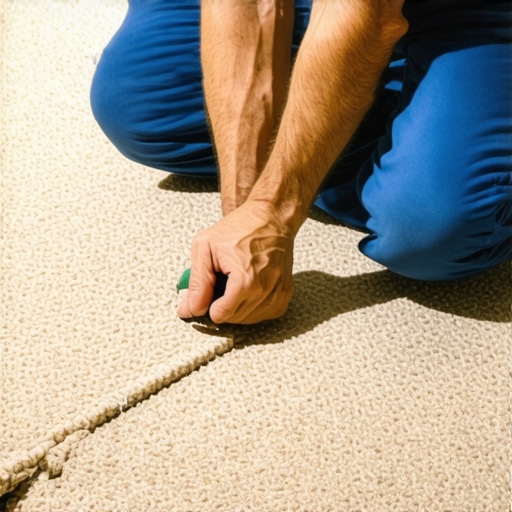
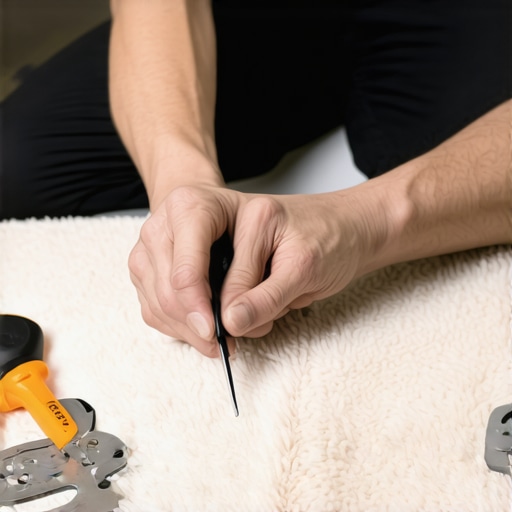
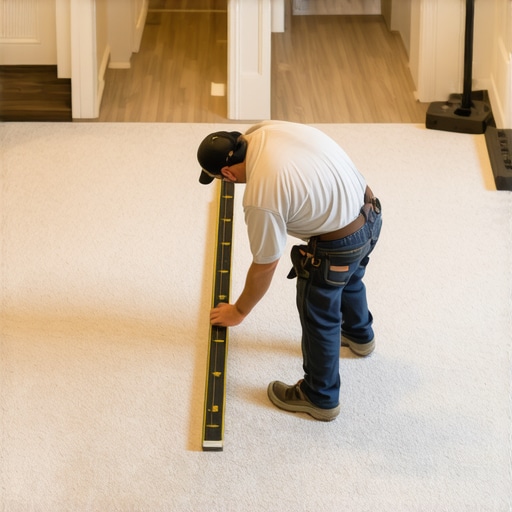
Precision carpet cutting for a burnt section requires a sharp utility knife or a carpet cookie cutter to remove the damaged area. You must cut through the primary backing without slicing into the padding or the subfloor beneath, as any damage to the cushion will create a visible divot. I prefer the freehand method with a fresh blade every three inches. I use a metal straightedge to guide the cut. You are looking for a clean, vertical wall in the carpet backing. If you angle the blade, you create a bevel. A bevel means the patch will either have a gap or it will overlap and create a hump. Neither is acceptable. I have seen installers try to use scissors. That is a crime. Scissors crush the tufts. You need a clean, surgical slice that leaves the surrounding fibers intact.
| Fiber Type | Melting Point (F) | Repair Difficulty |
|---|---|---|
| Nylon 6 | 428 Degrees | High |
| Polyester (PET) | 482 Degrees | Medium |
| Polypropylene | 320 Degrees | Extreme |
| Triexta | 437 Degrees | Medium |
Adhesive chemistry and the bond of the patch
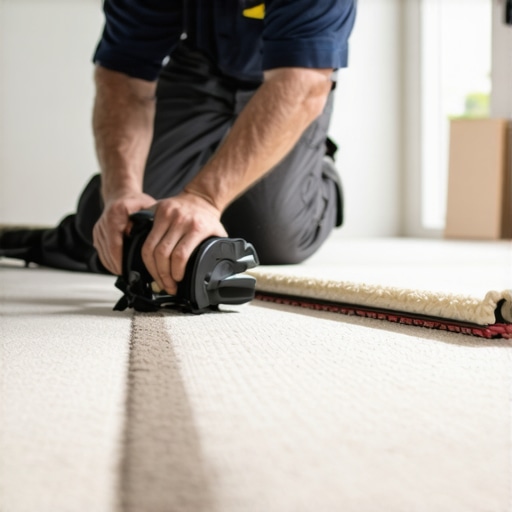
The bond strength of a carpet patch depends on the adhesive chemistry of the seam tape or pressure sensitive glue used. To ensure a permanent repair, the backing of the donor piece must be fused to the existing floor system using heat or high strength resins. I stay away from the cheap stuff you find at the big box stores. You want a professional grade thermoplastic tape. This stuff is basically a hot melt glue on a fiberglass mesh. You slide it under the edges of the hole, place your donor piece on top, and use a seam iron to activate the glue. But you have to be careful. You already burnt the floor once. If you hold the seam iron there too long, you will melt the patch too. It is a delicate balance of heat and timing. You want the glue to flow into the grids of the carpet backing to create a mechanical lock.
The 1/8 inch that ruins everything
Alignment is the most critical factor in a carpet repair job. A displacement of 1/8 inch in the stitch row will result in a visible line that the human eye can detect from across the room. You have to count the rows. Carpet is made on a giant loom. It has rows and columns just like a spreadsheet. When you put that donor piece in, you have to line up the rows. If you are off by even a tiny bit, the texture will look broken. I use a carpet awl to pull the fibers out of the way before I make my cut. Then I use a carpet tractor to blend the fibers once the glue is set. The tractor has these little spiked wheels that massage the fibers together. It is like combing hair. You are trying to weave the two separate pieces of history into one single story.
- Identify the fiber type to understand the melting behavior.
- Harvest a donor piece from a low traffic closet.
- Ensure the nap direction of the patch matches the floor perfectly.
- Use a fresh surgical blade for every single cut.
- Apply professional grade thermoplastic seam tape.
- Use a carpet tractor to blend the seam fibers.
- Check for subfloor levelness before sealing the bond.
Why your subfloor is lying to you
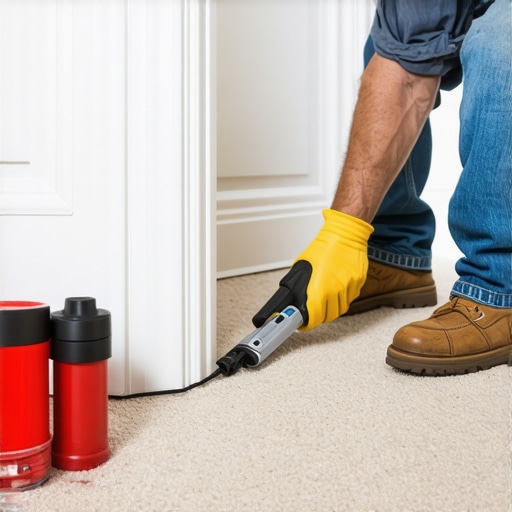
Homeowners think the carpet pad hides subfloor imperfections. It does not. If your wood subfloor has a high spot or a loose panel, the carpet patch will eventually delaminate or show excessive wear at the peak. I have seen repairs fail because the installer didn’t check for moisture in the concrete slab. If you have moisture coming up through the floor, it will kill the adhesive on your patch. The glue will turn back into a liquid or get brittle and snap. I always carry a moisture meter. Even for a small carpet repair. If that slab is over 80 percent relative humidity, your patch is going to walk. You have to seal the subfloor or use a moisture resistant adhesive. Most guys think that is overkill for a burn mark. Those are the guys whose repairs I have to fix two years later.
The ghost in the expansion gap
Even in carpet installations, the perimeter expansion gap is vital for structural integrity. If the carpet is stretched too tight or too loose near the burnt area, the patch will either pucker or gap as the humidity changes throughout the seasons. This is where the physics of the room come into play. In the summer, the fibers swell. In the winter, they shrink. If you glue a patch in during a humid July, it might look great. Come January, when the air is dry as a bone, that patch might shrink and leave a visible white line of glue. You have to understand the tension of the floor. I use a power stretcher to make sure the tension is uniform across the room before I finalize a repair. It is about more than just the hole. It is about the entire surface area of the room. A floor is a living thing. It breathes. It moves. If you don’t respect that, it will embarrass you. No conclusion is needed for a job well done. You just pick up your tools and move to the next one.