How to Clean Grout Lines Without Scrubbing for Three Hours
The microscopic reality of your dirty grout
Cleaning grout lines without scrubbing involves using the laws of chemistry and physics to extract dirt from the cementitious matrix. By applying an alkaline-based oxygenated cleaner or a high-pressure steam extraction method, you can lift embedded soils without mechanical agitation. This process relies on surfactants and heat to break molecular bonds between the grime and the porous grout surface.
Most guys skip the leveling compound. They think the underlayment will hide the dip. It won’t. I spent three days grinding concrete on a job last month just so the floor wouldn’t click like a castanet, and let me tell you, that same level of precision is required for grout maintenance. I once walked into a luxury bathroom where the owner had spent five grand on Italian marble only to ruin it with a jug of acidic grocery store cleaner. The grout was bleached white but the edges of the marble were etched beyond repair. You have to understand that grout is essentially a microscopic sponge made of Portland cement and sand. It is not a solid, impenetrable barrier. When you walk across your floor with work boots or even bare feet, you are pressing skin oils, dust, and microscopic debris into these tiny pores. If you take a stiff brush and start scrubbing like a maniac, you are often just pushing that dirt deeper into the structural pores while simultaneously stripping away the protective sealant. This creates a cycle of damage that makes the floor harder to clean every single time you attempt it. A real pro looks at the chemical composition of the stain before they ever touch a tool.
The physics of capillary action in cementitious joints
Grout is a porous material that absorbs liquids through a process known as capillary action, where the surface tension of the liquid pulls it into the internal voids of the cement. To clean this without scrubbing, you must reverse this pressure by using an oxygenated cleaner that creates internal gas pressure to push the dirt out. This avoids the structural degradation associated with high-friction manual cleaning methods.
When we talk about floor leveling and its impact on grout, we are talking about the foundation of the entire installation. If the subfloor has even a 1/8 inch dip over ten feet, the tile will flex. This deflection is the silent killer of grout. It creates micro-fissures that you can barely see with the naked eye, but they are wide enough for dirty mop water to settle into. Once that water evaporates, the dirt remains trapped inside the grout line. This is why your laminate or carpet install doesn’t have these issues, they are floating or flexible systems. Tile is rigid. If the subfloor moves, the grout breaks. This is a fundamental engineering reality. To clean these lines without three hours of labor, you need to use a cleaner with a high pH to break down the grease, or a low pH for mineral deposits, but never both at once. You also need to consider the temperature. Heat reduces the viscosity of oils, making them easier to extract. A professional steam cleaner at 200 degrees Fahrenheit will do more in ten seconds than a homeowner with a toothbrush will do in ten minutes. It is about using energy efficiently rather than using muscle. You are essentially performining a microscopic extraction of the soil particles from the cement matrix.
“A floor is only as good as the subfloor beneath it; deflection is the enemy of every joint.” – Master Flooring Axiom
The specialized tools that replace manual labor
The most effective tools for cleaning grout without scrubbing include commercial-grade steam vapor cleaners and specialized oxygenated bleach solutions that dwell on the surface to dissolve bonds. High-pressure steam at 60 PSI can penetrate the crystalline structure of the grout to blast out contaminants that brushes cannot reach. This method maintains the integrity of the grout joints while achieving a higher level of sanitation.
I have seen guys try to use wire brushes on grout. Do not do that. You are basically sandpapering your floor. If you are dealing with showers, the problem is usually soap scum and body oils, which are acidic in nature. You need an alkaline cleaner to neutralize and lift them. If you are in a region with hard water, like the limestone-heavy areas of Central Texas, your grout is likely clogged with calcium deposits. In that case, you need a very mild phosphoric acid solution, but you must be careful not to leave it on too long or it will eat the cement itself. This is why I always tell people to check their moisture levels. High humidity in a bathroom keeps grout pores open, allowing mold to root itself deeply. If you use a high-quality sealant after a deep clean, you are effectively plugging those holes so the dirt has nowhere to go. This is the difference between a floor that looks good for a week and a floor that looks good for a decade. The chemistry of the bond is everything. When you apply a cleaner, let it dwell for twenty minutes. Let the molecules do the heavy lifting for you. This is the secret to avoiding the three-hour scrub session. You are a floor architect, not a janitor.
| Grout Type | Porosity Level | Best Cleaning Agent | Dwell Time Required |
|---|---|---|---|
| Sanded Grout | High | Alkaline Oxygen Bleach | 20-30 Minutes |
| Unsanded Grout | Medium | Steam Vapor | 10-15 Minutes |
| Epoxy Grout | Very Low | Neutral PH Cleaner | 5 Minutes |
| Furan Grout | Zero | Degreaser | 5 Minutes |
Choosing between alkaline and acidic cleaners
Selecting the correct cleaning agent depends on the chemical nature of the stain and the mineral composition of the grout. Alkaline cleaners with a pH of 10 or higher are ideal for organic materials like grease and food, while mild acidic cleaners target inorganic mineral scale. Using the wrong chemical can result in permanent etching of the tile or the total dissolution of the grout binder.
If you look at the Janka Hardness Scale, it tells you about wood, but we need a similar mental model for grout durability. Grout is not as tough as the tile it surrounds. It is the sacrificial lamb of the flooring system. If there is movement in the house, the grout cracks so the tile doesn’t. When cleaning, you must respect this fragility. Most people think vinegar is a safe natural cleaner. It is not. The acetic acid in vinegar will slowly eat away the Portland cement in your grout lines, making them more porous over time. This is a common mistake I see in shower maintenance. People want to be eco-friendly, but they end up destroying their shower floor. Instead, use an oxygenated bleach powder mixed with warm water. It is non-toxic and works by releasing oxygen bubbles that physically lift the dirt out of the pores. It is a mechanical action on a molecular level. You apply it, wait, and then simply mop it up with clean water. No scrubbing required. If you have a carpet install that meets a tiled entry, be extra careful not to get these cleaners on the carpet fibers, as the high pH can strip the dyes. Everything in flooring is interconnected. One mistake in the bathroom can lead to a ruined hallway if you are not paying attention to the transitions.
- Test the cleaner on a small, inconspicuous area to check for color fastness.
- Apply the solution generously to ensure it saturates the grout pores.
- Allow the solution to dwell for at least 20 minutes without drying out.
- Use a wet-dry vacuum to extract the dirty solution rather than a mop.
- Rinse the area twice with distilled water to remove all chemical residue.
- Apply a high-quality penetrating sealer once the grout is completely dry.
Prevention through molecular sealing techniques
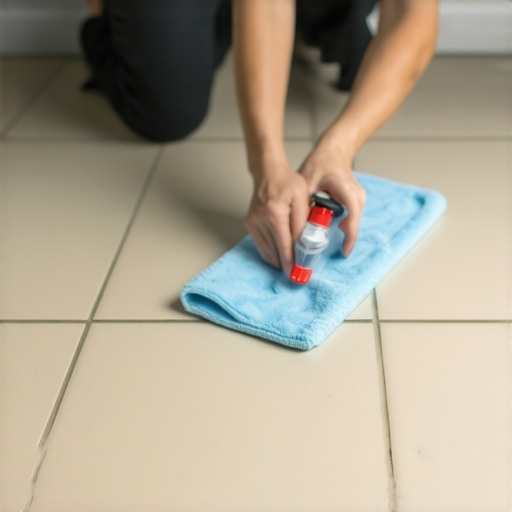
Properly sealing grout lines creates a hydrophobic barrier that prevents liquids and soils from entering the pores of the cement. A high-quality fluorocarbon alphatic resin sealer provides the longest-lasting protection against both water and oil-based stains. This preventative step is the only way to ensure that future cleaning can be done with simple water and a microfiber cloth.
“Grout integrity depends entirely on the water-to-powder ratio during the initial mix.” – TCNA Handbook Guidance
I have spent years fixing floors where the sealer was skipped to save fifty bucks. It is the most expensive mistake you can make. Without a sealer, you are essentially living on an open-cell sponge. In the humid climates of the Southeast, unsealed grout will grow mold within months. In the dry deserts of Nevada, it will suck up every bit of dust until it turns black. When I talk about structural zooming, I mean looking at the sealer as a protective shield. There are two types: topical and penetrating. Topical sealers sit on top and can peel. Penetrating sealers go into the pore and stay there. For a kitchen or a high-traffic hallway, you want a penetrating sealer. It doesn’t change the look of the floor, but it changes the physics of how the floor interacts with dirt. If you spill red wine on a sealed floor, it beads up. If you spill it on an unsealed floor, it is a permanent part of your home’s history. This is why I am so obsessive about the prep work. Whether it is floor leveling or grout sealing, the work you do before you see the final result is what actually matters. A floor that stays clean is a floor that was installed and maintained with an understanding of materials science. Stop scrubbing and start thinking like an engineer.