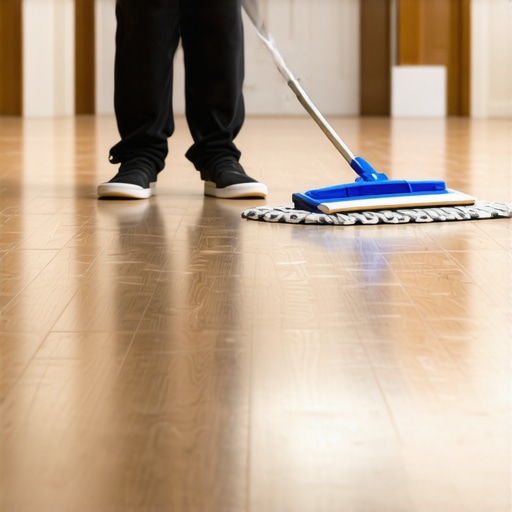
The Reason Your Laminate Floor Looks Cloudy No Matter How Much You Clean It
You have spent hours on your knees with a bucket and a mop, yet the floor looks like someone smeared a gallon of whole milk across the boards. It is a common frustration for homeowners who treat their laminate surface like it is solid hardwood or tile. Most people believe that more soap equals a cleaner floor. In reality, that very soap is creating a microscopic film of surfactants and polymers that trap dust and minerals, resulting in a permanent haze that ruins the aesthetic of your room.
The invisible film killing your shine
The cloudy appearance on your laminate flooring is usually caused by cleaner residue, hard water minerals, or wax-based products that should never touch a synthetic surface. Unlike wood, laminate is a photographic layer protected by a melamine resin and aluminum oxide wear layer. When you use traditional soaps, the oils and fats have nowhere to go. They sit on top of the plasticized surface, attracting every piece of dust in the air. This is the primary reason your floor looks dull even after a deep scrub.
I once walked into a house where a homeowner had just finished a high-end renovation. They had these beautiful wide-plank oak-look laminates installed in the kitchen and the living areas. But every time the sun hit the floor through the windows, the whole surface looked grey and smeared. The owner was frantic. She had been using a steam mop and a popular scented floor cleaner every single day for two weeks. She thought she was being thorough. In reality, she was cooking the chemical residue into the wear layer and swelling the edges of the planks. I had to tell her that her cleaning routine was actually destroying her $8,000 investment. We spent the next six hours stripping the wax with a vinegar-water solution and a microfiber pad just to find the original floor again.
The physics of the melamine wear layer
To understand why your floor is cloudy, you have to look at the molecular structure of the wear layer. Laminate is not a natural material. It is a composite of high-density fiberboard (HDF) topped with a decorative paper and a transparent protective coat. This coat is infused with aluminum oxide crystals, which are nearly as hard as diamonds on the Mohs scale. This makes the floor incredibly resistant to scratches, but it also means it is non-porous. When you apply a liquid cleaner that contains suds or oils, they cannot penetrate the surface. They dry into a thin, uneven sheet of plastic-like film. When light hits this film, it scatters instead of reflecting. That scattering is what your eye perceives as a cloud.
“A floor is only as good as the subfloor beneath it; deflection is the enemy of every joint.” – Master Flooring Axiom
The danger of moisture near showers and kitchens
High moisture areas like the space outside showers or near kitchen sinks are the first places where the clouding starts. Many people assume that a waterproof laminate is truly impervious. It is not. While the surface might be waterproof, the click-lock joints are the weak point. When you use a soaking wet mop, water seeps into those joints. This causes the MDF or HDF core to swell slightly. This swelling creates a microscopic lip at the edge of the plank. When you mop across that lip, the cleaning solution pools at the edge. Over time, these pools dry and create thick lines of residue that look like white or grey shadows along every seam. This is why proper floor leveling is vital before installation. If the subfloor has a dip, the planks flex more, the joints open up, and the moisture infiltration becomes a nightmare.
When cleaning products become the enemy
The marketing for floor cleaners is deceptive. They use words like shine, glow, and polish. For a laminate floor, those are dangerous words. Laminate flooring is already manufactured with a specific gloss level. You cannot change that level by adding a liquid. Any product that claims to add a shine is actually adding a temporary acrylic coating. This coating is soft. It scuffs easily under foot traffic. Within a month, the traffic patterns are etched into the wax, and the areas under the furniture remain shiny. This creates a patchy, cloudy mess that no amount of standard mopping can fix. You are basically trying to clean a floor that is buried under a layer of cheap liquid plastic.
| Cleaner Type | pH Level | Residue Risk | Recommendation |
|---|---|---|---|
| Vinegar/Water | Acidic (3.0) | Low | Best for removing haze |
| Commercial Soap | Alkaline (8.5+) | High | Avoid for daily use |
| Steam Mops | Neutral (Water) | Extreme | Avoid due to heat damage |
| Isopropyl Alcohol | Neutral (7.0) | Zero | Excellent for spot cleaning |
The 1/8 inch that ruins everything
You might think the cloudiness is just a surface issue, but it often links back to the structural integrity of the installation. If your floor leveling was not done to within 1/8 inch over a 10-foot span, the floor will bounce. This bounce acts like a bellows, sucking air and microscopic dust up from the subfloor through the expansion gaps. This dust then settles on the sticky residue left by your cleaners. It is a cycle of filth. You clean the floor, the residue catches the dust from the air and the subfloor, and the floor looks grey again by noon. If you are coming from a carpet install, you might not be used to this level of subfloor prep. Carpet hides a world of sins. Laminate, with its reflective surface, highlights every lump, bump, and cloud of dust.
“Moisture is the single most common cause of flooring failure, manifesting as dimensional change or finish degradation.” – NWFA Technical Manual
The reality of the steam mop myth
I see people using steam mops on laminate all the time. It is a disaster. The intense heat and pressurized vapor force moisture into the locking mechanisms. This does not just cause the floor to cloud. It causes the delamination of the wear layer. The steam breaks down the adhesion between the melamine and the decorative paper. Once that happens, the floor will look white because the top layer is literally lifting off. There is no cleaning that. You are looking at a full replacement. If you see white spots that look like air bubbles, your cleaning method has killed your floor.
How to strip the haze and restore the look
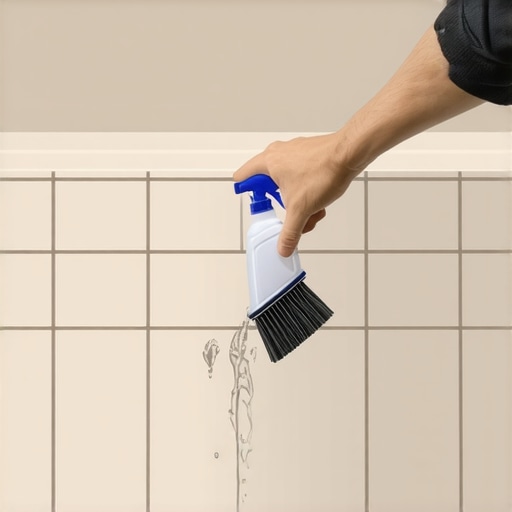
To fix a cloudy floor, you have to go back to basics. You need to strip the accumulated surfactants without melting the core material. This requires a pH-neutral approach or a slightly acidic one to break down the minerals. Use a mixture of one cup of white vinegar to a gallon of distilled water. The distilled water is important because tap water contains calcium and magnesium that add to the clouding. Mist the floor lightly with a spray bottle. Do not pour water on it. Use a microfiber pad to wipe it dry immediately. You are not mopping; you are buffing. If the haze is thick, you might need to use isopropyl alcohol to cut through the wax. It evaporates quickly and leaves no residue behind.
- Stop using any cleaner that creates suds or bubbles.
- Replace your mop head every time it becomes saturated with grey water.
- Use felt pads on all furniture to prevent microscopic scratching of the wear layer.
- Never use a vacuum with a beater bar, as it grinds dust into the finish.
- Check the humidity in your home. High humidity makes the residue feel tacky.
The ghost in the expansion gap
Another reason for that persistent haze is the fine particulate matter trapped in the expansion gaps at the perimeter of the room. When you walk, the air pressure pushes this dust out onto the surface. This is why you see a grey shadow near the baseboards. If the carpet install in the adjacent room was not transitioned with a proper T-molding, the fibers and dust from the carpet will migrate onto the laminate and bond with whatever cleaning slop is on the surface. You must keep the expansion gaps clean. Use a shop vac with a crevice tool to pull the grit out from under the baseboards twice a year. It makes a massive difference in how clean the floor stays.
The final verdict on laminate maintenance
Laminate is a high-performance surface that requires low-moisture maintenance. If you treat it like a sidewalk, it will look like one. The cloudiness is a symptom of chemical overkill. You are trying too hard. Step away from the heavy chemicals. Stop the steam. Fix your subfloor leveling issues to prevent the bellows effect. If you follow the NWFA guidelines and keep your moisture levels in check, that hazy film will disappear. Your floor is a structural engineering marvel of compressed wood and resin. Treat the surface with the respect it deserves, and the clarity will return. It will take time to strip away months of buildup, but once you reach the original aluminum oxide layer, the floor will shine like the day it was installed. No wax. No clouds. Just a clean, durable surface that can handle the reality of a busy home.