Why Your Shower Grout is Turning White and How to Stop Efflorescence
Most guys skip the leveling compound. They think the underlayment will hide the dip. It won’t. I spent three days grinding concrete on a job last month just so the floor wouldn’t click like a castanet. That same level of neglect happens in showers. I have walked into hundreds of bathrooms where a high-end marble install looks like it was dusted with flour. The homeowner is scrubbing with bleach, making it worse, while the real culprit sits six inches below the tile surface. This white powder is not mold or soap scum. It is a chemical byproduct of moisture movement through a cementitious substrate. You cannot scrub your way out of a structural moisture problem. If the shower pan was not pitched correctly or if the waterproofing membrane is failing, the grout is simply the messenger of your shower’s slow demise.
The ghost in the shower stall
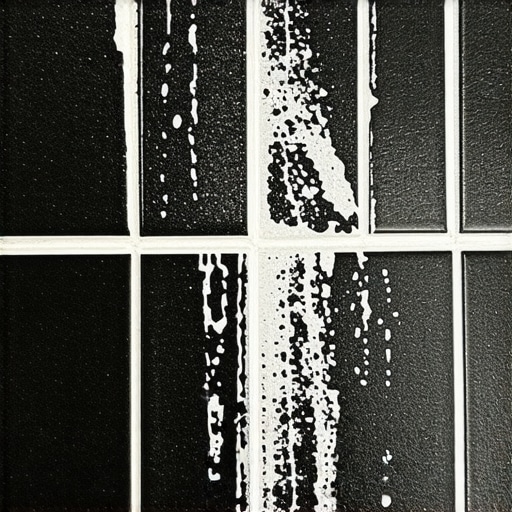
Efflorescence is the migration of soluble salts to the surface of cementitious materials, where they form a white crystalline deposit. This occurs when excess moisture dissolves calcium hydroxide within the mortar bed or grout joints. As the water evaporates, it leaves behind a mineral residue that hardens into calcium carbonate upon contact with atmospheric carbon dioxide. I see this most often in showers where the pre-pitch was ignored. If water sits in the mud bed because it cannot reach the weep holes, it becomes a mineral-rich soup. That soup eventually wicks up through the grout. It is the same principle as floor leveling on a damp slab. If you do not address the vapor drive, the top layer will fail. People think grout is a waterproof seal. It is not. Grout is a filter. If you have water trapped behind your laminate or tile, the salts will find a way out.
Molecular reality of rising salts
Primary efflorescence happens during the curing process when excess water in the grout mix carries minerals to the surface. This is usually the result of a poor water-to-cement ratio during installation. Secondary efflorescence is more sinister, indicating a recurrent moisture source behind the tile assembly. When I look at a shower, I am looking for the wicking path. The capillary action of porous cement is powerful enough to pull water upward against gravity. This is why you see white crusting at the bottom of the wall, just above the floor joint. It is a sign that your moisture barrier is either missing or breached. Unlike a carpet install where a spill stays in the fibers, moisture in a shower saturates the entire structural assembly. The chemistry is relentless. Calcium hydroxide is a byproduct of Portland cement hydration. If water is present, the reaction continues. You are essentially watching your subfloor dissolve and recrystallize on your decorative finish.
“A floor is only as good as the subfloor beneath it; deflection is the enemy of every joint.” – Master Flooring Axiom
Why your subfloor is lying to you
Subfloor deflection and improper drainage are the leading causes of grout failure and mineral leaching. If a floor system has too much flexibility, the grout joints will develop micro-cracks that allow liquid water to bypass the tile surface. I have seen guys try to install laminate over a pouncing subfloor and the same logic applies here. You cannot put a rigid material over a trampoline. In a shower, that movement breaks the chemical bond of the thin-set. Once that bond is broken, water enters the substrate and begins the leaching process. I always check the joist spacing before I even pull a notched trowel out of my truck. If the L/360 deflection standard is not met, the shower is doomed. The salts you see are just the tip of the iceberg. Underneath, the alkalinity is likely eating the alkali-resistant mesh of your cement board. It is a slow-motion wreck caused by a lack of structural rigidity.
The myth of the waterproof surface
Waterproof grout and sealed tile do not prevent efflorescence if the vapor drive originates from the substrate. Many homeowners believe that applying a silicone-based sealer will stop the white powder, but this often traps moisture inside the grout joint. This trapped water leads to spalling, where the face of the grout literally pops off because of hydrostatic pressure. It is similar to the failure of waterproof LVP when the concrete slab has high moisture vapor emission rates. The water has to go somewhere. If you block the surface, it will travel laterally until it finds a perimeter gap or causes a mold bloom. I prefer a breathable sealer or, better yet, an epoxy grout that is truly non-porous. But even epoxy cannot save a shower with a plugged weep hole. If the drain assembly is blocked by mortar, the water stays in the pan, and the mineral cycle never ends.
| Grout Type | Porosity Level | Efflorescence Risk | Recommended Use |
|---|---|---|---|
| Sanded Cement | High | High | Wide joints, budget installs |
| Unsanded Cement | High | High | Polished stone, narrow joints |
| High Performance | Medium | Low | Daily use showers |
| Epoxy Grout | Zero | None | Steam showers, high moisture |
Chemistry of a permanent fix
Sulfamic acid is the industry standard for removing efflorescence, but it must be used with extreme caution to avoid etching the tile. You cannot just splash acid around and hope for the best. You have to pre-hydrate the grout joints with clean water so the acid stays on the surface and does not soak deep into the cement matrix. If you do not pre-soak, the acid will weaken the structural integrity of the grout. After cleaning, the pH level must be neutralized. I use a baking soda solution to stop the acidic reaction. But remember, cleaning is a temporary cosmetic fix. If you do not stop the water source, the salts will return within weeks. This is the part people hate to hear. Sometimes the only real fix is a sledgehammer and a new liner. If the preslope was never done, you are fighting the laws of physics.
“The presence of efflorescence is a symptom of moisture migration; the source must be identified before the remedy is applied.” – TCNA Handbook Standards
Precision leveling for wet environments
Shower pan construction requires the same mathematical precision as high-end floor leveling for hardwood installs. Every lineal foot of the floor must slope a quarter-inch toward the drain. If there is a flat spot, water will pool. This standing water becomes the engine for secondary efflorescence. I use a digital level to verify the pitch on every mud bed I pour. If the substrate is concrete, I check for cracks that could indicate structural movement. A crack isolation membrane is not an option, it is a requirement. You have to decouple the tile assembly from the house’s movement. When I am doing a carpet install, I can hide a subfloor dip with heavy padding. In a shower, a dip is a reservoir. You have to be a mechanic about the water flow. The capillary break at the threshold is another critical point. Without it, moisture can travel out of the shower and rot the laminate in the adjoining room.
Prevention Checklist
- Ensure the pre-pitch is a minimum of 1/4 inch per foot.
- Verify that weep holes in the drain assembly are clear of mortar.
- Use a liquid-applied waterproofing membrane over the cement board.
- Select a high-performance grout with low absorption rates.
- Maintain proper ventilation to reduce surface evaporation speed.
- Avoid excessive water when mixing cement-based products.
Maintenance routines that actually work
Proper ventilation and squeegeeing are the best ways to prevent mineral buildup on newly installed tile. You want to minimize the time that liquid water sits on the grout surface. If the bathroom stays humid for hours after a shower, you are encouraging vapor drive. I tell my clients to run the exhaust fan for at least thirty minutes after every use. It is about managing the micro-climate. If you see white fuzz starting to form, do not use harsh chemicals immediately. Try a stiff nylon brush and distilled water first. Distilled water is hungry water, it wants to absorb minerals. If the efflorescence is primary, it will eventually exhaust its supply of salts and stop. If it is secondary, you need to call a professional to snoop around with a moisture meter. The grout is just the canary in the coal mine for your home’s plumbing health.