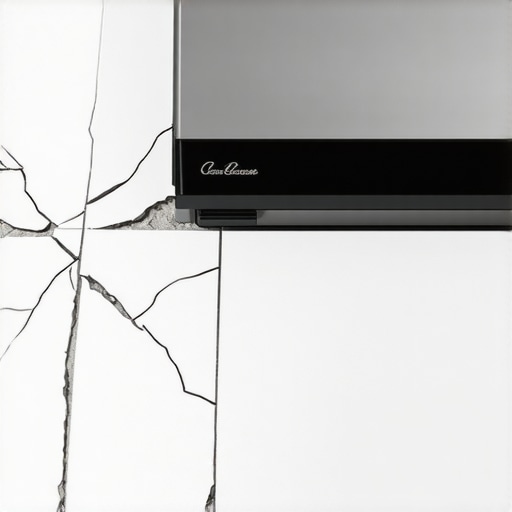
Why Your Kitchen Floor Tiles Are Cracking Near the Dishwasher
The subfloor secret that contractors ignore
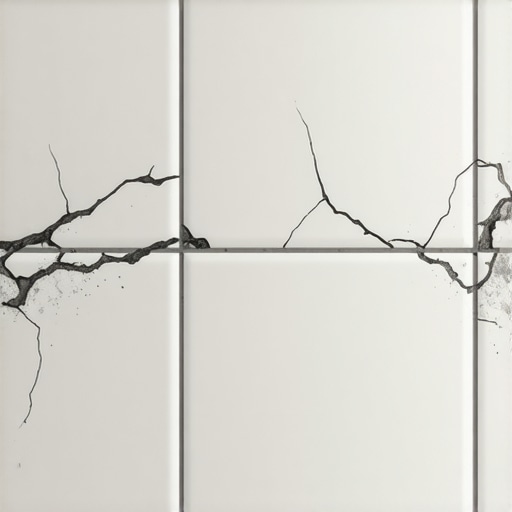
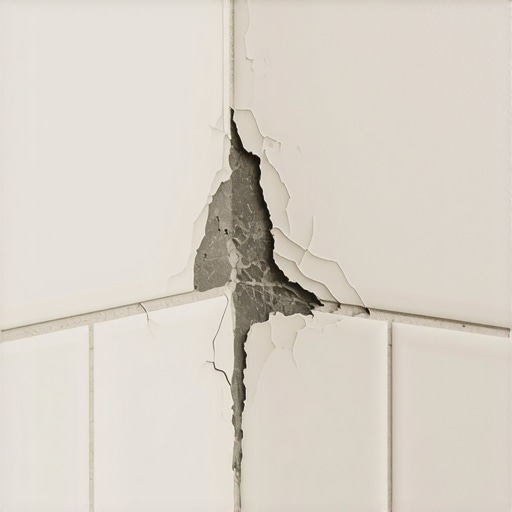
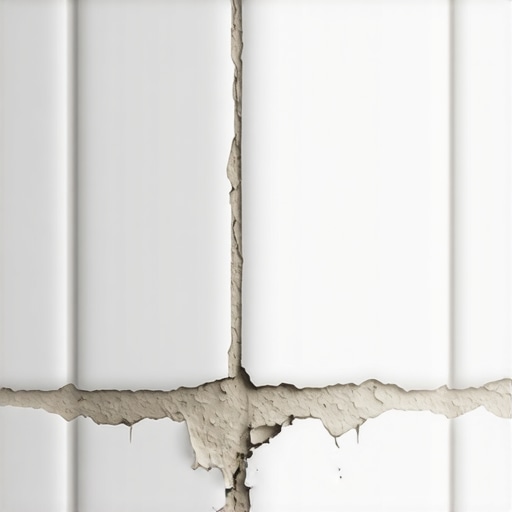
Most guys skip the leveling compound. They think the underlayment will hide the dip. It won’t. I spent three days grinding concrete on a job last month just so the floor wouldn’t click like a castanet. When you see a crack running straight through a porcelain tile or a grout line near your dishwasher, it is never just a bad tile. It is a structural failure. I have been on my knees for twenty five years looking at these failures and it always comes down to the same physics. A floor is a system. If the subfloor has even a sixteenth of an inch of play, the rigid tile will eventually give up. This is especially true near heavy appliances that vibrate and leak steam. You have a heavy dishwasher filled with water, a motor that spins at high speeds, and a heating element that dumps moisture into the air. This combination is a nightmare for a poorly installed floor.
“A floor is only as good as the subfloor beneath it; deflection is the enemy of every joint.” – Master Flooring Axiom
The phantom vibration of the appliance cycle
Vibrations from the dishwasher pump and motor create constant mechanical stress on the tile assembly. If the mortar bond is not 100 percent full or if the subfloor has excessive deflection, these micro-movements eventually shear the bond, leading to visible cracks across the grout and tile. Think of it as a paperclip being bent back and forth. You might not see the metal weakening at first, but the fatigue is cumulative. When your dishwasher enters the drain cycle, the pump creates a rhythmic oscillation. If your thin-set was applied with a standard notched trowel without back-buttering the tile, you have air pockets under that tile. Those air pockets are weak points. Every time that motor hums, the tile flexes into that air pocket. Eventually, the porcelain snaps. This is a common issue I see during a carpet install to tile transition where the floor leveling was neglected at the doorway. You need a solid, monolithic base to resist these mechanical forces.
How moisture vapor destroys the adhesive bond
Steam from the dishwasher drying cycle penetrates porous grout and finds its way into the subfloor structure. When plywood or OSB absorbs this moisture, it swells. This dimensional change creates an upward pressure that the rigid tile cannot accommodate, causing a fracture in the weakest point of the surface. Most people assume their tile is waterproof. It isn’t. The tile itself might be, but the grout is a sponge. Every time you open that dishwasher door and a cloud of steam hits the floor, you are feeding the subfloor moisture. If you didn’t use a high-quality modified thin-set with polymers, the moisture breaks down the chemical bond. I have seen showers fail for the same reason. If the waterproofing membrane is not continuous, the moisture wicks into the studs and the whole thing expands. In a kitchen, this expansion happens right at the feet of your dishwasher. It pushes the tile up while the weight of the appliance holds the other side down. The tile has no choice but to crack.
The physics of a missing expansion gap
Expansion gaps are required at every perimeter where a tile floor meets a vertical surface like a cabinet or a wall. When installers butt the tile tight against the dishwasher legs or the kitchen island, the floor has no room to move during seasonal temperature changes. Every material on this planet expands and contracts. A laminate floor will buckle if it hits a wall, and tile will tent or crack. In the summer, humidity increases. Your wood subfloor expands. The tile stays relatively stable. If the tile is locked against the cabinetry, the internal pressure builds until the floor literally explodes or cracks at the weakest point, which is usually the narrow strip of tile in front of the dishwasher. You need a minimum of one quarter inch of space. This gap should be filled with 100 percent silicone caulk, not hard grout. Grout does not compress. Silicone does.
Structural deflection and the limits of joist span
Deflection is the amount a floor bends under a load. If your floor joists are spaced too far apart or are too thin for the span, the subfloor will bounce as you walk or as the dishwasher runs. Tile has zero flexibility. It is a brittle stone product. The Tile Council of North America (TCNA) specifies that for ceramic tile, the deflection must not exceed L/360. This means the span (L) divided by 360. If you have a ten foot span, the floor should not bend more than one third of an inch under a full load. If you are installing natural stone, that requirement doubles to L/720. Most old houses fail this test. I have walked into kitchens where the floor felt like a trampoline. You can put the most expensive tile in the world down, but if the joists are weak, the grout will turn to powder and the tiles will crack within a year. You often need to add a second layer of plywood or sister the joists to stiffen the assembly.
| Substrate Type | Deflection Limit | Minimum Thickness |
|---|---|---|
| Ceramic Tile | L/360 | 1.125 inch |
| Natural Stone | L/720 | 1.25 inch |
| Laminate Flooring | L/240 | 0.75 inch |
| Vinyl Plank | L/240 | 0.75 inch |
Why floor leveling matters more than the tile choice
Proper floor leveling ensures that there are no high spots or valleys that create stress points under the tile. A flat floor allows for a consistent mortar bed thickness, which is essential for a long-lasting installation. I see guys all the time trying to fix a dip with more thin-set. That is a rookie mistake. Thin-set is meant for bonding, not for leveling. As thin-set cures, it shrinks. If you have a half-inch of mortar in one spot and an eighth-inch in another, the shrinkage will be uneven. This pulls on the tile and creates internal tension. Using a self-leveling underlayment (SLU) is the only way to get a perfectly flat plane. This is especially vital near the dishwasher where the floor must be level to ensure the appliance can be slid in and out without catching on the edge of a lipped tile. If the floor is not level, the weight of the dishwasher rests on the high spots, focusing all that pressure on a few square inches of porcelain.
“Deflection is the silent killer of the ceramic installation; it is the ghost that cracks your grout while you sleep.” – TCNA Handbook Commentary
The 1/8 inch that ruins everything
A common error is the failure to use a proper uncoupling membrane. Products like Ditra allow the subfloor and the tile to move independently of one another, which prevents the transfer of stress from the wood to the stone. If you glue tile directly to plywood, you are asking for trouble. Plywood is organic. It breathes. It moves with the weather. Tile is mineral. It is static. When the plywood moves and the tile doesn’t, something has to break. An uncoupling membrane features a hollow structure that allows for small amounts of horizontal movement. It acts as a shear break. Without this, any movement in the house foundation or the subfloor translates directly into the tile. The area near the dishwasher is the most active part of your kitchen floor due to the heat cycles. If you skipped the membrane, you effectively skipped the insurance policy for your floor.
- Verify the subfloor thickness meets a minimum of 1 1/8 total inches.
- Apply a waterproof transition strip between the dishwasher and the tile.
- Use a premium large format tile mortar with high polymer content.
- Ensure 95 percent mortar coverage under every kitchen tile.
- Leave a 1/4 inch expansion gap at all cabinet bases.
Chemical failure of the thinset bond
The chemistry of your adhesive is the final piece of the puzzle. In high-traffic areas near water sources, you cannot use basic mastic. Mastic is an organic adhesive that can re-emulsify if it gets wet. If your dishwasher leaks even a tiny bit, a mastic bond will turn back into glue and the tile will pop loose. You must use a C2-S1 or C2-S2 rated modified thin-set. These ratings refer to the cementitious strength and the flexibility. An S2 rated mortar is highly deformable, meaning it can handle the vibrations of a heavy appliance without cracking. While most people want the thickest underlayment, too much cushion actually causes the locking mechanisms on LVP to snap under pressure, and in the case of tile, too much mortar creates a soft bed that allows for too much movement. You need the right balance of rigidity and adhesion. If you are seeing cracks, it is a sign that the system has reached its breaking point. You cannot just patch the grout. You have to address the movement underneath. Fix the subfloor, level the plane, and respect the expansion gaps, or you will be replacing those tiles again in two years. Floor work is about managing movement. If you don’t give the energy a place to go, it will find its own way out through your beautiful porcelain finish.