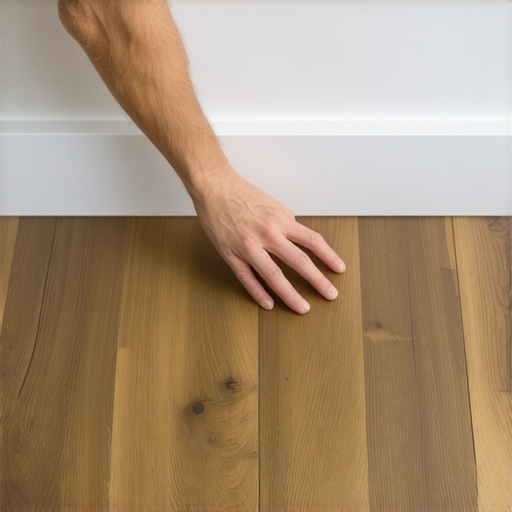
How to Stop Your Laminate Flooring from Bouncing Near the Baseboards
I spent three days grinding concrete on a job last month just so the floor wouldn’t click like a castanet. Most guys skip the leveling compound. They think the underlayment will hide the dip. It won’t. A homeowner called me because their brand new floor felt like a trampoline every time they walked near the hallway wall. The installer had ignored a quarter inch dip in the slab and tried to mask it with a double layer of cheap foam. Within two weeks, the locking mechanisms were screaming under the stress. Fixing a bounce near the baseboards is not about the trim. It is about the physics of the substrate and the structural integrity of the plank core.
The physics of the perimeter bounce
Laminate floor bouncing near baseboards usually occurs because the subfloor is not level, the expansion gap is too tight, or the underlayment compression is exceeding the manufacturer limits. When a floating floor spans a subfloor dip, it creates a vertical deflection that manifests as a spongy sensation near the wall. This is a mechanical failure of the installation system rather than a defect in the laminate planks themselves.
You have to understand the molecular reality of a high density fiberboard core. These planks are essentially compressed sawdust and resin. They are incredibly stiff across their horizontal plane but they have zero tolerance for vertical torque. When you step on a plank that is bridging a low spot, the weight of your body forces the tongue into the groove at an angle it was never designed to handle. If the gap is near the baseboard, the plank acts as a lever. The baseboard is the fulcrum. The result is a floor that moves more than a ship at sea. I have seen 12mm planks snap their locking joints in under six months because the installer thought 1/8 inch of deflection was acceptable. It is not.
“A floor is only as good as the subfloor beneath it; deflection is the enemy of every joint.” – Master Flooring Axiom
Why your subfloor is lying to you
Subfloor levelness is the most ignored specification in the residential construction industry today. Most NWFA standards require the substrate to be level within 3/16 of an inch over a 10 foot radius. If your concrete slab or plywood subfloor exceeds this tolerance, the laminate locking system will eventually fail, leading to bouncing or gapping near the perimeter walls.
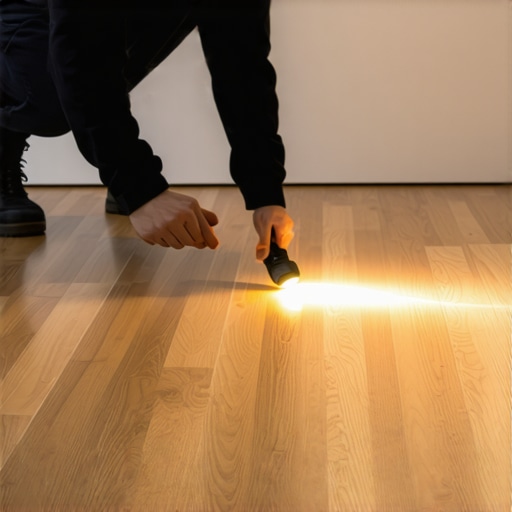
I have walked onto jobsites where the general contractor swears the slab is flat. I pull out my 10 foot straightedge and find a valley that looks like a dried up riverbed. In a shower, you want a pitch for drainage. In a floor, you want a mirror. If you are transitioning from a carpet install to a laminate install, the floor leveling requirements change drastically. Carpet is forgiving. It hides the sins of the framers. Laminate is an informant. It tells you exactly where the house is settling. If you have a bounce near the baseboard, the first thing I do is pull the trim and check if the plank is actually touching the subfloor. If there is air under that plank, you have a structural problem that a piece of molding cannot hide.
The hidden danger of thick underlayment
Underlayment selection impacts the static load and impact insulation class of your flooring assembly. While many believe a thicker underlayment provides more cushion and sound dampening, an overly compressible foam actually causes laminate planks to bounce. High density underlayment with a high compression strength is required to support the click lock joints and prevent vertical movement.
This is where the DIY crowd gets into trouble. They go to the big box store and buy the thickest, softest padding they can find, thinking it will make the floor feel like a cloud. It makes the floor feel like a sponge. When you walk, the padding compresses too much. The joint flexes. The air trapped between the plank and the low spot in the subfloor is pushed out, then sucked back in. This creates a clicking or whistling sound. You want an underlayment with a high density rating, usually measured in pounds per cubic foot. If you can squeeze the foam between your thumb and forefinger and it stays flat, it is garbage. You need a material that resists the 200 pounds of force coming down from a human heel.
| Material Type | Density (lb/ft3) | Compression Resistance | Ideal Use Case |
|---|---|---|---|
| Standard Foam | 1.5 – 2.0 | Very Low | Budget temporary fixes |
| Cross-linked Polyethylene | 2.0 – 4.0 | Medium | General residential use |
| High Density Rubber | 20.0 – 25.0 | High | Luxury residential installations |
| Natural Cork | 10.0 – 12.0 | High | Thermal and acoustic insulation |
The ghost in the expansion gap
Expansion gaps are mandatory for laminate flooring because wood based cores expand and contract with changes in relative humidity. If a floor is pinched against a wall or baseboard, it cannot move horizontally, which forces the planks to buckle or bounce vertically. A minimum 1/4 inch gap is required at all vertical obstructions to ensure floor stability.
Think of your floor as a living organism. It breathes. When the humidity in your house goes from 30 percent in the winter to 60 percent in the summer, those planks grow. If they hit the wall, they have nowhere to go but up. I have seen floors that were installed perfectly level start to bounce three months later because the installer forgot to leave a gap at the door jambs. The floor gets jammed, the tension builds, and the whole assembly lifts off the subfloor. This is why you never nail your baseboards into the flooring. You nail them into the wall. If you pin the floor down with a heavy kitchen island or a nailed baseboard, you have killed the floating mechanism. It is now a fixed floor with no room to move.
“Expansion space is not a suggestion; it is a structural requirement for floating assemblies.” – Master Flooring Axiom
Methods to stabilize a moving plank
Fixing a bouncing laminate floor without a full tear out involves injecting stabilizing resins or adjusting the expansion gap at the perimeter. If the issue is a subfloor dip, low viscosity floor repair adhesives can be used to fill the void beneath the planks. This remediates the deflection and provides a solid substrate for the locking joints to rest upon.
If you are lucky, the bounce is just a lack of expansion space. You pull the baseboards, you see the plank is tight against the drywall, and you trim it back with an oscillating saw. The floor relaxes, drops back down, and the bounce disappears. But if the problem is a dip in the subfloor, you have to get creative. I use a kit that involves drilling a tiny hole in the laminate, usually in a dark grain line or under the baseboard. I inject a specialized two part epoxy or an acrylic resin that expands to fill the void. Once it cures, it is hard as rock. The floor no longer has a hole to sink into. It is a surgical fix that saves you from ripping out a thousand square feet of material.
Checklist for subfloor remediation
- Remove baseboards and check for 1/4 inch minimum clearance
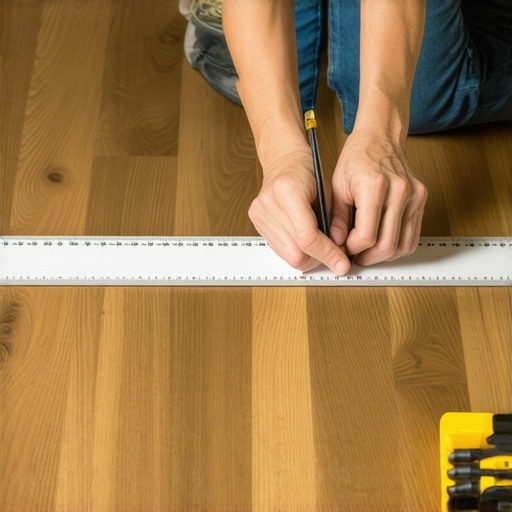
- Use a 10 foot straightedge to identify the depth of the subfloor dip
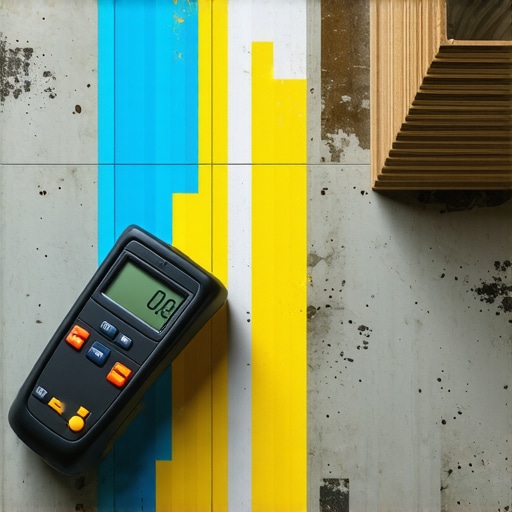
- Check the moisture content of the substrate with a pinless meter
- Evaluate the density of the existing underlayment foam
- Inspect the locking joints for visible stress whitening or cracking
- Trim any planks that are touching the drywall or door casings
The chemical bond of modern repair
When we talk about injecting resins, we are looking at the molecular bond. You need a material that has a high enough viscosity to stay put but low enough to flow into the deepest part of the dip. Most residential subfloors are made of OSB or concrete. OSB is porous. If you use a water based filler, the wood will soak it up, swell, and make the problem worse. You need a 100 percent solids epoxy. For concrete slabs, the concern is the vapor transmission. If that slab is sweating, no adhesive in the world will stick. This is why I always carry a calcium chloride test kit. I need to know how many pounds of moisture are coming off that slab every 24 hours. If it is over five pounds, you have bigger problems than a bouncy baseboard. You have a looming mold issue.
The engineering of the plank itself also matters. Cheaper laminate uses a lower density core that is more prone to vertical shearing. A high quality plank has a core density exceeding 900 kg/m3. That density provides the rigidity needed to span minor subfloor imperfections without the bounce becoming a structural failure. If you are installing over a radiant heat system, the stakes are even higher. The constant cycling of heat will make those planks move more than a standard install. You better have your leveling and your gaps dialed in to the millimeter.