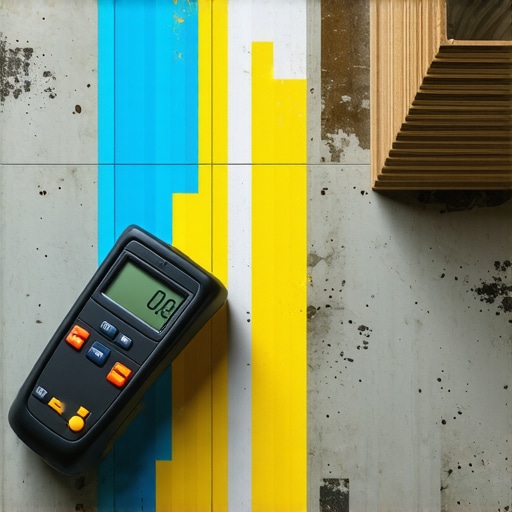
Why Your Subfloor Needs a ‘Moisture Map’ Before You Lay Laminate
Most guys skip the leveling compound. They think the underlayment will hide the dip. It won’t. I spent three days grinding concrete on a job last month just so the floor wouldn’t click like a castanet. That job taught the homeowner a hard lesson. If you do not map the moisture and the topography of your subfloor, your laminate is a ticking time bomb. I have seen fifteen thousand dollar wide-plank walnut floors cup like a potato chip, and I have seen laminate joints swell until they looked like mountain ranges. It all comes back to what is happening beneath the surface. You cannot just throw down a foam pad and hope for the best. A subfloor is a living, breathing structural component. If it is wet, your floor fails. If it is uneven, your floor fails. There is no middle ground in this trade.
The invisible threat of hydrostatic pressure
Laminate flooring requires a dry subfloor with a Moisture Vapor Emission Rate (MVER) of less than 3 pounds per 1,000 square feet over 24 hours. Concrete slabs are porous sponges that transport water through capillary action. When you trap that moisture under a non-breathable laminate plank, the vapor pressure builds until it destroys the core of the board. This is not just about liquid water. It is about the microscopic movement of vapor. I have seen brand new slabs that looked bone dry on top but were registering ten percent moisture three inches down. Without a moisture map, you are flying blind into a disaster. The National Wood Flooring Association is very clear on this.
“A floor is only as good as the subfloor beneath it; deflection is the enemy of every joint.” – Master Flooring Axiom
Why your subfloor is lying to you
A subfloor may look level to the naked eye but contains micro-deviations that cause laminate locking mechanisms to snap under foot traffic. Even if the surface feels dry, the internal relative humidity (RH) could be hovering at eighty percent. This is why we use in-situ probes. We drill into the concrete and measure the humidity from the inside out. If you are working on a wood subfloor, you need to check the joist spacing. If your joists are too far apart, the subfloor will flex. That flex translates directly to your laminate seams. Over time, that movement fatigues the tongue and groove. You will start hearing a clicking sound. That is the sound of your floor dying. It is the sound of a contractor who did not use a straight edge and a moisture meter.
The physics of the moisture map
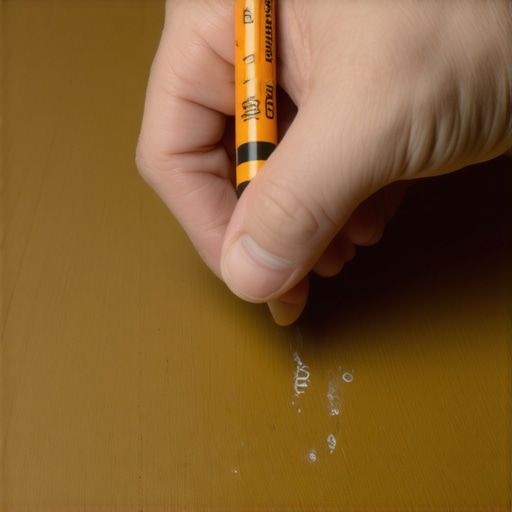
Creating a moisture map involves taking readings every three feet across the entire room to identify hidden damp spots near exterior walls or plumbing lines. You use a grid system. You mark the readings directly on the subfloor with a wax pencil. This map tells you where you need a heavier vapor barrier or where you might have a slow leak in a shower pan. If you see a spike in moisture near a sliding glass door, you know your flashing is failing. If the center of the room is damp, you might have a high water table pushing through the slab. Laminate is made of high-density fiberboard (HDF). HDF is essentially compressed sawdust and glue. It loves water. It will drink it up and expand. Once it expands, it never goes back to its original size.
Critical moisture thresholds for installation
Different subfloor materials have specific maximum moisture contents that must be verified before any laminate planks are acclimated to the space. Wood subfloors should generally be within two to four percent of the flooring material itself. Concrete must be fully cured, which usually takes at least twenty-eight days per inch of thickness. Here is a breakdown of the technical limits you should be looking for during your inspection.
| Subfloor Material | Maximum Moisture Content | Testing Method Required |
|---|---|---|
| Cured Concrete Slab | 3.0% MVER or 75% RH | Calcium Chloride / RH Probe |
| Plywood Subflooring | 12.0% Total MC | Pin-Style Moisture Meter |
| Oriented Strand Board (OSB) | 10.0% Total MC | Pin-Style Moisture Meter |
| Anhydrite Screed | 0.5% Total MC | CM Method |
The ghost in the expansion gap
Laminate floors are floating systems that require at least a quarter-inch expansion gap at every vertical obstruction to prevent buckling during seasonal humidity shifts. If you lock your floor against a wall or under a heavy kitchen island, you have created a fixed point. When the humidity rises in the summer, the floor expands. If it has nowhere to go, it will lift off the subfloor. This is called crowning. I have seen floors lift three inches off the ground because an installer did not leave a gap at the door casings. You need to treat the floor like a giant sheet of ice on a lake. It needs to be able to slide. This is why we do not nail or glue laminate to the subfloor. It is a mechanical system, not a cosmetic one.
The one eighth inch that ruins everything
Subfloor flatness must be within one-eighth of an inch over a ten-foot radius to ensure the structural integrity of the click-lock joints. If you have a hump in your floor, the laminate will teeter-totter over it. If you have a dip, the floor will deflect when you step on it. Most people think a thick underlayment will fix this. They are wrong. Too much cushion actually makes the problem worse. The extra compression puts even more stress on the locking mechanism. You end up snapping the thin plastic or wood tongues that hold the planks together. You must use floor leveling compound or a grinder to get that subfloor dead flat. There are no shortcuts here.
Solving the dampness dilemma
Mitigating high moisture levels requires a multi-step approach including the use of 6-mil polyethylene plastic and high-quality seam tape. If your moisture map shows readings above the limit, you cannot proceed with a standard install. You might need an epoxy moisture mitigator. This is a thick, two-part coating that seals the concrete. It is expensive, but it is cheaper than replacing a floor. You also need to look at your crawlspace. If you have standing water or damp soil under the house, that moisture is coming up through the floor. You need a vapor barrier on the ground in the crawlspace before you even think about the laminate inside.
The checklist for a stable floor
- Check subfloor levelness with a ten-foot straight edge across the entire room.
- Perform at least three calcium chloride tests for every thousand square feet of concrete.
- Verify that the HVAC system has been running for at least ten days to stabilize the environment.
- Map moisture readings at three-foot intervals, specifically targeting areas near showers and exterior doors.
- Grind down any high spots and fill any low spots with a high-compressive strength leveling compound.
- Ensure the subfloor is free of wax, oil, and construction debris that could harbor mold.
The regional climate variable
Local humidity levels in places like the Pacific Northwest or the Gulf Coast dictate longer acclimation periods for laminate materials. In a swampy climate, you might need to let your flooring sit in the room for a full week with the boxes open. In a desert climate, you have to worry about the wood drying out too fast and becoming brittle. I always tell people that the house needs to be in its lived-in state. Don’t install flooring while the drywall mud is still wet. That moisture goes right into the air and then right into your floor. The chemistry of the glue in the laminate is sensitive to these changes.
Final technical requirements
Every professional installation must adhere to the manufacturer instructions to maintain the warranty and ensure long-term performance. This means using the right underlayment and the right transition strips. Don’t try to run laminate through a doorway without a T-molding unless the manufacturer explicitly allows it. Most don’t. You need that break to allow for independent movement between rooms. If you follow the moisture map and you respect the physics of the material, your floor will last thirty years. If you ignore the subfloor, you will be ripping it up in thirty days. It is that simple. Flooring is a science. Treat it like one.