The ‘Cardboard’ Trick for Moving Appliances Over New Floors
The ‘Cardboard’ Trick for Moving Appliances Over New Floors
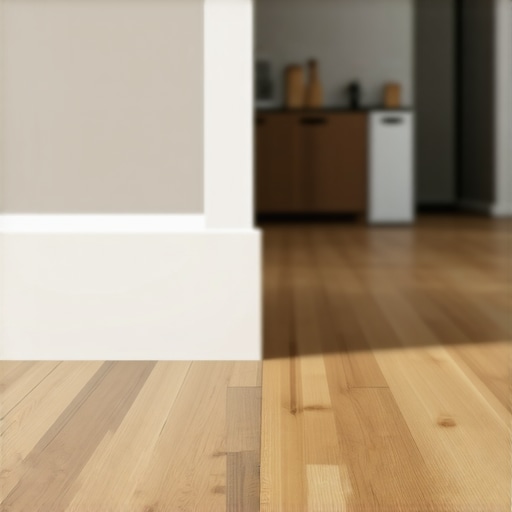
Most homeowners assume that a brand new floor is a finished product ready for immediate use. They are wrong. I spent three days grinding concrete on a job last month just so the floor wouldn’t click like a castanet, only to see the delivery crew drag a 400 pound refrigerator across the planks without a single sheet of protection. It breaks your heart to see a precision engineered surface ruined by a moment of laziness. A floor is a structural system, not a piece of furniture. When you move heavy appliances, you are dealing with point loads that can exceed the compressive strength of your subfloor and the shear strength of your locking mechanisms. This is especially true for laminate and luxury vinyl plank installations where the tongue and groove joints are only a few millimeters thick. If you don’t understand the physics of surface tension and friction, you are going to destroy your investment.
The physics of the point load
Appliance wheels exert massive pressure on very small contact points which can crush the internal core of laminate or wood. When a refrigerator sits on four small wheels, the weight is not distributed. It is concentrated into four tiny areas. If your floor leveling was not perfect, those wheels will find the voids. When the wheel hits a low spot in the subfloor, the plank will flex. That flex puts immediate stress on the locking joint. Cardboard works because it acts as a sacrificial friction reducer and a weight distributor. It spreads that point load across a wider surface area, reducing the PSI (pounds per square inch) exerted on the delicate wear layer of your floor. This is the difference between a floor that lasts thirty years and one that fails in thirty seconds.
“A floor is only as good as the subfloor beneath it; deflection is the enemy of every joint.” – Master Flooring Axiom
Why your subfloor is lying to you
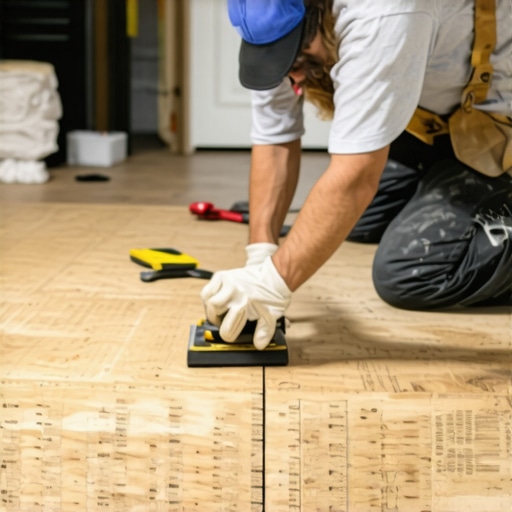
You might look at your plywood or concrete and think it looks flat. It isn’t. I have never seen a subfloor that didn’t need work. Most guys skip the leveling compound. They think the underlayment will hide the dip. It won’t. When you move a heavy range or a washing machine over a dip, the cardboard might protect the surface from scratches, but it won’t protect the joints from snapping if there is a void underneath. This is why floor leveling is the most important part of any laminate or hardwood job. If the floor is level to within 1/8 inch over a 10 foot span, the appliance wheels have a consistent plane to roll across. Without that level surface, you are essentially asking your floor to act as a bridge over a canyon. Bridges are engineered for that. Flooring joints are not.
The chemical reality of surface friction
The friction between a rubber wheel and a urethane finish is surprisingly high. This kinetic friction creates heat and drag. When you try to push a heavy object, the wheels often lock up or skid. This skidding action doesn’t just scratch the floor, it can actually delaminate the top layer of a laminate plank. By using clean, dry corrugated cardboard, you are introducing a medium with a much lower coefficient of friction. The cardboard slides across the floor’s wear layer much more easily than rubber or hard plastic wheels. However, you must ensure the cardboard is clean. If there is a single grain of sand or a tiny piece of carpet install tack strip stuck to the bottom of that cardboard, it will act like a diamond tipped engraving tool. It will gouge a permanent trench into your floor that no amount of wax can fix.
| Material Type | Compressive Strength | Friction Rating | Best Use Case |
|---|---|---|---|
| Corrugated Cardboard | Low | Very Low | Light appliances and short distances |
| Ram Board | Medium | Low | General construction and foot traffic |
| Masonite (1/8 inch) | High | Medium | Heavy refrigerators and professional moves |
| Plywood (1/4 inch) | Very High | High | Long term protection for heavy renovations |
The step by step movement protocol
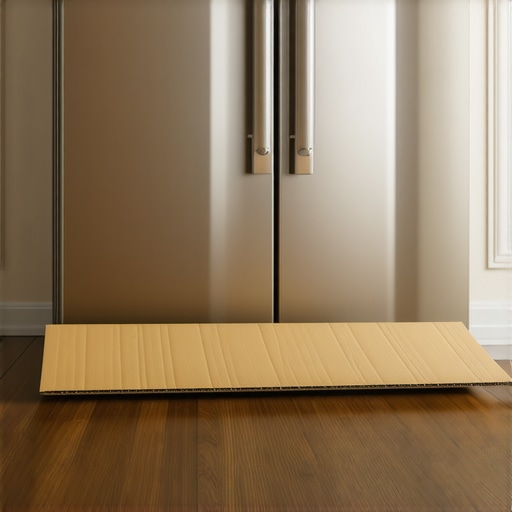
To execute the cardboard trick correctly, you need to think like a rigger. First, you must vacuum the floor twice. I mean it. Any grit will be ground into the finish. Second, you need high quality C-flute corrugated cardboard. Do not use the thin stuff from a cereal box. You want the thick stuff from a shipping container. Lay a continuous path from the appliance’s starting point to its final destination. Overlap the edges of the cardboard and tape them together using painter’s tape. Do not use duct tape. Duct tape leaves a residue that can chemically bond with the floor finish, especially in humid environments like Houston or Florida. Once your path is secure, you can begin the move. You should still use an appliance dolly whenever possible, keeping the weight on the dolly’s pneumatic tires which further distribute the load across the cardboard path.
Common mistakes in shower and kitchen transitions
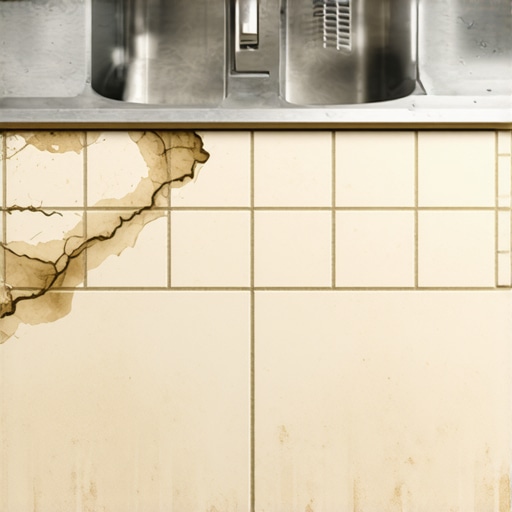
People often forget that transitions are the weakest point of any floor. When you are moving an appliance from a kitchen into a utility room or near showers where tile meets laminate, the height difference can be a killer. A 1/8 inch lip can catch a wheel and cause it to slam down on the next surface. This impact force is often double the static weight of the appliance. You must build a small ramp using additional layers of cardboard or a scrap piece of 1/8 inch Masonite. This ensures the appliance glides over the transition rather than jumping it. I have seen countless showers and bathroom tile entries cracked because someone tried to ‘bump’ a washing machine over a transition strip. It is a rookie mistake that costs hundreds of dollars in repairs.
“The maximum allowable variation in subfloor flatness is 1/8 inch over a 10 foot radius for most floating installations.” – NWFA Technical Guidelines
The regional humidity factor
In high humidity areas, the moisture content of your subfloor and the cardboard itself matters. Cardboard is a desiccant. It absorbs moisture from the air and the floor. If you leave cardboard sitting on a new wood floor for three days in a swampy climate, you are trapping moisture underneath it. This can cause the wood to cup or the laminate core to swell. My rule is simple. Put the cardboard down, move the appliance, and pick the cardboard up immediately. Do not leave it overnight. I have seen $15,000 wide-plank walnut floors ruined because someone left ‘protective’ coverings down too long and the wood couldn’t breathe. The floor needs to acclimate to the home’s ambient humidity. Anything that blocks that air exchange is a risk.
Moving day preparation checklist
- Vacuum the entire path twice to remove all crystalline silica and construction debris.
- Check the underside of your cardboard for staples, dirt, or moisture.
- Ensure the appliance wheels are clean and free of stuck gravel from the moving truck.
- Verify that all floor leveling compounds have fully cured for at least 24 to 48 hours.
- Measure the width of all doorways and transitions to ensure a 1 inch clearance on all sides.
- Tape the cardboard sheets together to prevent them from sliding out from under the appliance.
The 1/8 inch that ruins everything
Precision is not a suggestion in this trade. It is the law. If your floor is out of level by more than 1/8 inch, the ‘Cardboard’ trick might save you from a scratch, but it won’t save you from a structural failure. When a heavy fridge sits on a high spot, it creates a pivot point. The planks on either side will want to lift. Over time, this constant pressure will cause the locking tabs to fatigue and eventually snap. You will know this happened when you hear a ‘crack’ every time you walk past the fridge. At that point, the only fix is to pull up the floor, level the subfloor properly, and replace the broken planks. It is much easier to do it right the first time. Use a 10 foot straight edge. Check your work. Don’t trust your eyes. Trust the tool.