Why You Should Never Use a Steam Mop on New Laminate
I once walked into a house where a homeowner had just spent four thousand dollars on a premium laminate install. Within six months, every single plank was cupping at the edges. It looked like a series of small, wooden waves. I asked her how she cleaned it. She pointed at a shiny white steam mop sitting in the corner. She thought she was being hygienic. In reality, she was shooting high-pressure vapor directly into the heart of her subfloor assembly. I had to tell her the entire floor was a total loss. It broke my heart, but you cannot fix water-saturated fiberboard. That is the reality of modern flooring. You have to treat these materials with the respect their chemistry demands or you will be ripping them out before the first year is up.
The physics of vapor penetration
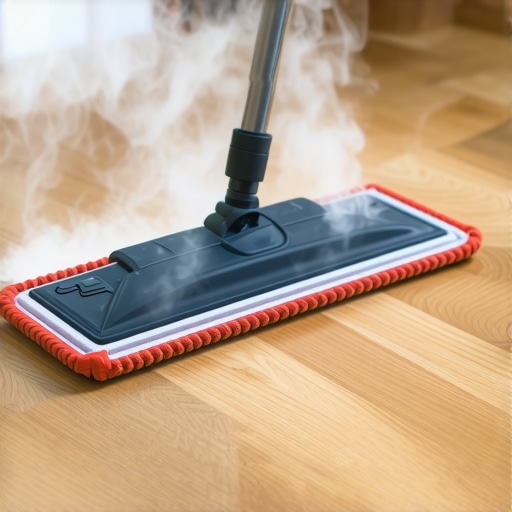
Steam mops work by forcing water vapor into the microscopic gaps of your floor. This pressurized gas enters the tongue and groove joints where no topical sealant exists. Unlike liquid water which sits on top, steam molecules are small enough to penetrate the raw HDF core. When you pull that trigger, you are not just cleaning the surface. You are injecting moisture into a material that is designed to stay dry. Laminate flooring is a composite product. It consists of a wear layer, a decorative layer, and a High-Density Fiberboard (HDF) core. That HDF core is essentially sawdust and resin pressed together under immense force. While the top melamine layer is incredibly tough, the sides of the planks are vulnerable. The steam reaches temperatures exceeding 212 degrees Fahrenheit. This heat expands the tightest joints just enough to let the vapor in. Once that moisture enters the fiberboard, it is game over. The cellulose fibers absorb the water through capillary action and swell. Unlike solid wood, which might dry out and shrink back, HDF loses its structural integrity once saturated. It stays swollen. This leads to what we call peaking, where the edges of the boards push against each other and rise up.
“A floor is only as good as the subfloor beneath it; deflection is the enemy of every joint.” – Master Flooring Axiom
The chemical breakdown of melamine resins
Heat from steam mops causes the thermal degradation of the adhesives and resins holding your laminate together. These floors are engineered to exist at room temperature, not under a blast of volcanic heat. The bond between the wear layer and the core eventually fails. You might not see it the first time. You might not even see it the tenth time. But slowly, the heat is melting the glue. This process is called delamination. I have seen floors where the clear plastic wear layer simply peeled off like a sunburned skin. This happens because the steam liquefies the resins that were cured during the manufacturing process. In regions like the humid Southeast, where I do a lot of work, the ambient humidity is already high. Adding a steam mop to a house in Georgia or Florida is like putting your floor in a pressure cooker. The floor cannot breathe. The moisture gets trapped under the planks, especially if you have a heavy-duty underlayment. This creates a mold factory right under your feet. It is not just about the look of the floor. It is about the air quality of your home. If you want a floor that can handle steam, you need to be looking at a professional tile install with epoxy grout. Anything else is a gamble you are going to lose.
The structural damage of edge peaking
Edge peaking is a permanent structural failure where the vertical expansion of the core forces the joints upward. This creates a tripping hazard and exposes the most fragile part of the plank to foot traffic. Once a joint peaks, the wear layer will chip away. When you walk across a peaked joint, your foot hits the raised edge. This chips the aluminum oxide finish. Now, the raw fiberboard is exposed to the air. Every time you mop after that, even if you use a damp cloth, more water gets in. It is a slow death for your floor. I have spent decades with a moisture meter in my pocket. I have seen the readings on steam-mopped floors go from a healthy 8 percent to a catastrophic 18 percent in a matter of weeks. That is not just a little damp. That is a soaked sponge. The pressure of the steam also affects the subfloor. If you have a plywood or OSB subfloor, the steam can travel through the laminate joints and start rot in the structural layer of your house. I have had to replace entire sections of subfloor because a homeowner was too aggressive with a steam cleaner in the hallway. It is an expensive mistake that no warranty covers.
| Cleaning Method | Moisture Level | Heat Intensity | Risk Level for HDF |
|---|---|---|---|
| Steam Mop | High (Vapor) | Extremely High | Critical Failure |
| Wet Mop and Bucket | High (Liquid) | Low | High Risk |
| Damp Microfiber | Minimal | None | Safe |
| Dry Vacuum | None | None | Safest |
Why water resistant is a marketing lie
Most laminate marketed as waterproof only provides a topical barrier for a specific number of hours. This rating does not account for pressurized steam which bypasses the surface protection entirely. Marketing teams use these terms to sell product, but installers know the truth. You will see labels claiming 24-hour or 72-hour water resistance. Those tests are done with standing water at room temperature. They are not done with a 200-degree steam wand. The steam bypasses the perimeter seals. It bypasses the wax coating on the joints. It is an unfair fight. If you are dealing with a basement install where the floor leveling was not perfect, you already have minor stress on those locking mechanisms. The steam just finishes the job. When I am doing a carpet install, I do not worry about a little water. But with laminate, every drop is a threat. People think they are saving time by using steam. They are actually just accelerating the replacement date of their floor. A real floor mechanic will tell you to stick to the basics. Use a broom. Use a vacuum with the beater bar turned off. Use a spray bottle and a microfiber pad. It is not glamorous, but it keeps your floor flat and your bank account full.
“The introduction of pressurized steam into wood-based flooring cores leads to irreversible fiber saturation.” – Master Flooring Axiom
Valid cleaning protocols for modern laminates
Maintaining a laminate floor requires a dry-first approach to prevent grit from scratching the surface. Only use cleaners specifically formulated for laminate to avoid leaving a dulling residue on the melamine. Keeping the moisture to an absolute minimum is the only way to preserve the joints. You want to start by removing the abrasive particles. Sand and dirt act like sandpaper under your shoes. If you do not get the dirt off before you wipe, you are just grinding it into the finish. Once the floor is clear of debris, use a misting bottle. Do not spray the floor. Spray the microfiber pad. It should be barely damp to the touch. If you see streaks of water behind you as you mop, you are using too much. In the flooring world, we have a saying: If it is wet enough to splash, it is wet enough to trash. This is especially vital near showers or kitchen sinks. Those are the high-stress zones. I always recommend putting a rug with a non-staining backing in front of the sink. It catches the drips that your mop would otherwise miss.
- Vacuum the floor at least twice a week using a hard floor setting.
- Never use wax or oil-based soaps as they create a sticky film.
- Wipe up liquid spills immediately with a dry paper towel.
- Avoid using any cleaning tool that plugs into an electrical outlet.
- Check the PH level of your cleaner to ensure it is neutral.
- Use felt floor protectors on all furniture legs to prevent deep gouges.
The 1/8 inch that ruins everything
The expansion gap at the perimeter of the room is the lung of your floor. If you steam the floor, the boards expand and close this gap, causing the floor to buckle against the walls. A floor with no room to move will always fail. Laminate is a floating floor. It is not nailed down. It needs to move as the seasons change. When you introduce steam, you are forcing an artificial expansion cycle. The floor grows. If it hits the baseboard or the drywall, it has nowhere to go but up. I have seen entire floors lift off the subfloor like a giant bubble. This is called a floor failure. To prevent this, we always leave at least a quarter inch of space around the edges. But that space is not enough to handle the swelling caused by a steam mop. The mechanics of the click-lock system are finely tuned. They rely on the edges being crisp and dry. Once they get mushy from the steam, the lock loses its grip. The floor starts to move under your feet. It starts to creak. It starts to click. That sound is the sound of your investment dying. Stick to the manufacturer guidelines. Read the fine print. You will find that nearly every laminate manufacturer in the world explicitly forbids the use of steam mops. Using one voids your warranty instantly. If you have a problem and the inspector sees that tell-tale edge peaking, they will deny your claim before they even finish their coffee. Save the steam for your tile showers or your stone floors. Keep it away from your laminate.”