Why Your Laminate Floor Clicks When You Walk Near the Island
The physics of the phantom click under your kitchen floor
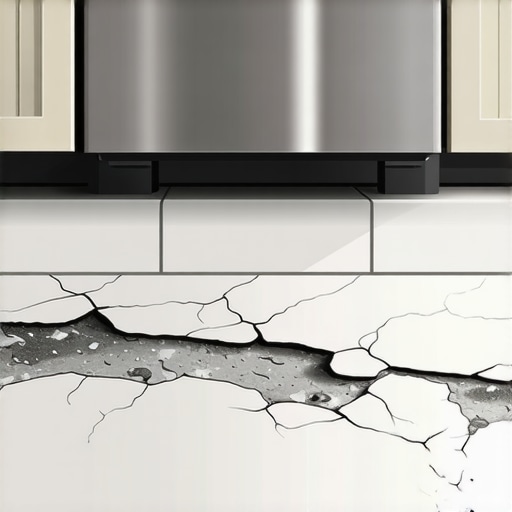
The clicking sound you hear when walking near a kitchen island is the mechanical cry of a floating floor system under extreme stress. This noise occurs because the laminate planks are trapped between the heavy weight of the island and the perimeter walls. When you step near the island, the planks try to shift but are pinned down, causing the locking joints to rub together or slap against a subfloor that is not perfectly flat. This is not just an annoyance. It is a sign of structural tension that can lead to total joint failure.
I have spent twenty five years on my knees with a moisture meter and a level. I have seen it all. Last year, I walked into a house where the homeowner had just spent ten thousand dollars on a high end laminate. Every time they walked past the granite topped island, the floor sounded like a tap dancer was following them. The installer had pinned the floor under the island cabinets. He treated the floor like it was permanent, but laminate is a living, moving entity. It needs to breathe. When he locked that floor down with a thousand pounds of stone and cabinetry, he killed its ability to expand and contract. That floor was gasping for air, and every click was a warning.
The ghost in the expansion gap
A laminate floor clicks near an island because the heavy cabinetry acts as an anchor that prevents the floor from floating. Laminate is a wood based product that expands and contracts with changes in humidity and temperature. If you pin it down with a heavy island, the floor cannot move. This causes the planks to bow or lift slightly in other areas. When you walk on those lifted areas, they compress back down against the subfloor, creating that sharp clicking or popping sound.
You have to understand the chemistry of the core. Most laminate uses High Density Fiberboard, which is essentially wood fibers compressed with resins like melamine or urea formaldehyde. These fibers are hygroscopic. They soak up moisture from the air. In a kitchen, you have high humidity from boiling pots and dishwashers. The floor wants to grow by maybe an eighth of an inch over a ten foot span. If the island is sitting on top of it, that growth has nowhere to go. The tension builds in the tongue and groove locking system until the friction becomes audible.
Why your subfloor is lying to you
Subfloor levelness is the single most important factor in preventing floor noise and joint breakage. Most builders tell you a subfloor is fine if it looks okay to the naked eye. They are lying. A subfloor must be flat within three sixteenths of an inch over a ten foot radius. If there is a dip near your island, even a tiny one, the laminate will hover over that void. When your body weight hits that spot, the plank deflects. The clicking is the sound of the locking mechanism rubbing under the pressure of that deflection.
“A floor is only as good as the subfloor beneath it; deflection is the enemy of every joint.” – Master Flooring Axiom
I have spent days grinding down concrete humps and filling low spots with self leveling compound just to get a floor ready for laminate. If you skip floor leveling, you are inviting disaster. People think underlayment will hide the dips. It won’t. Underlayment is for sound dampening and moisture protection, not for structural leveling. If you put a soft, thick underlayment over a dip, you actually make the clicking worse because you are giving the floor more room to bounce.
The 1/8 inch that ruins everything
Expansion gaps at the perimeter and around fixed objects must be maintained at a minimum of one quarter to one half inch. If the floor is touching the base of the island or the wall, it has no room to move. The clicking near the island is often the result of the floor being squeezed against the island’s toe kick. The force of the expansion pushes the plank into the obstacle, and the only way the energy can escape is by lifting the plank off the subfloor.
| Metric | Tolerance Requirement | Impact of Failure |
|---|---|---|
| Subfloor Levelness | 1/8 inch over 10 feet | Clicking and joint separation |
| Expansion Gap | 1/4 inch to 1/2 inch | Buckling and floor peaking |
| Moisture Content | Under 12 percent for HDF | Swelling and edge cupping |
| Relative Humidity | 35 to 55 percent | Gapping or compression bark |
| Island Weight | Fixed to subfloor only | Pinning of the floating system |
When I install a kitchen floor, I never put the island on top of the laminate. I install the island first, directly to the subfloor. Then I install the laminate around the island, leaving a quarter inch gap. I hide that gap with shoe molding or a scribe piece. This allows the floor to move freely under the toe kick without being crushed by the weight of the cabinetry. If your island is already installed on top of your floor, you might have to use a toe kick saw to cut the laminate back and release the tension.
The chemistry of the locking joint
The precision of the click lock system depends on the integrity of the milled profile. Modern laminate uses a glueless locking system, often a drop lock or a fold down mechanism. These are engineered to within microns. When the floor is under tension from a heavy island, the tongue of one plank is pushed into the groove of the next with more force than the design intended. This creates microscopic friction. The clicking is the sound of those melamine coated surfaces grinding against each other.
If you live in a high humidity area like Houston or Florida, your laminate is going to expand more. If you live in a dry climate like Phoenix, it will shrink. Both scenarios cause clicking if the floor is pinned. In high humidity, the floor swells and presses against the island. In low humidity, the floor shrinks and pulls away, often causing the joints to open up just enough to allow movement. This is why acclimation is not optional. You must leave that floor in the room for at least 48 to 72 hours before you even open the boxes. You are waiting for the HDF core to reach an equilibrium with the local atmosphere.
The danger of over cushioned underlayment
Using an underlayment that is too thick or too soft will cause the locking mechanisms to snap under the weight of foot traffic. People often buy the thickest underlayment they can find because they think it will be softer on their feet. This is a mistake. A floating floor needs a firm base. If the underlayment is too squishy, the floor will flex too much when you walk near the island. That vertical movement puts incredible leverage on the thin tongue and groove joints. Eventually, the click turns into a crack, and the floor is ruined.
- Check subfloor for dips exceeding 3/16 inch.
- Ensure a 1/2 inch expansion gap around all vertical obstructions.
- Verify that the kitchen island is not bolted through the laminate.
- Maintain indoor humidity between 35 and 55 percent.
- Use a moisture barrier over concrete slabs to prevent HDF swelling.
If you are dealing with a concrete slab, you have to worry about moisture vapor transmission. Concrete is like a sponge. It pulls moisture from the ground and releases it into the air. If you do not have a 6 mil poly vapor barrier, that moisture hits the bottom of your laminate. The bottom of the plank swells while the top stays dry. This is called cupping. When the floor cups, it creates a hollow space underneath it. You walk on it, and it clicks. It is a simple chain reaction of physics and chemistry.
“Floating floors must remain floating; any mechanical fastener or heavy weight that pins the floor to the substrate is a violation of the system’s engineering.” – National Wood Flooring Association Standard
Solving the clicking mystery
To fix a clicking floor near an island, you must first identify if the floor is pinned or if the subfloor is uneven. If you can feel the floor moving up and down, it is a subfloor issue. If the floor feels solid but still clicks, it is likely a tension issue. You can sometimes fix this by removing the baseboards or toe kicks and checking the expansion gap. If the floor is tight against the island, you need to trim it back. I have used oscillating multi tools to cut a gap in place. It is a surgical procedure, but it works.
In some cases, the clicking is caused by the underlayment itself rubbing against the subfloor. This happens frequently with cheap foam underlayments. High quality underlayments have a higher density and a smoother surface to prevent this friction. If you are planning a carpet install or a shower remodel in an adjacent room, remember that the transitions between these spaces are critical. A T molding is necessary for any laminate run longer than 30 feet to allow for independent movement. If you skip the T molding, you are just adding more weight and more tension to the system, which will inevitably lead back to that annoying clicking sound near your island.
Summary. Do not treat your laminate like it is stone. It is a high tech product made of wood fiber and resin. Treat it with the respect its engineering requires. Keep your subfloor flat, keep your expansion gaps open, and never, ever pin it down with a kitchen island. If you follow those rules, your floor will stay quiet for decades. If you don’t, you will be listening to that click every time you go to the fridge for a glass of water.