Why Your Floor Leveler Is Dusting Off and What to Do
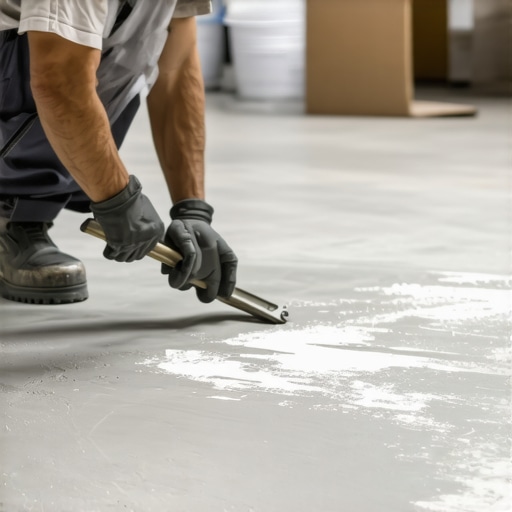
I spent three days grinding concrete on a job last month just so the floor wouldn’t click like a castanet. The smell of WD-40 and oak dust is part of my skin at this point, but what I saw on that site made my blood boil. The previous installer had dumped five bags of self-leveling underlayment over a dusty, unprimed slab. When I walked across it, the stuff literally puffed up like flour from under the edges of the laminate. It was a chalky disaster. A floor is a performance surface, not a decoration. If the foundation is turning to powder, your expensive finish material is essentially floating on a layer of ball bearings. Most guys skip the prep because it is back-breaking work that no one sees, but the physics of a subfloor do not care about your schedule. If you do not respect the chemistry of the bond, the bond will not respect your bank account.
The microscopic failure of your subfloor
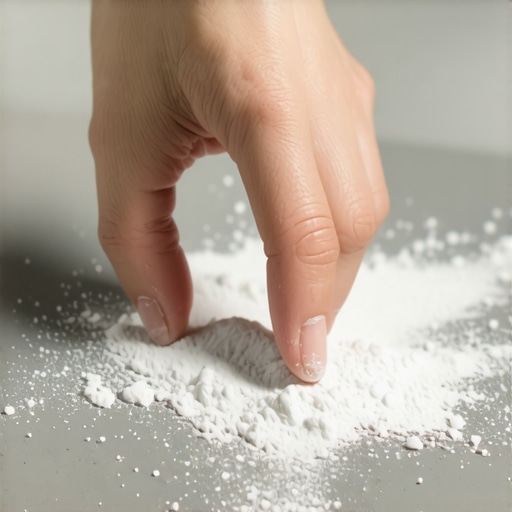
Floor leveler dusts off because the surface was too porous or the water ratio was incorrect during the mixing phase. When the substrate sucks the moisture out of the leveler before it can hydrate the cement particles, the material turns back into a weak powder that lacks structural integrity. This process, known as flash drying, prevents the formation of calcium silicate hydrate crystals which are the building blocks of cement strength. When you pour a liquid leveler onto a dry, thirsty concrete slab, that slab acts like a sponge. It pulls the water down instantly. The cement at the interface never gets the chance to chemically cure. It just dries out. This creates a weak, friable layer at the bottom that eventually works its way to the surface as dust. If you see white or grey powder when you drag a finger across your cured leveler, the chemical chain has been broken. You are looking at a structural failure that no underlayment or carpet padding can fix.
The ghost in the expansion gap
Every floor needs room to breathe and move but the leveler itself must remain a rigid part of the substrate. If your leveler is dusting, it often means the perimeter of the room was not properly dammed or the material was allowed to flow into areas where it could not properly settle. I have seen installers pour leveler right up against drywall without a foam expansion strip. The house shifts, the leveler cracks, and the friction between the moving pieces turns the edges into dust. This is especially problematic in laminate installations where the floor is floating. As people walk across the room, the vertical deflection of the laminate acts like a bellows, sucking that dust up through the locking mechanisms and into your living environment. This is not just an installation problem, it is a respiratory one. The dust is high in silica. You do not want to breathe that every time you take a step toward the kitchen.
“A floor is only as good as the subfloor beneath it; deflection is the enemy of every joint.” – Master Flooring Axiom
Why your primer is not an option
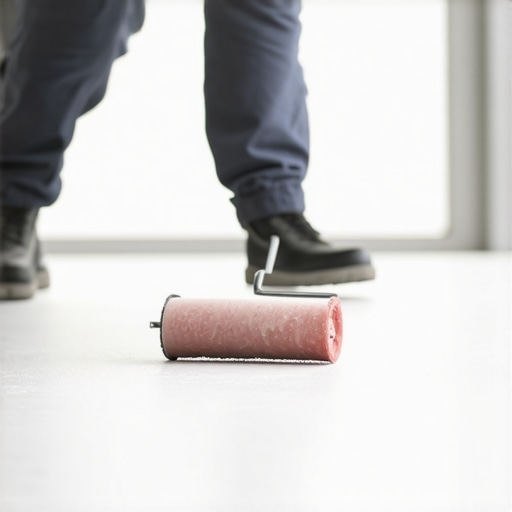
Primer is the chemical bridge that prevents the substrate from stealing water from the leveling compound while simultaneously creating a mechanical tooth for the new material to grab. Skipping primer is the single most common reason for a dusting or delaminating floor leveler in modern construction. Most installers think primer is just a way for the manufacturer to sell more bottles. They are wrong. A high-quality acrylic primer seals the pores of the concrete. Think of it like painting a piece of raw wood. If you do not prime, the wood drinks the paint. With concrete, if you do not prime, the concrete drinks the water that the leveler needs to survive. For showers and wet areas, this is even more critical. The humidity levels in a bathroom will find any weakness in the bond. If the leveler is dusty under a tile installation, the thin-set will not stick. Your tiles will pop, and your grout will crack. It is a domino effect of failure that starts with a five-gallon bucket of primer you decided not to buy.
| Leveler Type | PSI Strength | Minimum Dry Time | Primer Requirement |
|---|---|---|---|
| Gypsum Based | 2,500 PSI | 24-48 Hours | Non-Negotiable |
| Portland Cement Based | 4,500 PSI | 6-12 Hours | Essential |
| Rapid-Setting Cement | 6,000 PSI | 90 Minutes | High-Bond Only |
The water ratio trap for installers
Adding too much water to the mixing bucket to make the leveler flow better is a recipe for a weak and dusty surface. The excess water rises to the top during the curing process, carrying fine particles with it and creating a soft layer called laitance. I see this in every